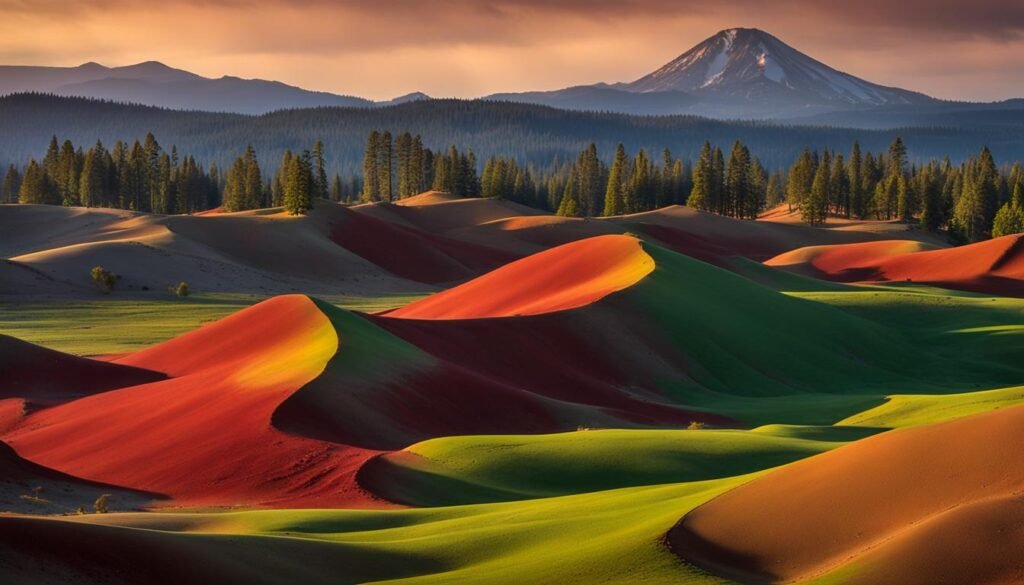
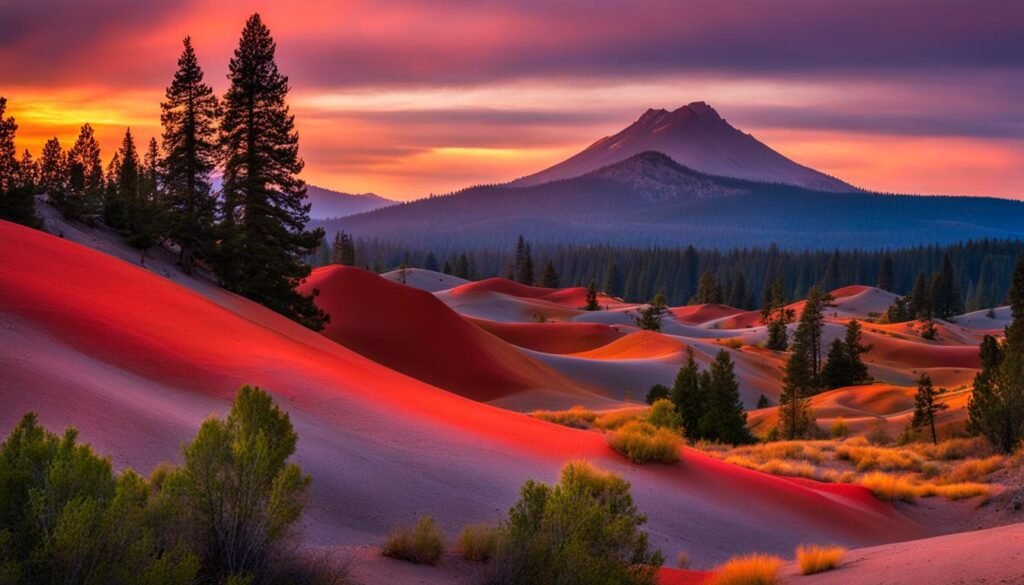
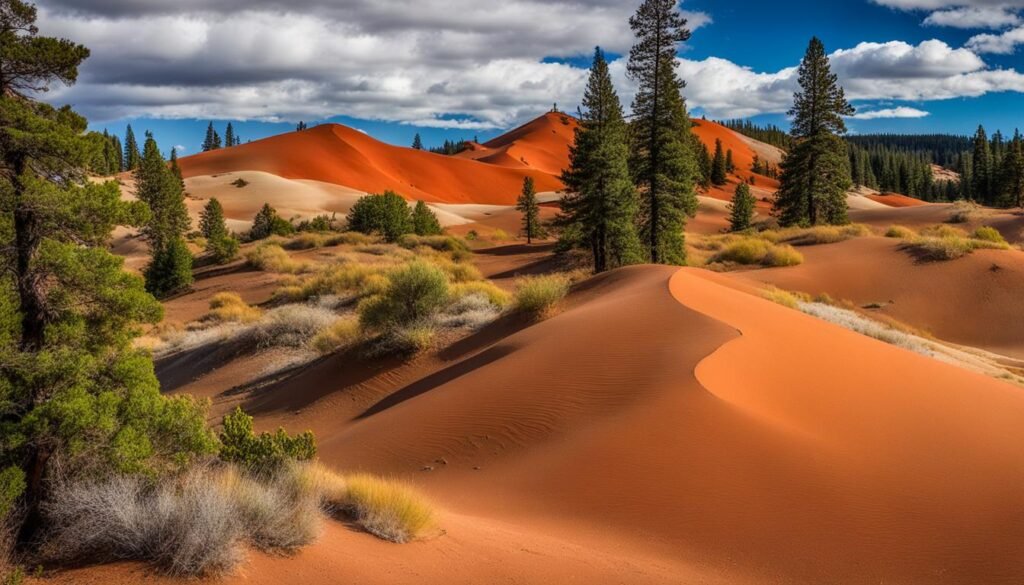
The Painted Dunes sit in the remote northeast corner of Lassen Volcanic National Park, near Butte Lake, and they are one of the park’s stranger sights: dunes of oxidized volcanic ash in reds, oranges, and blacks, the color coming from cinder and ash that landed hot on the older lava and oxidized. They sit at the base of Cinder Cone, and the standard way to see them is the hike in from the Butte Lake campground.
The Painted Dunes and Cinder Cone hike
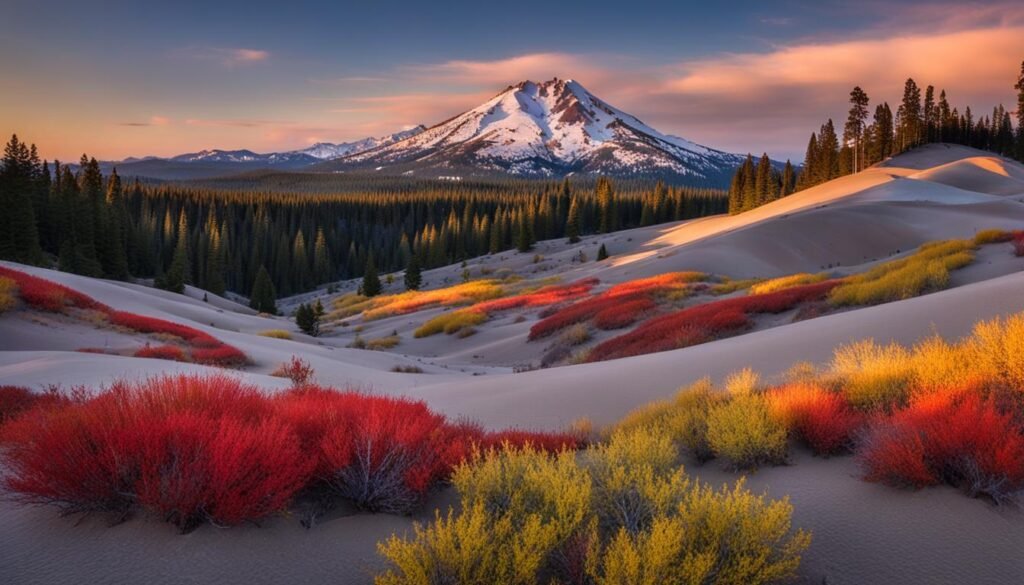
The trail starts at the Butte Lake Campground, about a 45-minute drive from the park’s north (Manzanita Lake) entrance, and runs southwest through the Fantastic Lava Beds toward Cinder Cone. The loop to the cone and along the dune overlook is roughly 4 miles round trip with about 846 feet of climb, much of it loose cinder on the cone itself. The southeast face of Cinder Cone looks down on the dunes and is the classic photo angle. Late-day light (the “glow hour” just after sunset) is when the reds read strongest.

Why the dunes are colored
The reds and oranges are iron-rich volcanic ash and pumice that fell onto the lava flows while still hot and oxidized in place, in contrast to the black basalt around them. It is a visible record of the Cinder Cone eruption sequence, the same event that built the cone and the Fantastic Lava Beds. The park is the only place in the world with all four volcano types (shield, cinder cone, composite, and plug dome), so the area is a compact geology lesson.
The rest of Lassen Volcanic National Park
Lassen is in the southern Cascade range about 130 miles north of Sacramento, and it ties together hydrothermal areas and alpine terrain. The main sights:
- Lassen Peak. The 10,457-ft plug dome, climbable via a steep trail to the highest point in the park.
- Bumpass Hell. The largest hydrothermal area, with boiling mud pots and steam vents, reached by a moderate hike.
- Manzanita Lake and Summit Lake. The alpine lakes for picnicking, fishing, and photos of Lassen reflected.
- Sulphur Works, Devastated Area. Roadside stops that show the volcanic activity and the 1915 eruption’s reach.

Planning the visit
- Season. The park road (CA-89 through the park) is closed by snow much of the year and typically opens late June; the Butte Lake area on the east side is reached via a separate, lower-elevation road that opens earlier. Summer and early fall are the window for the Painted Dunes hike.
- Gear. Sturdy shoes with grip, water, sun protection; the cinder is loose and there is no shade.
- Conditions. After the 2021 Dixie Fire some areas were affected; check the NPS site for trail and road status before going.
Final Thoughts
The Painted Dunes are a short, strange hike best done as part of a Lassen day: pair the Butte Lake/Cinder Cone loop with a stop at Bumpass Hell or a Lassen Peak climb, go in late summer or early fall when the road is open, and bring water and grip for the cinder. It is a geology stop more than a vista, so the payoff is understanding the colors, not a big overlook. Check the park’s current road and trail status, because Lassen’s season is short and the east-side access opens on its own schedule.