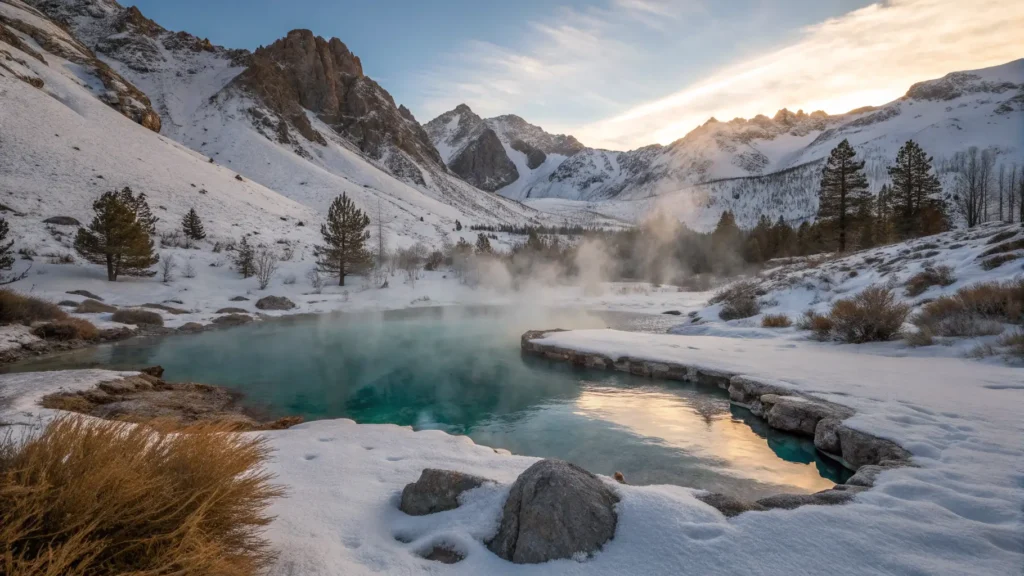
Mammoth Lakes in January might be the most underrated week you’ll ever put on a calendar.
Here’s the question I get asked constantly: “Isn’t January too cold? Too stormy? Too risky?”
Fair worries.
But here’s the thing most people miss.
The holiday crowds vanish after New Year’s, the snow keeps falling, and you’re left with a mountain that feels like it was built just for you.
I’ve been visiting Mammoth in January for years, and I’m going to give you the honest picture.
The good, the freezing, and the “why is there a chain control sign flashing at me” bits.
Grab a coffee.
Let’s get into it.
Why January Is Mammoth’s Best-Kept Secret (And Who Should Actually Go)
January sits smack in the middle of winter in Mammoth Lakes.
Christmas chaos? Gone.
Spring break madness? Weeks away.
What’s left is what many regulars call the quietest month on the slopes.
The town still has a pulse, mind you.
Restaurants are open, weekends get lively, and there’s a happy buzz around the village.
But those brutal 45-minute lift queues from Boxing Day? They evaporate.
So who should book a January trip?
- Skiers and snowboarders chasing deep snowpack, fresh powder, and short lift lines
- Winter sports lovers who don’t mind proper cold and the odd storm
- Value hunters who’d rather have quiet slopes than mild weather
Who shouldn’t?
Anyone who wilts below 5°C or panics at the sight of a snowflake on a windscreen.
Key takeaway:
January trades comfort for quality. If you can handle the cold, you get the mountain at its best with a fraction of the crowds.
The January Weather: What “Really Cold” Actually Means Here
Let’s talk numbers, because “it’s cold” is useless without context.
Typical January temperatures in Mammoth Lakes:
- Average highs: around 37–38°F (3°C)
- Average lows: around 20°F (-7°C), with some datasets showing dips to -9°C (16°F)
- Record extremes: highs up to 54°F (12°C) and lows down to a frankly rude -22°F (-30°C)
Add in average winds of about 5 mph and you get proper wind chill on exposed ridgelines.
Visitors consistently describe it as “really cold and breezy”, and they’re not wrong.
Now, the snow — the reason you’re actually going.
January is one of the snowiest and wettest months of the year in Mammoth.
Expect roughly 70–130 mm of precipitation falling over 4–8 days, almost all of it as snow at town elevation.
That works out to around six snowy days per month, each one topping up an already deep base.
That combination matters.
Deep snowpack underneath, fresh powder on top.
It’s the exact recipe serious skiers dream about.
One thing that surprises first-timers: the sunshine.
Despite the storms, Mammoth averages around 7 hours of bright sunshine per day in January, out of roughly 9.5–10 hours of daylight.
Sunrise lands around 7:10 AM, sunset near 5:00 PM.
And here’s a mistake I made on my very first January trip that I’ll never repeat.
I skipped sunscreen because, well, it was winter.
By day two, I had a goggle tan so severe my colleagues asked if I’d been welding without a mask.
Snow reflects UV like a mirror at altitude, and even a moderate UV index will cook you.
Learn from my raccoon face: pack sunscreen and proper sunglasses.
Key takeaway:
Cold enough to demand real winter kit, snowy enough to deliver world-class conditions, and sunny enough to burn you if you’re careless.
Getting There Without Drama: Roads, Chains, and the US-395 Reality Check
Here’s where January trips succeed or fail: the journey in.
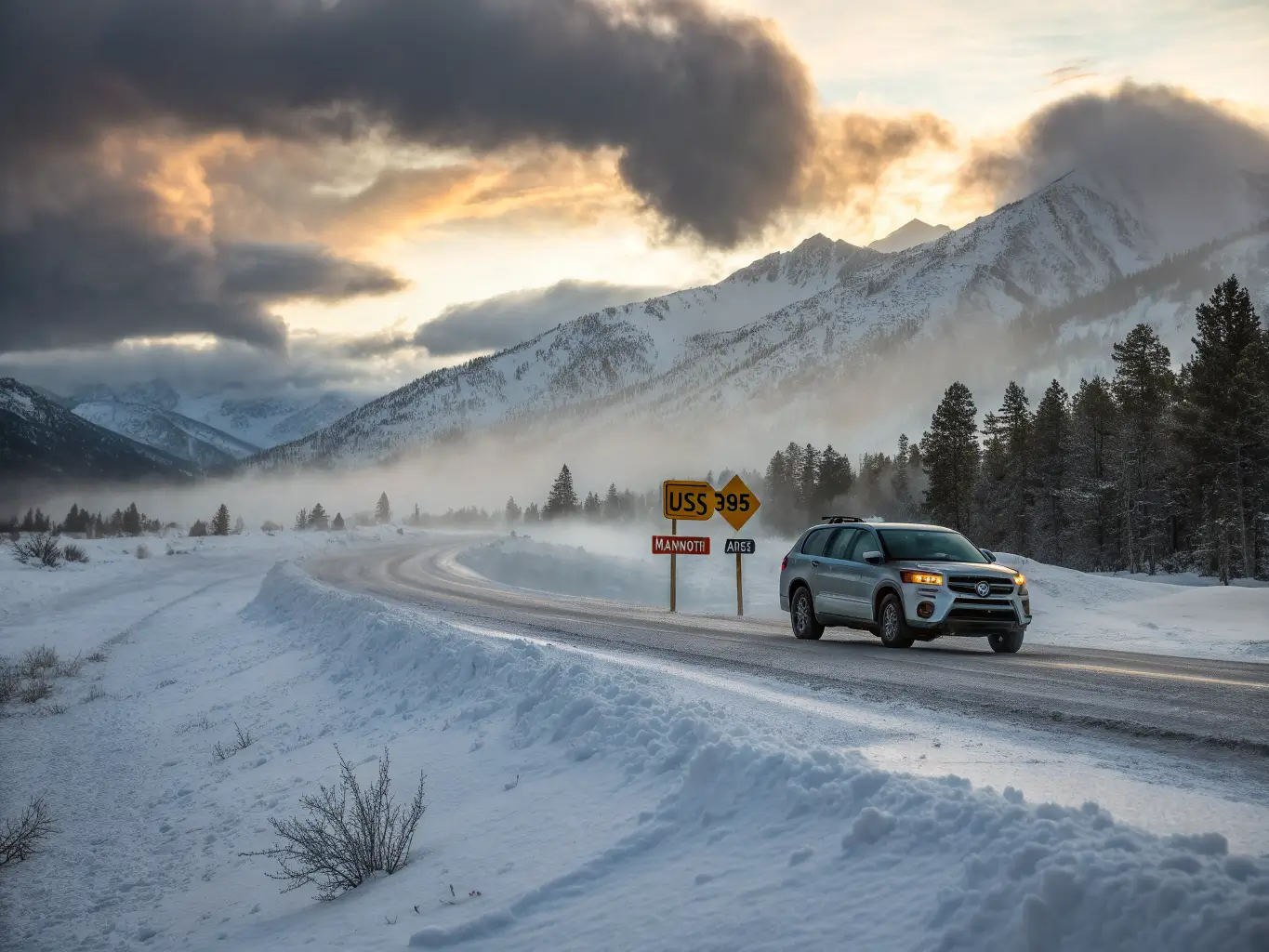
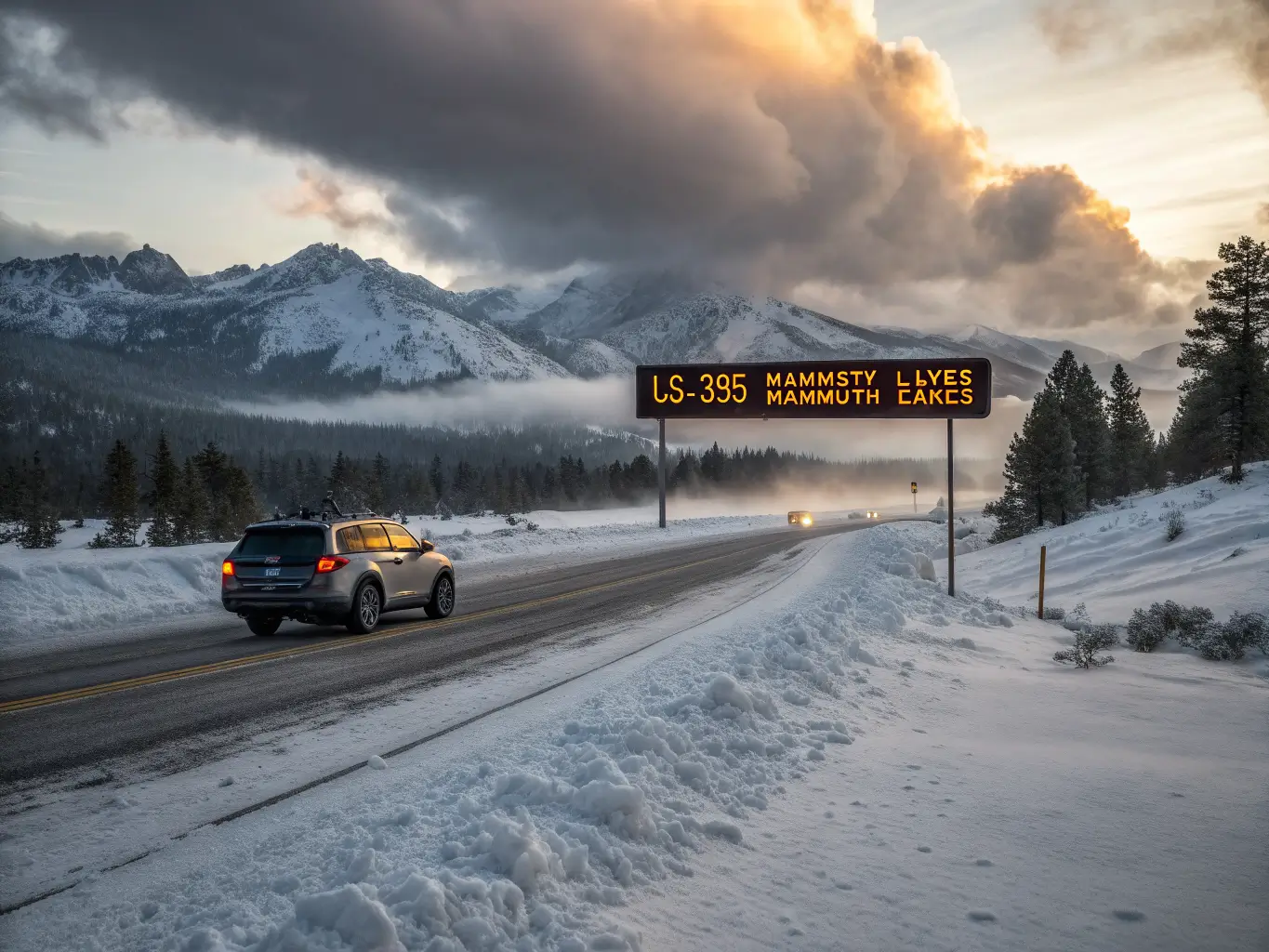
Most people drive up US-395 through the Eastern Sierra, and on a clear day it’s one of the most beautiful drives in America.
During a storm?
Different story entirely.
Roads turn icy or snow-covered fast, and conditions can flip within an hour.
Non-negotiables for January driving:
- Carry snow chains — they’re often legally required during chain controls, even if you never use them
- Check road conditions and forecasts before you leave, not when you arrive
- Pack an emergency kit: blankets, food, water, torch, and basic tools
- Keep your fuel tank topped up — the stretches between towns are long and cold
Flying instead?
Mammoth Yosemite Airport operates in winter, but storms can delay or cancel flights, so check your status obsessively.
One more thing people don’t expect: many roads to lakes, hot springs, and trailheads are simply closed or unplowed in January.
That’s not a dealbreaker — it just means some spots require a short hike or snowshoe to reach.
How long should you stay?
Three days minimum, honestly.
Four to six is the sweet spot: a few ski days, a rest day, and time for hot springs or snowshoeing.
And timing within the month matters.
Early January still carries New Year’s crowds and prices.
Mid-to-late January? Quieter slopes, easier bookings, same brilliant snow.
Key takeaway:
The drive is the risk. Prepare properly, travel outside storm peaks, and aim for mid-January if you want the mountain to yourself.
The Skiing: Why Serious Riders Circle January on Their Calendars
Let’s be blunt.
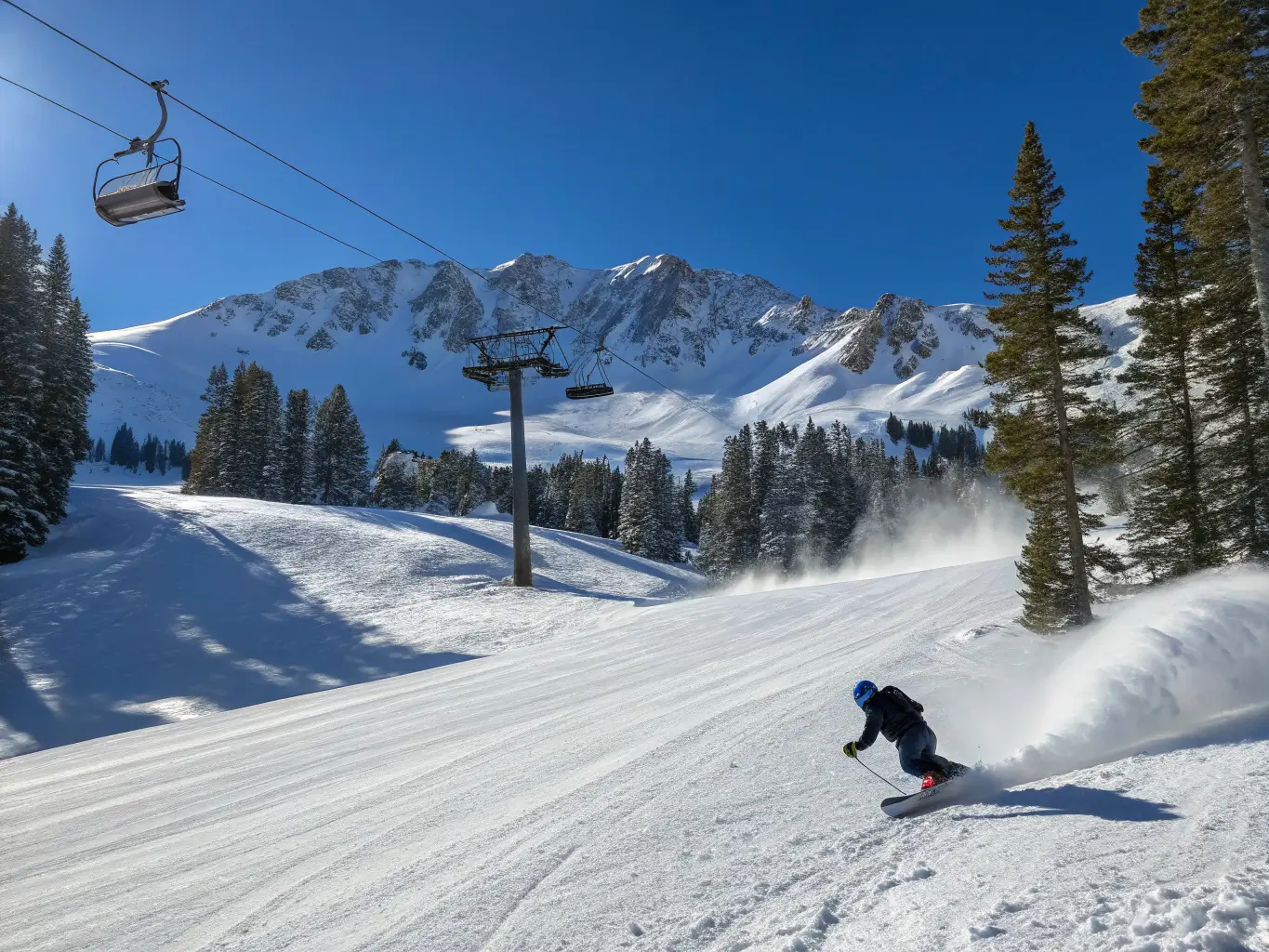
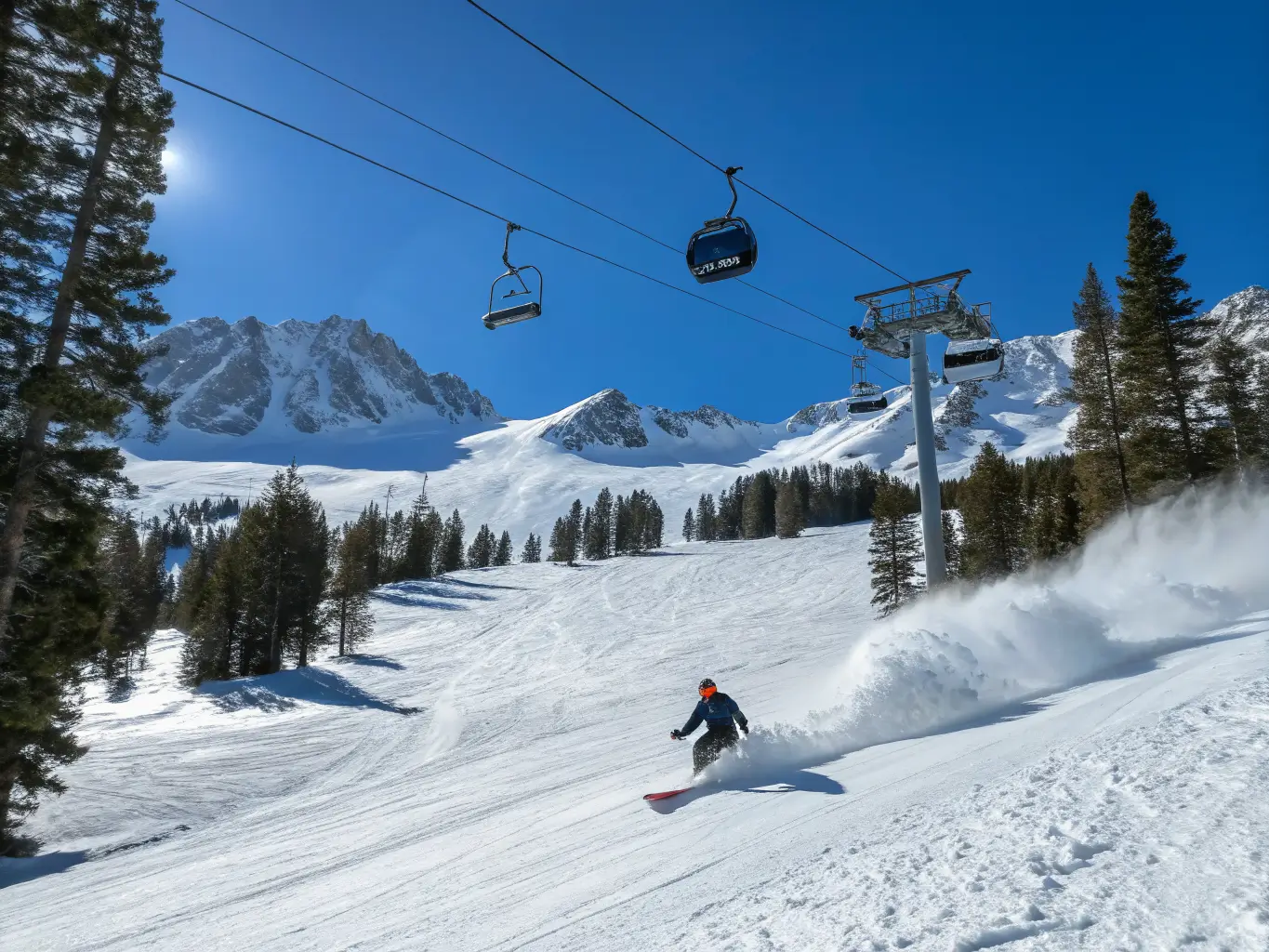
If skiing is your priority, January is arguably the best month of the year at Mammoth Mountain.
Why?
Because you get two things at once that rarely coexist:
- A deep, well-developed base built up through November and December
- Regular fresh powder dumps refreshing the surface all month
Add the post-holiday quiet, and you get uninterrupted top-to-bottom runs with barely a queue in sight outside of weekends.
Is it perfect?
No.
Active storms bring flat light, wind, and the occasional lift closure for weather or avalanche control work.
Some of my best-ever powder days came with an hour of standing around waiting for the upper mountain to open.
Worth it every time.
Storm-day survival tips:
- Good goggles with low-light lenses are worth their weight in gold
- A face covering turns miserable wind into a non-issue
- Stick to treed runs when visibility drops — the contrast saves your legs and your nerves
Key takeaway:
January delivers the deepest, freshest, quietest skiing of the season — as long as you’re flexible when storms roll through.
Beyond the Slopes: What Everyone Else Is Missing
Think Mammoth in January is only for skiers?
That assumption is costing people some of the best experiences in the Eastern Sierra.
Start with snowshoeing and cross-country skiing at the Tamarack Cross-Country Ski Center near Tamarack Lodge — a local favourite with groomed trails winding through silent, snow-loaded forest.
Then there’s the sledging scene.
Woolly’s Tube Park offers proper tubing with rentals included, while free snow play spots like Sherwins Trailhead, Shady Rest Park, and the Mammoth Scenic Loop keep families happy without spending a penny.
Fancy something warmer?
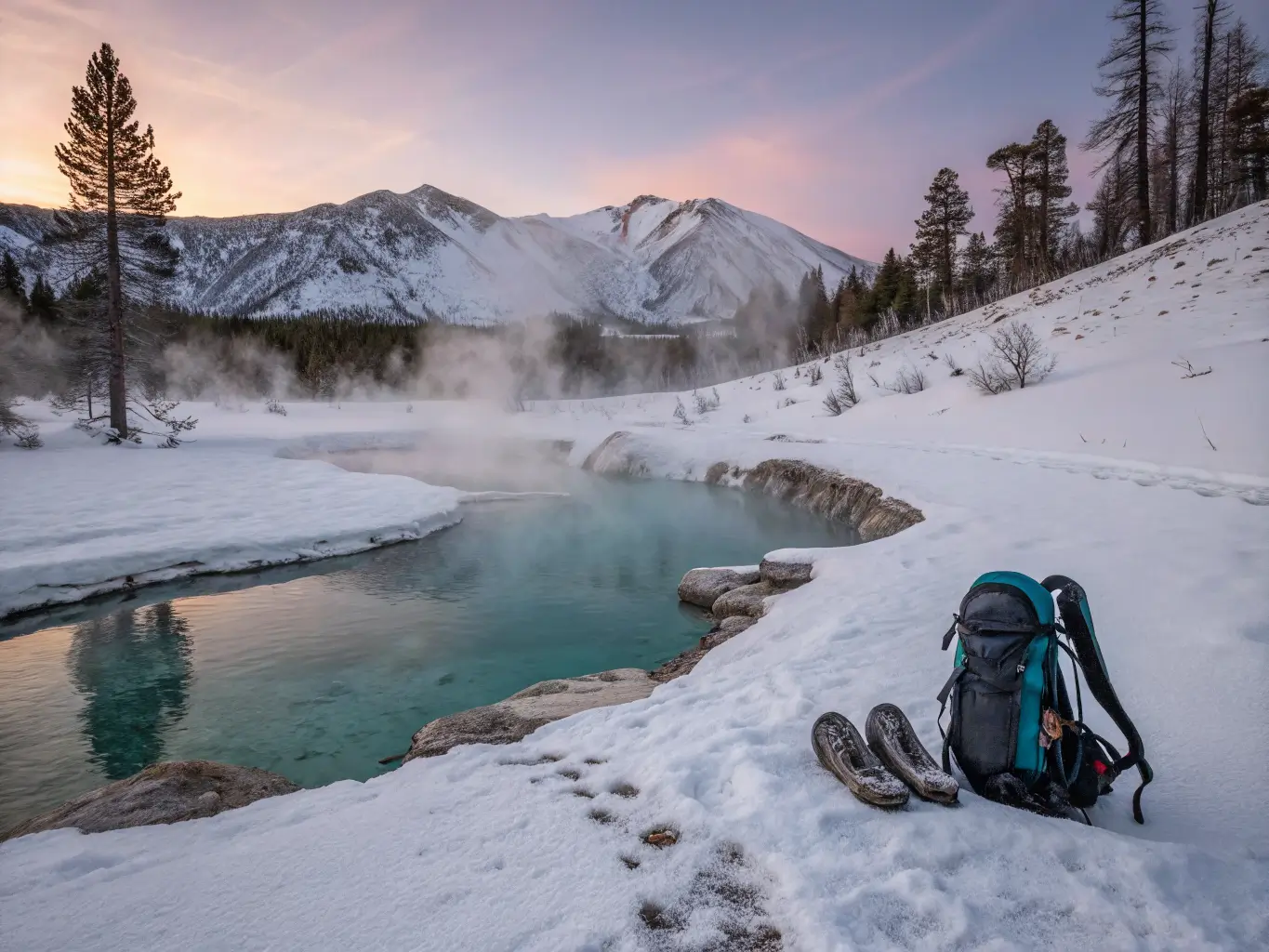
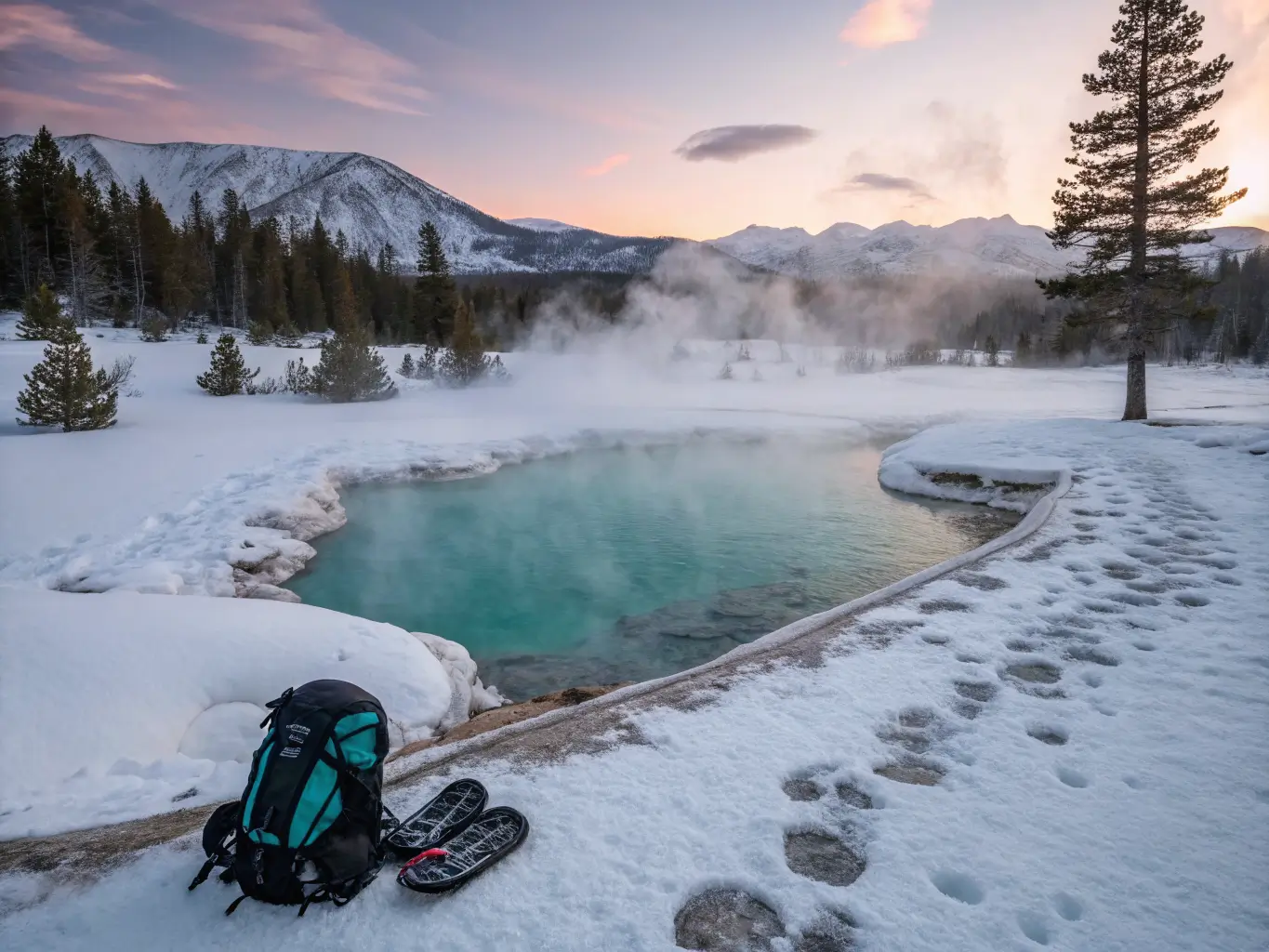
The region’s natural hot springs are magical in January — steam rising off the water while snow falls around you.
Just know the access roads are usually closed, so you’ll snowshoe roughly a mile each way along flat, snowy trails to earn your soak.
Which, if you ask me, makes the water feel twice as good when you get there.
And that’s before we’ve even touched on the winter fly fishing, the Panorama Gondola views, or the trails around Panorama Dome and Inyo Craters — because there’s a whole other layer to this town that most visitors never scratch.
For more on visiting Mammoth at other times of year, see these guides: Mammoth Lakes in November and Mammoth Lakes in August.
Let’s start with the gondola, because it deserves its own moment.
The Panorama Gondola runs scenic rides to the summit of Mammoth Mountain, generally operating from about 8:30 AM to 3:30 PM, with the last scenic-only ride around 3:15.
You don’t need to ski a single run to earn that view.
From the top, the entire Eastern Sierra spreads out below you — white peaks, frozen basins, and on a clear day, visibility that seems to stretch forever.
Bring your camera.
Sunrise and sunset light over snow-covered lakes like June Lake, Grant Lake, Crowley Lake, and Twin Lakes produces the kind of photos people assume are edited.
They’re not.
That’s just January doing its thing.
Key takeaway:
Non-skiers have a full itinerary here — snowshoeing, tubing, hot springs, gondola views, and fishing — most of it uncrowded and some of it completely free.
—
Lodging, Crowds, and the Honest Pros-and-Cons List
Here’s a pattern I’ve watched repeat every single year.
The first week of January? Still busy, still festive, still priced accordingly.
Then something shifts.
The holiday visitors go home, and lodging demand drops noticeably.
Availability opens up, the village calms down, and suddenly you can walk into restaurants that needed reservations a week earlier.
But — and this catches people out — long holiday weekends like MLK weekend bring the crowds roaring back.
Capacity gets stretched, and last-minute bookings become painful.
If your dates land on a holiday weekend, book early. No exceptions.
Now, the honest scorecard.
Why January wins:
- Abundant snowfall and deep snowpack — genuinely the best conditions of the season
- Quiet slopes after the holiday exodus
- Full winter ambiance: consistent snow coverage, crisp air, and that ~82% humidity giving everything a proper alpine feel
Why January might not be for you:
- Very cold temperatures — some travelers simply won’t enjoy 20°F mornings
- Snowstorms disrupt travel, close roads, and occasionally shut lifts
- Closed access roads mean extra effort (hiking, snowshoeing) to reach hot springs and certain trailheads
Notice something about that cons list?
Every single downside is manageable with preparation.
The cold has a clothing solution. The storms have a timing solution. The closed roads have a snowshoe solution.
Key takeaway:
January’s drawbacks punish the unprepared and barely touch the prepared. Which camp you fall into is entirely your choice.
—
The Gear and Safety Checklist That Separates Great Trips From Miserable Ones
Let me tell you about the coldest I’ve ever been in Mammoth.
Second trip, mid-January, and I decided a heavy cotton hoodie under a ski jacket was “basically layering.”
By 10 AM I was soaked in sweat from the inside, frozen from the outside, and sitting in the lodge watching everyone else enjoy eight inches of fresh powder.
Cotton is a betrayal. Never again.
The layering system that actually works:
- Base layer: moisture-wicking thermals (synthetic or merino — never cotton)
- Mid layer: insulating fleece or down
- Outer layer: a proper waterproof shell
- Extremities: warm gloves or mittens, winter hat, and thick socks
For your feet and beyond:
- Waterproof, insulated boots for town and snow play
- Snowshoes or traction spikes for icy trails and hot spring approaches
- Helmet, goggles, and face covering for the mountain — rentals are widely available locally if you don’t own gear
Then there’s the safety side, which nobody loves talking about but everybody should.
On the road:
- Check weather forecasts, road conditions, and chain requirements before every drive
- Slow down on ice, and don’t drive through the peak of a major storm if you can wait it out
- Keep that emergency kit — blankets, food, water, flashlight, first-aid — in the car at all times
On the mountain and trails:
- Watch for avalanche advisories — warnings do get issued for backcountry zones in winter
- Stay on marked trails and within resort boundaries unless you have genuine backcountry training and equipment
- Tell someone your route and expected return time before heading anywhere remote
None of this is dramatic.
It’s just the difference between an adventure and an incident report.
Key takeaway:
Layer properly, chain up, carry a kit, respect the avalanche forecasts. Boring advice that makes brilliant trips possible.
—
Your January Questions, Answered Straight
Let’s rapid-fire through the questions I hear most.
“Is January actually a good time to visit Mammoth Lakes?”
Yes — if winter sports are your reason for going.
Abundant snow, cold temps, quiet slopes.
If you’re hoping for mild hiking weather, come back in summer.
“How many days do I need?”
Three days minimum to hit the essentials without rushing.
Four to six is ideal: ski days, a rest day, and time for hot springs or snowshoeing.
“Do I really need snow chains?”
Really.
They’re frequently required during chain controls, and conditions change fast enough that “the forecast looked fine” won’t save you.
Bring them even if you never touch them.
“What should I wear?”
Layers with a waterproof shell, thermal base layers, gloves, hat, insulated boots.
Plus sunglasses and sunscreen — the snow-reflected sun is stronger than you think.
“Is it safe to hike or visit hot springs in January?”
Yes, with the right approach.
Expect to snowshoe or hike roughly a mile on snowy but flat trails to reach most hot springs.
Bring traction devices, check the weather, and mind the short daylight — sunset comes around 5 PM.
Key takeaway:
Every common January concern has a simple answer: prepare for cold, carry chains, allow enough days, and start hikes early.
—
Where January in Mammoth Is Heading
Worth a quick look forward before we wrap up.
Long-term climate variability is a real conversation in every ski town, and Mammoth is no exception.
Snowfall timing and amounts may shift over the years — but the current data still shows January as reliably wintry, with significant snow arriving in most seasons.
The practical response?
Do what savvy travelers increasingly do: check real-time snow reports and forecasts in the final days before your trip, and stay flexible on exact dates when possible.
Meanwhile, the destination itself keeps evolving.
Guided snowshoe tours, winter photography workshops, and wellness-focused trips built around hot springs and spas are all growing — which means January is becoming less of a “skiers only” month every year.
And ongoing improvements to winter road maintenance, shuttle services, and airport reliability should gradually take some of the sting out of getting here.
Key takeaway:
January’s snow remains dependable, the activity menu keeps expanding, and access keeps getting easier. The secret won’t stay secret forever.
—
The Bottom Line: Go Before Everyone Else Figures It Out
Let’s bring it home.
January in Mammoth Lakes is a trade.
You give up warmth, easy driving, and predictability.
You get back the deepest snowpack of the season, fresh powder on tap, empty lift lines, steaming hot springs surrounded by snow, and a mountain town breathing easy after the holiday rush.
For prepared travelers, that trade is a steal.
So here’s your move.
Pick a mid-to-late January window, book three to six nights, throw chains and an emergency kit in the car, pack real layers, and check the forecast the week before you leave.
Then go enjoy the quietest, snowiest, most underrated month the Eastern Sierra has to offer.
Because once you’ve had a January powder day with no lift line in sight, every other ski trip gets measured against it.
That’s the magic of Mammoth Lakes in January.
Further reading and related resources
Planning tips and guides:
- Mammoth Lakes in January guide — a focused visitor guide for January travel
- winter activities in Mammoth Lakes beyond skiing — ideas for non-ski days and local experiences
More regional reads: