Placita Olvera, the block-long stretch better known as Olvera Street, sits at the northeast corner of downtown LA and is the closest thing the city has to a founding site: Los Angeles was founded as a Spanish pueblo here in 1781. Today it is a narrow, shaded pedestrian street of Mexican food stalls, craft vendors, and a cluster of genuinely old buildings, wrapped by larger museums (CAAM, the Chinese American Museum, LA Plaza de Cultura y Artes) and across the road from Union Station. Go for the history and the tamales, not for shopping you can’t get elsewhere.
The buildings and museums
The historic core is small and walkable. The anchors:
- Avila Adobe (1818) – the oldest house in LA, a one-story adobe with period furnishings, free to walk through.
- Pico House (1869) – the grand hotel of its day, now part of the El Pueblo monument; the lobby is open.
- Sepulveda House (1887) – a Victorian with exhibits on old LA; the Visitor Center is here.
- Old Plaza Firehouse (1884) – the city’s first firehouse, now a small museum.
- America Tropical Interpretive Center – the Siqueiros mural on the Sepulveda Building wall, with context on the artist and the piece.
- LA Plaza de Cultura y Artes – a county museum next door covering Mexican-American LA history; free general admission.
- Chinese American Museum and the Italian American Museum of LA – both in the immediate block, if you want the broader immigration story.
All of these are within a two-block radius, so you can see the core in an hour and add the bigger museums if time allows.

Shopping and eating
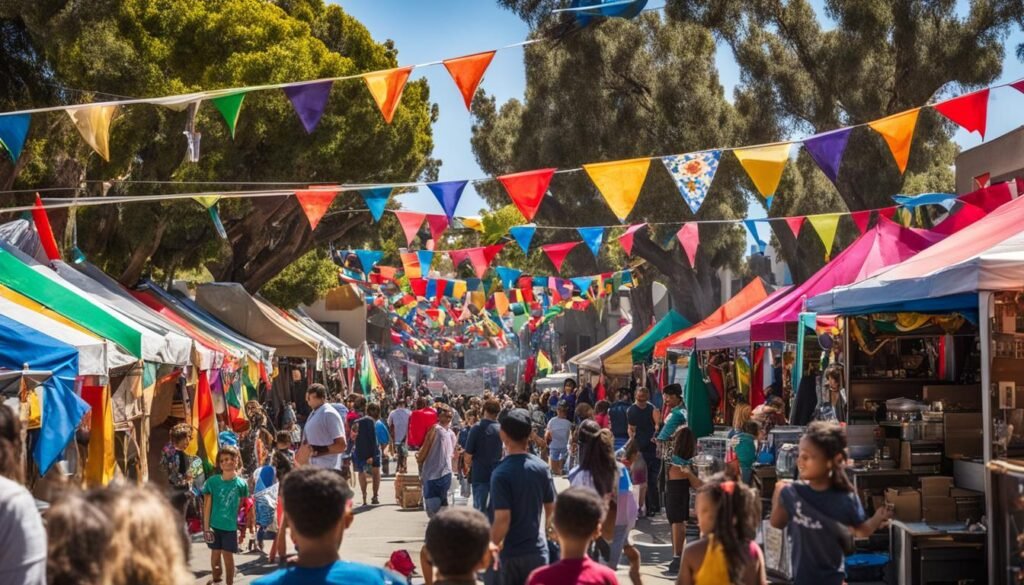
The street is a Mexican marketplace: papel picado, leather goods, ceramics, devotional art, and a wall of sugar skulls year-round. Prices are tourist-level but the food is the real draw, the tamale and taco stands and a few sit-down spots (the historic restaurants at the base, like La Luz del Dia for breakfast) serve straightforward Mexican food at fair prices. Go hungry, buy a paper cone of peanuts or a taco, and keep expectations for the “crafts” modest.
Events
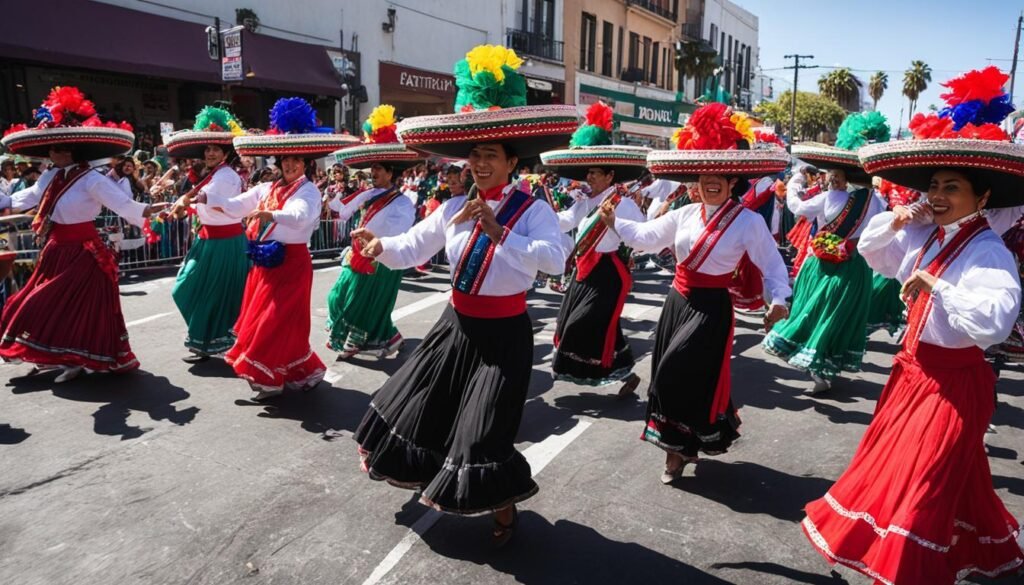
- Dia de los Muertos (late Oct-early Nov): the big one, altars and processions along the street and at the neighboring cemeteries.
- Mexican Independence Day (Sept 15-16): music and a civic ceremony at the plaza.
- Las Posadas (December): nightly processions in the week before Christmas.
- Mariachi Plaza, just east in Boyle Heights, is the live-music extension if you want the bands.

Pair it with Union Station
Union Station (1939) is directly across Alameda Street and worth the walk over: the restored waiting room, the old ticket concourse, and the tiled patios. Combined, Olvera Street and Union Station make a half-day of old-LA history with zero admission cost (museum interiors vary).
Planning tips
- Parking. The lot at the north end of Olvera Street (off Cesar Chavez) is the easy option; the area is also a Metro hub (Union Station, and the A/E lines).
- Hours. The street is open daily; the museums keep weekday-ish hours and some close Mondays/Tuesdays, so check before you go.
- Crowds. Weekday mornings are calm; weekends and any festival day are packed.
- Combine. Chinatown is a few blocks north, and the DTLA historic core (Broad, MOCA, Grand Central Market) is a short ride south.
Final thoughts
Olvera Street is the quickest history lesson in LA: the oldest building in the city, the founding plaza, and a working Mexican market, all free to wander. Spend an hour on the street, add LA Plaza or CAAM if museums are your thing, and cross to Union Station while you are there. It is a tourist stop, but the buildings are real and the food is honest, which is more than you can say for most downtown attractions. Go on a weekday morning and you will have the place mostly to yourself.