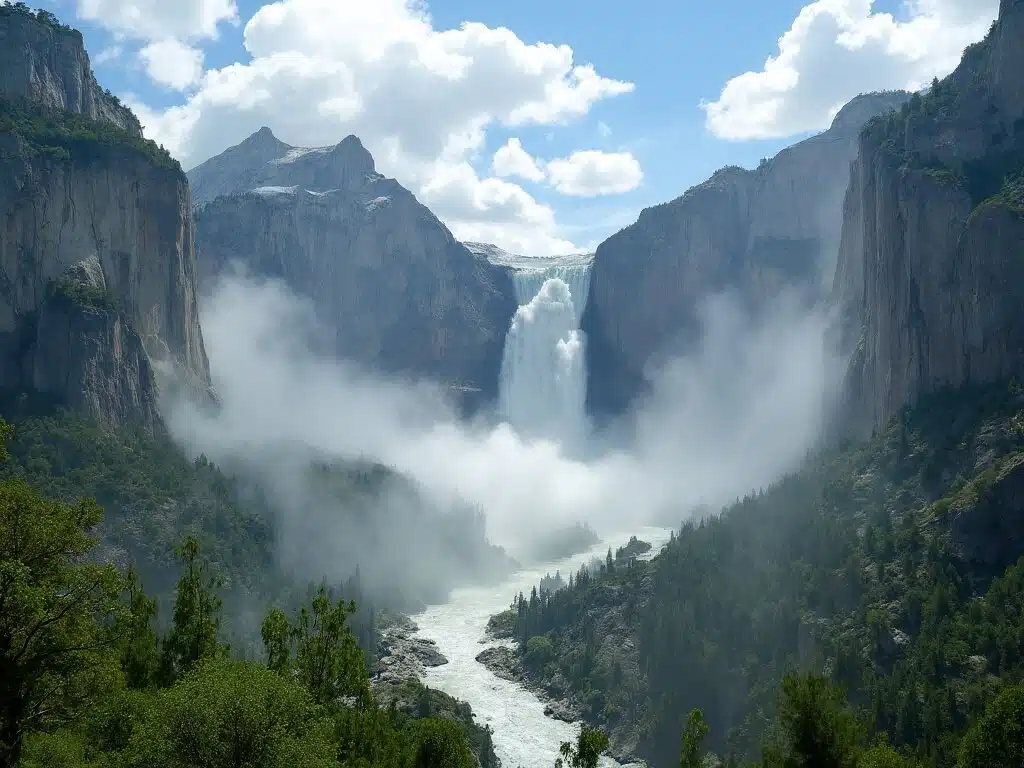
I have walked the Yosemite valley in April as the snow starts to melt and the first falls swell. The meadows are still patchy with white, and the mornings are cold enough that I pack gloves even for a short walk.
You’re probably wondering: will it be too cold? Will trails be open? Will you need snowshoes or sandals?
Fair questions.
I had every single one of them before my first April trip back in 2019.
Let me walk you through exactly what to expect so you can plan with confidence.
April Weather in Yosemite: Warmer Than You Think, Colder Than You Hope
Here’s the honest truth about Yosemite Valley weather in April: it’s a mixed bag.
Average highs sit between 50–60°F (11–16°C).
Lows dip to around 29°F (-1°C).
That means mornings feel properly wintry, but afternoons can be genuinely lovely.
The thing that catches most people off guard isn’t the temperature itself.
It’s the wind.
Average wind speeds hover around 10.9 mph, which doesn’t sound like much on paper.
But combine a light breeze with 35°F air at 7 AM and you’ll feel it in your bones.
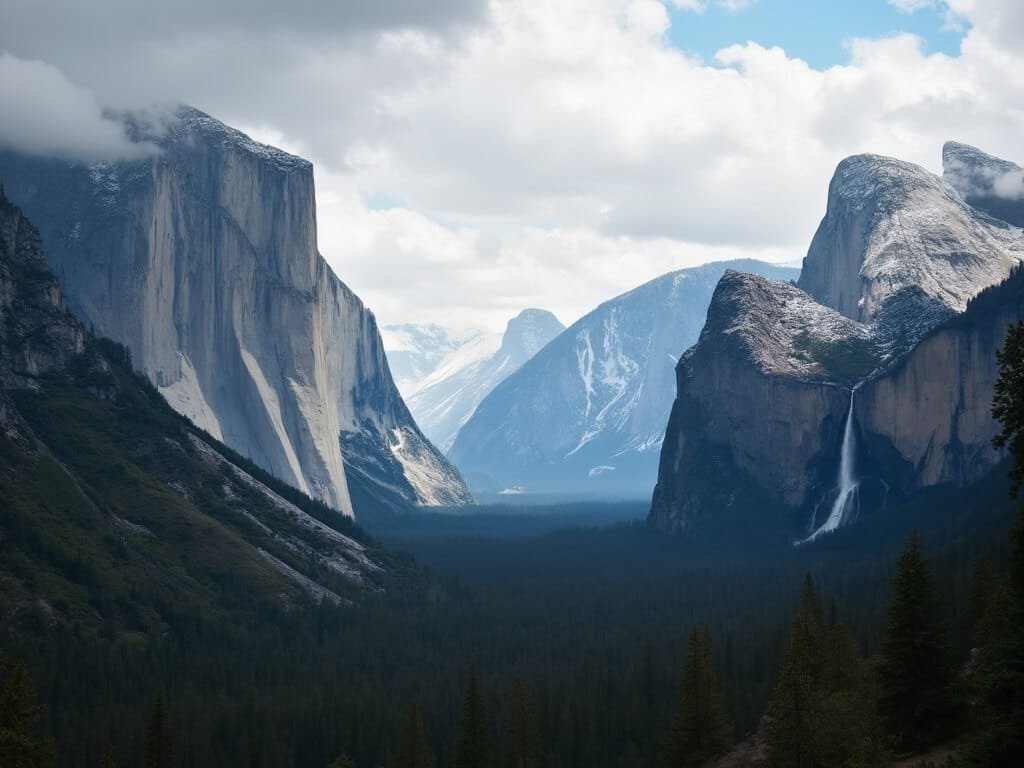
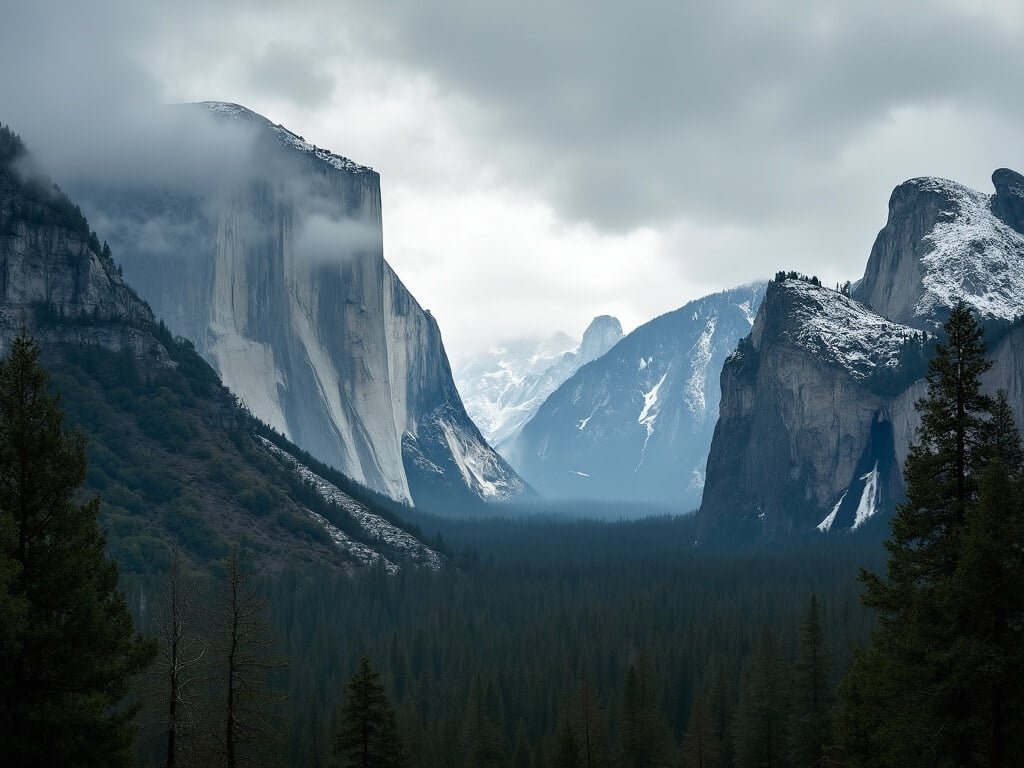
I remember standing at Tunnel View on an April morning, coffee in hand, absolutely convinced my fingers would never work again.
By 2 PM that same day, I was hiking in a t-shirt.
April in Yosemite is basically four seasons crammed into one day.
The key numbers you need to know:
- Average high: 52°F (11°C)
- Average low: 29°F (-1°C)
- Humidity: 76%
- Wind: 10.9 mph average
- Cloud cover: 53%
Takeaway:
Dress in layers. Seriously. This isn’t optional advice — it’s survival strategy.
Will It Rain? The Real Story Behind April Precipitation in Yosemite
You’ve got roughly a 28% chance of rain or snow on any given April day.
That translates to about 5 rainy days across the whole month.
Not bad odds, right?
But here’s what the statistics don’t tell you.
Early April can still deliver proper snowstorms.
I’m talking below-freezing temperatures, heavy snowfall, and roads temporarily closing.
By late April, those storms become much rarer.
When it does rain, expect around 0.45 inches (11.4 mm) per event.
Nothing catastrophic.
More of a steady drizzle that makes the granite walls glisten and the waterfalls roar even louder.
The smart move?
Pack waterproof gear regardless of the forecast.
Yosemite weather forecasts are suggestions at best.
Takeaway:
Rain is likely at some point during your visit, but it rarely ruins a trip — and it often makes the park more beautiful.
13 Hours of Daylight (and Why That Changes Everything)
Here’s something April has over every winter month: light.
Sunrise lands around 6:23 AM.
Sunset stretches to 7:32 PM.
That gives you roughly 13.2 hours of usable daylight.
For photographers, this is gold.
For hikers, it means longer days on the trail without headlamps.
For families, it means less pressure to rush between viewpoints.
Clear or partly cloudy skies stick around for about 12.8 hours per day, which means you’ll get plenty of blue-sky moments even on cloudier days.
Takeaway:
April daylight hours give you serious flexibility to explore without feeling rushed.
Yosemite’s April Waterfalls Will Absolutely Ruin Every Other Waterfall for You
This is the headline attraction.
Full stop.
Spring snowmelt turns Yosemite’s waterfalls into absolute monsters.
Yosemite Falls and Bridalveil Falls don’t just flow in April — they thunder.
The spray hits you from hundreds of metres away.
The sound is deafening in the best possible way.
Visit in August or September and some of these same falls are reduced to a trickle.
Some dry up completely.
April catches them at or near peak flow, and the difference is staggering.
If waterfalls are anywhere on your bucket list, this is the month.
Takeaway:
April waterfalls alone justify the trip. They’re that good.
Which Trails Are Actually Open in April? (Honest Answers Only)
This is where expectations need managing.
What’s open:
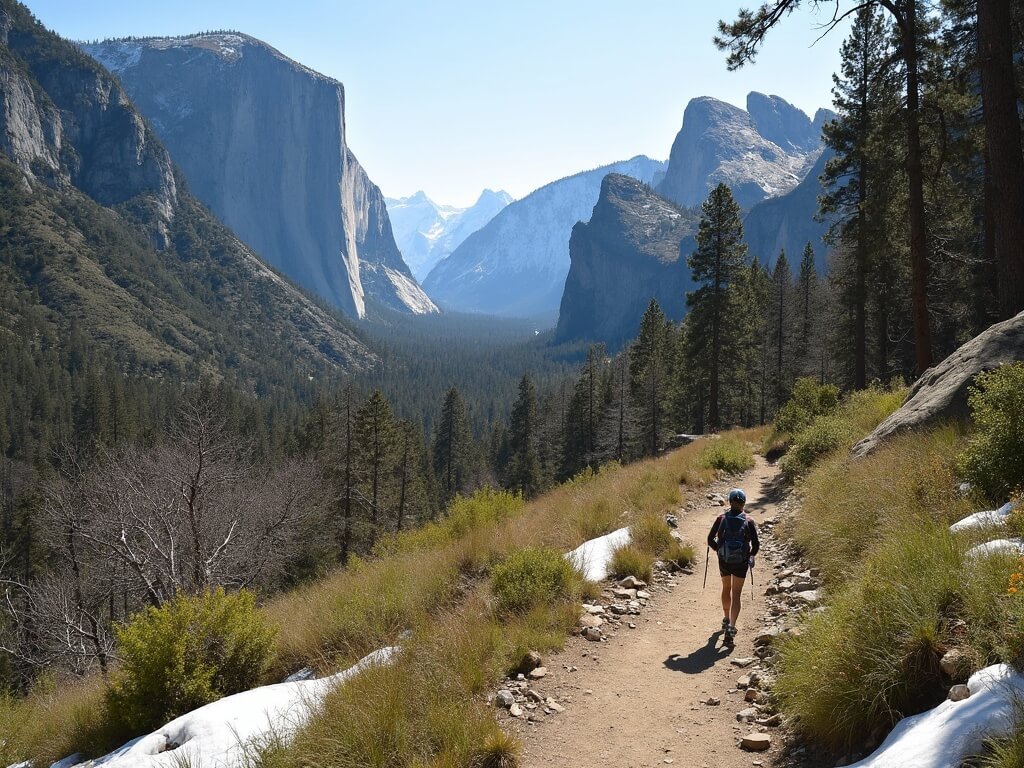
- Most lower valley trails
- Chilnualna Falls Trail at Wawona
- Wapama and Rancheria Falls trails at Hetch Hetchy
- Lower Mariposa Grove (usually mostly snow-free)
What’s not:
- Four Mile Trail to Glacier Point (closed early April, road typically opens late April)
- Upper Mariposa Grove (likely still snow-covered)
- Most high country trails (deep snowpack, largely inaccessible)
The valley floor offers plenty to keep you busy for days.
But if your heart is set on Glacier Point or Tioga Pass, you’ll need to time your visit for late April at the earliest — and even then, check conditions before you go.
The elevation differences across the park create wildly different experiences, and understanding those variations is just as important as knowing what to pack.
Related Internal Links
Learn more about seasonal differences and planning:
The Elevation Game: Why Yosemite Valley and the High Country Feel Like Different Planets
Most first-time April visitors make the same mistake.
They check the weather for “Yosemite” and assume it applies everywhere in the park.
It doesn’t.
Not even close.
Yosemite spans elevations from about 2,000 feet to over 13,000 feet.
That range creates microclimates so different you’d swear you crossed state lines.
Yosemite Valley (4,000 ft):
- Highs in the 50s–60s°F
- Spring wildflowers starting to pop
- Rain showers possible, snow unlikely by mid-April
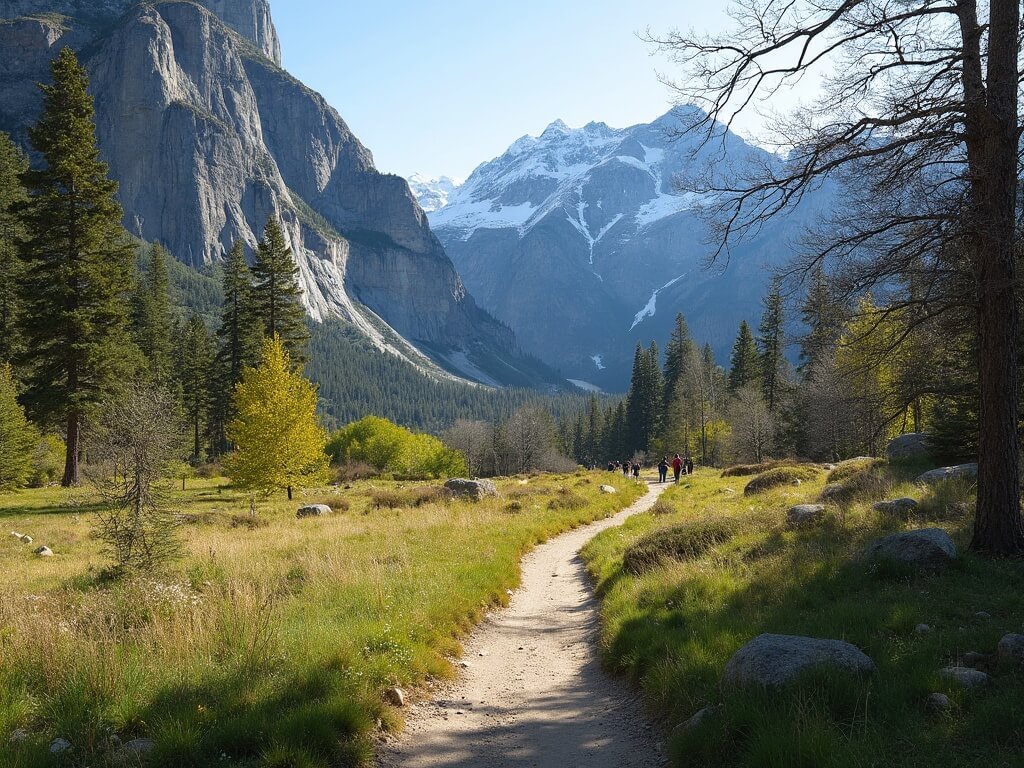
- Green meadows, flowing rivers, comfortable hiking conditions
Oakhurst and Gateway Towns (2,500–3,500 ft):
- Highs reaching the 60s–70s°F
- Genuinely pleasant spring weather
- Great forbasecamp if you want warmer evenings
- More restaurant and lodging options than inside the park
High Country — Tuolumne Meadows and Above (8,600+ ft):
- Still buried under deep snowpack
- Tioga Road closed (typically doesn’t open until late May or June)
- Trails completely inaccessible without backcountry snow gear
- Not part of your April itinerary unless you’re an experienced winter mountaineer
I learned this the hard way in 2019.
Drove in through the Arch Rock entrance wearing a fleece, feeling great.
Decided to explore the road toward Crane Flat and gained about 2,000 feet of elevation in 30 minutes.
Suddenly I was looking at snow piled several feet deep on both sides of the road, temperatures had dropped 15 degrees, and my fleece felt like tissue paper.
The park ranger at the Big Oak Flat entrance station told me something I’ve never forgotten: “People plan for Yosemite Valley weather and then act surprised when the rest of the park is still winter.” She wasn’t wrong.
Takeaway: Plan your April trip around Yosemite Valley and the lower elevations. The high country will still be there in July.
Crowds in April vs. Summer: The Numbers Don’t Lie
Here’s the real reason April might be Yosemite’s best-kept secret.
Yosemite hosted over 3.8 million visitors in 2023, according to NPS statistics.
The vast majority of those visits cluster between June and September.
July alone typically sees 600,000+ visitors.
April?
Visitor counts drop to roughly 300,000–350,000 for the entire month.
That’s nearly half the peak summer traffic.
What does that actually mean for your experience?
- Parking spots exist. In summer, the Valley parking situation borders on dystopian. In April, you’ll find spots at popular trailheads before 9 AM without a problem.
- Trails feel spacious. The Mist Trail in July is basically a conga line. In April, you’ll share it with a fraction of those hikers.
- Lodging is more available and cheaper. Peak summer rates at Yosemite Valley Lodge can exceed $350/night. April rates often drop 20–30%.
- No reservation system stress. Summer day-use reservations have been required in recent years. April falls outside that window, meaning you can drive in whenever you want.
The trade-off is obvious: fewer amenities are open, some roads are closed, and the weather is less predictable.
But if you’re the type of person who’d rather see Yosemite Falls with 50 people instead of 500, that trade-off isn’t even a trade-off.
It’s a gift.
Takeaway: April gives you 80% of Yosemite’s magic with 50% of the crowds. That math works every time.
What to Pack for April in Yosemite (The Actual List, Not the Generic One)
Every packing guide tells you to “bring layers.”
That’s not wrong, but it’s not helpful either.
Here’s what you actually need, broken down by why it matters.
Non-negotiables:
- Warm base layer (merino wool or synthetic) — mornings at 29°F demand real insulation against your skin
- Insulated mid-layer (fleece or light down jacket) — your primary warmth source for early hikes and evening campfires
- Waterproof shell jacket — not water-resistant, waterproof; April drizzle soaks through cheap rain gear fast
- Waterproof hiking boots — trails near waterfalls are perpetually wet, and snowmelt turns valley paths muddy
- Warm hat and gloves — you’ll feel ridiculous packing them until that first 6 AM sunrise session
- Sunglasses with UV protection — snow glare at higher elevations is brutal, and even valley light gets intense by midday
- SPF 30+ sunscreen — elevation plus spring sun equals sunburn you didn’t see coming
Often overlooked:
- Gaiters — if you’re hiking anywhere near lingering snow, these keep your ankles dry and warm
- Trekking poles — wet granite and icy patches on morning trails make these more safety equipment than luxury
- Headlamp — sunset is at 7:32 PM, but shadowed valley trails get dark 45 minutes before that
- Dry bag or waterproof stuff sack — protects electronics and spare clothes if weather turns suddenly
What you can leave home:
- Shorts (unless you run extremely warm; you might wear them for two hours in the afternoon)
- Sandals (save them for summer)
- Heavy winter parka (overkill for valley elevations; a layering system works better)
Takeaway: The layering system isn’t a cliché — it’s the only strategy that handles April’s 30-degree daily temperature swings without filling your pack with dead weight.
Camping vs. Lodging in April: Which One Actually Makes Sense?
This depends entirely on your cold tolerance and honesty about it.
Camping:
Several campgrounds open by April, including Upper Pines (reservation required) and occasionally Lower Pines.
Campsites run around $26–36/night — a fraction of lodge prices.
But here’s the reality check.
Overnight lows hit the upper 20s to low 30s.
That’s legitimately cold in a tent.
You’ll need a sleeping bag rated to at least 20°F and a quality sleeping pad with an R-value of 4 or higher.
Without those, you won’t sleep.
You’ll just lie there regretting your choices until sunrise.
If you have the gear and enjoy cold-weather camping, April nights in Yosemite Valley are genuinely magical.
Fewer campers, quieter mornings, and waking up to mist hanging over the Merced River is worth every shiver.
Lodging:
Yosemite Valley Lodge and The Ahwahnee (now officially The Majestic Yosemite Hotel) are open year-round.
Curry Village (Half Dome Village) has heated cabins and canvas tent cabins available, though canvas tent cabins share the same cold-night problem as camping — just with a cot instead of a sleeping pad.
Book early.
Even with lower April visitation, in-park lodging sells out weeks or months in advance because supply is extremely limited.
Gateway towns like El Portal, Mariposa, and Oakhurst offer more options at better prices.
El Portal puts you 30 minutes from the valley floor, which is close enough for early morning access without the in-park premium.
For more ideas about nearby spring destinations, consider Monterey in April or Big Sur in April for coastal alternatives, or Lake Tahoe in April if you’re chasing higher-elevation snow and lake views.
Takeaway: Camp if you have proper cold-weather gear and genuinely enjoy it. Lodge if you value warm mornings. Stay in gateway towns if you want the best balance of cost, comfort, and access.
Wildlife in April: What’s Moving and Where to Look
Spring triggers a burst of animal activity that summer visitors largely miss.
Black bears emerge from winter dens hungry and active.
April is one of the best months for bear sightings in the valley, particularly in meadow areas during early morning and late evening.
This also means bear safety protocols are critical — store all food in bear boxes, never leave anything scented in your car, and maintain distance if you spot one.
Mule deer graze openly in valley meadows.
Coyotes become more visible as they hunt in the greening fields.
Great gray owls — Yosemite’s most coveted bird sighting — are active in spring, particularly around Crane Flat and nearby meadows.
Birdwatchers should bring binoculars.
April migration brings warblers, flycatchers, and Steller’s jays into the valley in noticeable numbers.
Takeaway: April’s wildlife activity is a genuine bonus that most visitors don’t plan for but remember vividly afterward.
The Photography Advantage Most People Miss
Professional landscape photographers know something casual visitors don’t: April light in Yosemite is exceptional.
The sun angle in spring creates longer golden hours at both ends of the day.
Waterfalls at peak flow give you dramatic long-exposure opportunities.
Snow lingering on the valley rim adds contrast that disappears entirely by summer.
And those moody, partly cloudy skies at 53% average cloud cover?
They produce the kind of dynamic, dramatic images that flat blue summer skies simply cannot.
Best April photography spots:
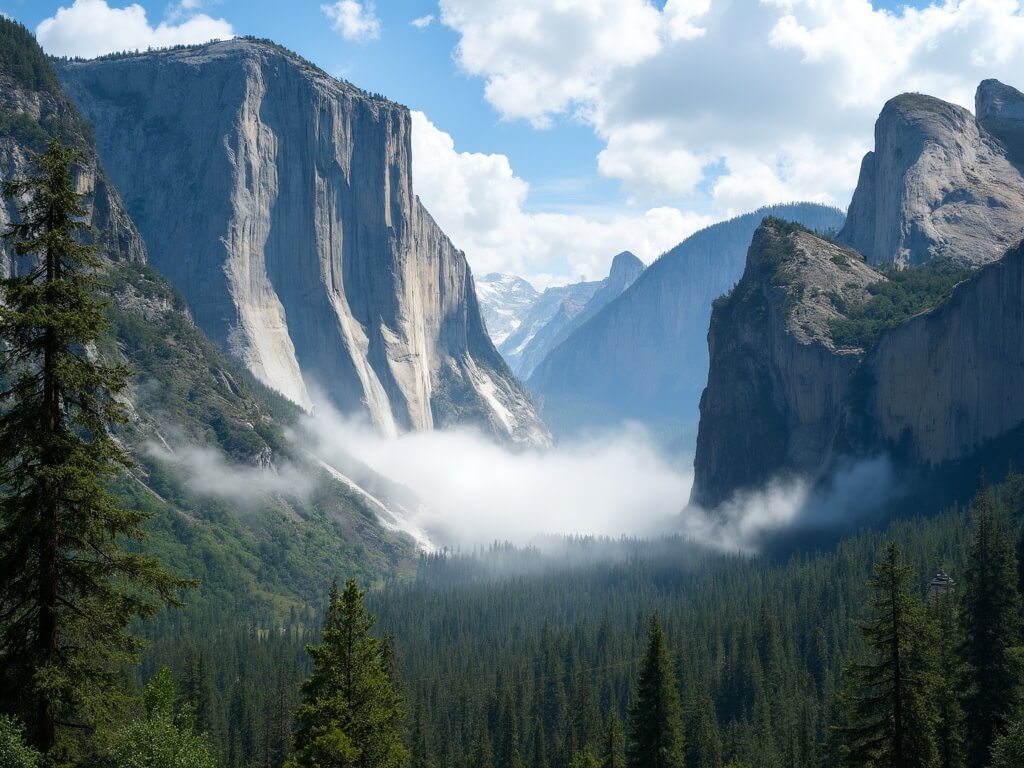
- Tunnel View at sunrise — mist rising from the valley with Bridalveil Falls thundering
- Swinging Bridge over the Merced River — reflections of El Capitan with spring green meadows
- Cook’s Meadow — wide valley views with Half Dome framed by emerging wildflowers
- Lower Yosemite Fall — get close enough to feel the spray and shoot with a wide-angle lens
- Valley View at sunset — last light on El Capitan with the Merced River in the foreground
Bring a polarizing filter to cut glare off wet granite, and a neutral density filter if you want silky waterfall shots in daylight.
Takeaway: April’s combination of peak water flow, lingering snow, spring color, and dramatic skies creates a photographer’s paradise that summer can’t match.
A Practical 3-Day April Itinerary (That Actually Works)
Planning an April trip requires accepting what’s open and making the most of it.
Here’s how I’d spend three days, based on real conditions and lessons from multiple spring visits.
Day 1: Valley Icons
- Arrive early, hit Tunnel View for your first jaw-drop moment
- Walk to Bridalveil Fall (short, flat trail — prepare to get wet from spray)
- Drive or shuttle to Lower Yosemite Fall loop trail (1 mile, easy, absolutely thundering in April)
- Afternoon at Cook’s Meadow or Sentinel Bridge for views and wildlife
- Sunset at Valley View on Northside Drive
Day 2: Hetch Hetchy or Wawona
- Morning drive to Hetch Hetchy (less crowded, stunning reservoir and waterfall trails)
- Hike to Wapama Falls (5 miles round trip, moderate, and the falls are explosive in spring)
- Alternatively, head to Wawona for the Chilnualna Falls Trail — a challenging but rewarding climb
- Evening back in the valley for stargazing (April skies can be remarkably clear)
Day 3: Deeper Valley Exploration
- Mirror Lake loop trail (5 miles, flat, best in spring when the lake actually has water)
- Explore the Lower Mariposa Grove of giant sequoias if road conditions allow
- If Glacier Point Road has opened (late April possibility), drive up for the single best viewpoint in the park
- Final sunset wherever calls to you — you’ll know your favorite spot by now
Takeaway: Three days gives you a thorough April experience without exhausting yourself or fighting weather windows.
The One Thing Nobody Tells You About April in Yosemite
Everything I’ve covered — the weather data, trail conditions, crowd levels, packing lists — matters.
But none of it captures the actual feeling of being there in spring.
There’s a quality to April in Yosemite that’s difficult to articulate.
The park feels like it’s waking up.
Waterfalls that were frozen or sluggish weeks earlier are now exploding with snowmelt.
Meadows are shifting from brown to electric green almost visibly.
The air smells like wet granite and pine needles and something else you can’t name but never forget.
Summer Yosemite is a spectacle.
April Yosemite is an experience.
The crowds are thinner, the waterfalls are bigger, the light is better, and the whole park has this restless, alive energy that peak season smooths over.
You’ll deal with cold mornings.
You might get rained on.
A trail or two will be closed that you wanted to hike.
None of that matters once you’re standing at the base of Yosemite Falls in April, spray soaking your jacket, the sound so loud you can feel it in your chest, and you realize you’re sharing the moment with a handful of people instead of a mob.
That’s the secret.
That’s why people who’ve done it keep coming back.
And that’s why Yosemite in April might just be the best version of America’s most iconic national park.
Useful links and further reading
Official planning and seasonal details: Yosemite National Park official April visitor guide.
More on why the timing is ideal for photography and quieter visits: Why visiting Yosemite in April is ideal.
Yosemite Village in April is wet and cool as spring arrives. Bring waterproof layers, and expect some high country roads to stay closed until the snow clears.