Yosemite Village in June sits at this incredible crossroads where everything can go brilliantly right or spectacularly wrong. You’ve got waterfalls thundering at peak flow, wildflowers carpeting the valley floor, and 14.8 hours of daylight to play with. But you’ve also got crowds that’ll make you question your life choices and temperatures that swing from freezing to scorching within the same day.
I’m going to walk you through exactly what June looks like in Yosemite Village, because the conventional wisdom you’ll find online misses half the story.
The Temperature Trap Everyone Falls Into
Here’s what caught me completely off guard on my first June visit: the temperature swings are absolutely mental.
The valley sits at 4,000 feet, and during the day you’re looking at highs around 81-82°F (27°C). Sounds lovely, right? Then the sun drops, and suddenly you’re shivering in 48-51°F (9-11°C) temperatures wondering where your jumper went.
The valley climate breaks down like this:
- Daytime highs: 81-82°F
- Night-time lows: 48-51°F
- Temperature swing: 30+ degrees in a single day
- Rain probability: Only 11% on any given day
- Average rainfall: 0.7 inches (basically nothing)
That Mediterranean climate everyone raves about? It’s real, but it comes with a catch. The Sierra sun at midday isn’t just warm—it’s searing. The dry mountain air makes it feel even more intense than the thermometer suggests.
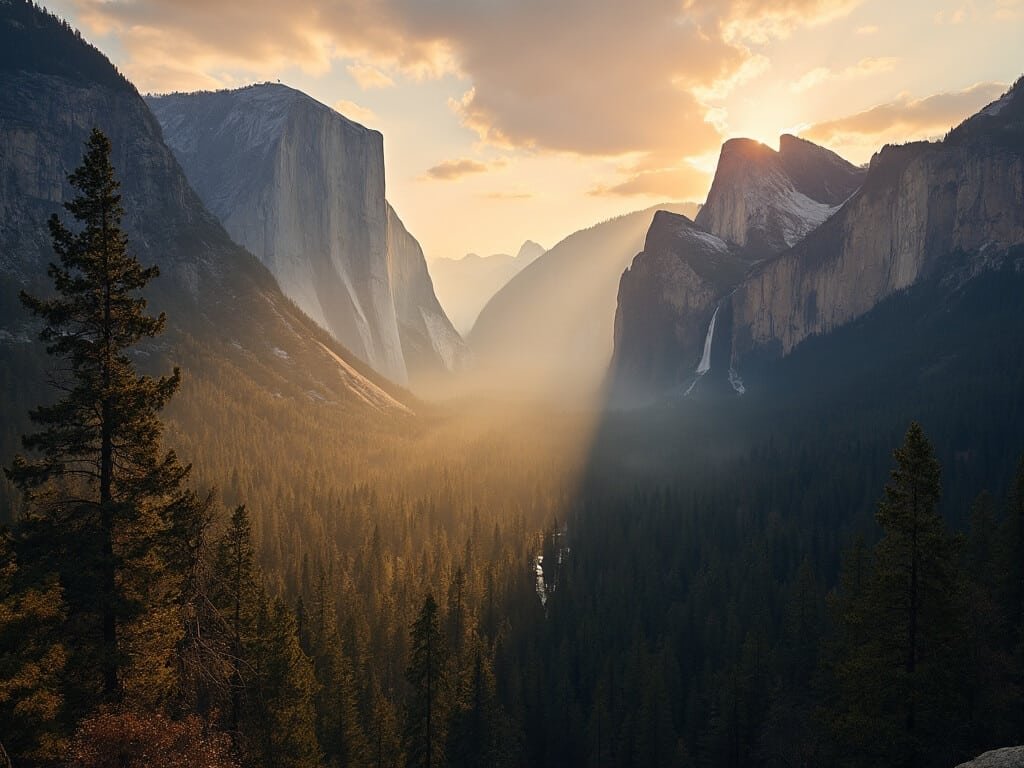
I remember hiking up to Vernal Falls on a Tuesday in mid-June, absolutely roasting in a t-shirt and shorts. By 7 PM that same evening, I was layered up in a fleece and light jacket watching the sunset from Tunnel View, genuinely cold. The other tourists around me looked equally unprepared, all of us doing that awkward “I’m fine, just a bit chilly” shuffle.
What Nobody Tells You About Daylight Hours
June gives you 14.8 hours of daylight. Sunrise hits around 5:35 AM, sunset around 8:20 PM. This changes everything about how you experience the park.
You can start a proper hike at 6 AM when it’s still cool and pleasant, avoid the midday heat entirely, and still have time for an evening walk after dinner. Or you can sleep in, faff about, and still catch golden hour without rushing.
The summer solstice falls on June 20th, giving you the absolute longest day of the year. It’s brilliant for photography, terrible for getting kids to bed, and absolutely perfect for squeezing every possible minute out of your visit.
Smart timing looks like this:
- Morning hikes: 6 AM to 11 AM (cool, fewer crowds, better light)
- Midday: 11 AM to 4 PM (hide, swim, nap, or visit indoor exhibits)
- Evening activities: 5 PM to 8:20 PM (temperatures drop, crowds thin, magic hour lighting)
The extended daylight isn’t just about fitting more in. It’s about timing things properly so you’re not melting on exposed trails at 2 PM when the sun is absolutely hammering down.
The Waterfall Window You Can’t Miss
June is waterfall season, full stop.
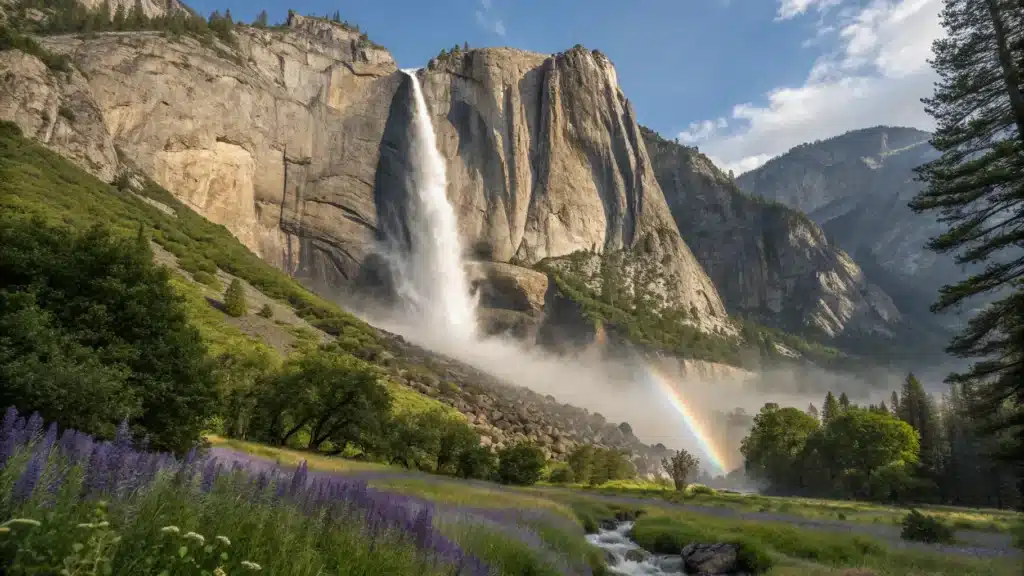
The snowpack that’s been building all winter starts properly melting, sending massive volumes of water cascading down those granite walls. This is what you came for.
Here’s what peak flow actually means:
- Yosemite Falls roars at maximum volume
- Mist from the falls creates constant rainbows
- You can hear the thunder from the valley floor
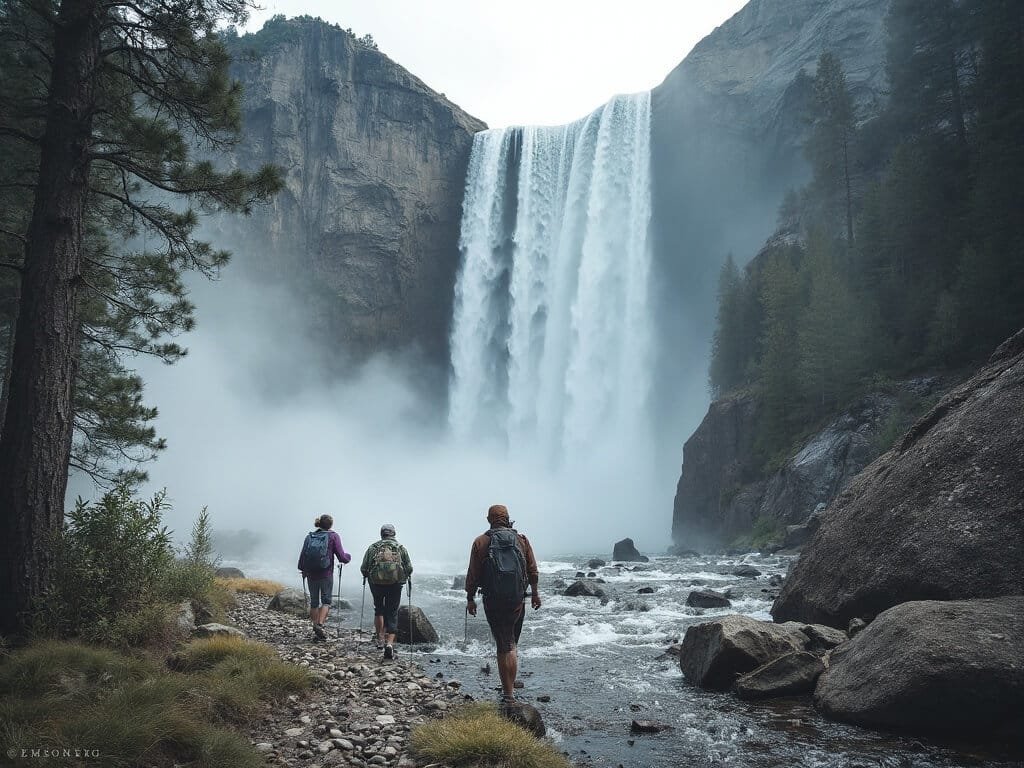
- Lower Yosemite Falls bridge gets you close enough to feel the spray
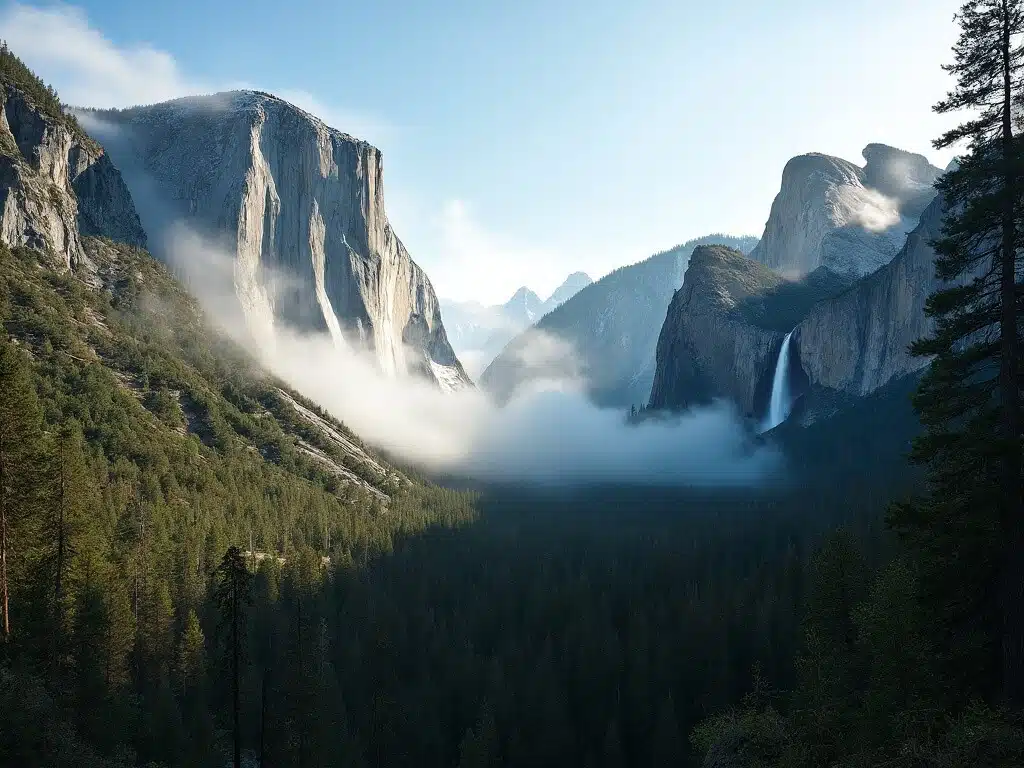
I’ve visited Yosemite in September when the falls were barely trickling. Absolutely gutting. June is the complete opposite—the waterfalls dominate everything, the sound echoing through the valley, the mist visible from miles away.
Lower Yosemite Falls becomes this accessible spectacle where you can walk right up via a bridge at the base. The spray hits you from 50 feet away. Your camera lens gets soaked. It’s properly impressive.
Waterfall timing matters:
- Early June: Everything at peak flow, including smaller cascades
- Mid-June: Major falls still thundering, smaller ones starting to fade
- Late June: Main attractions still impressive, seasonal falls drying up
The snowmelt drives everything, and once that snow’s gone, the water volume drops fast.
Wildflowers in the Valley (While They Last)
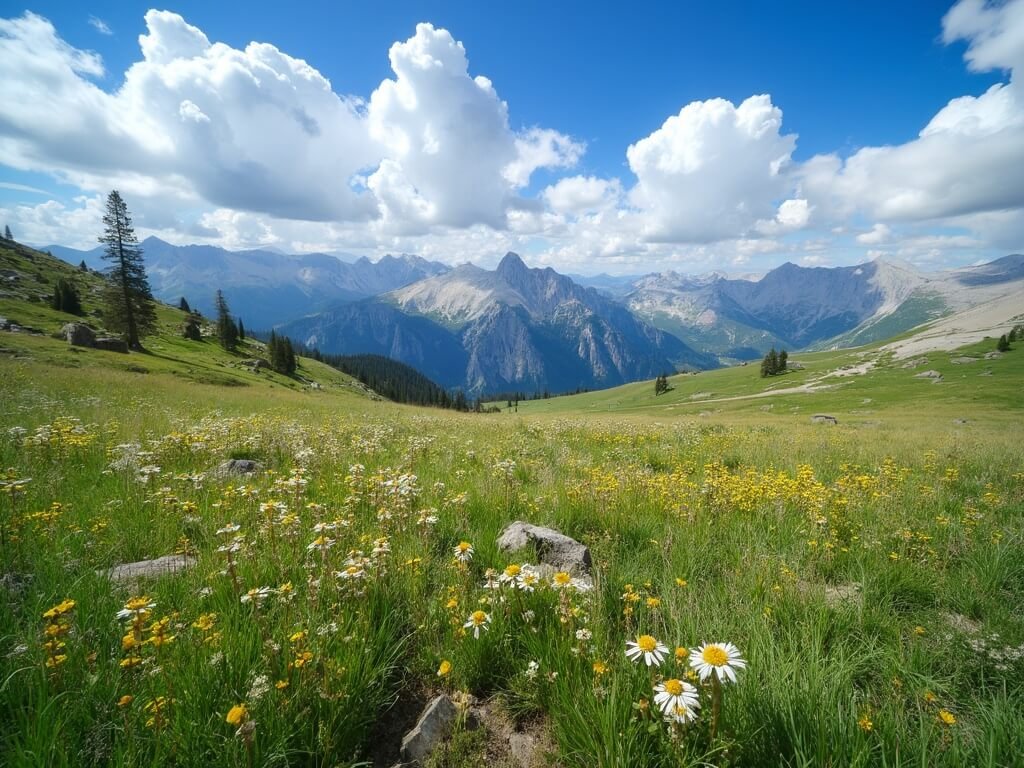
June puts wildflowers right in the valley where you can actually see them without hiking eight miles uphill.
The blooms follow the snowmelt up the mountain, so by June they’ve progressed from the lower foothills into the valley proper. Cooks Meadow, Chapel Meadow, and Mirror Lake all show peak wildflower conditions.
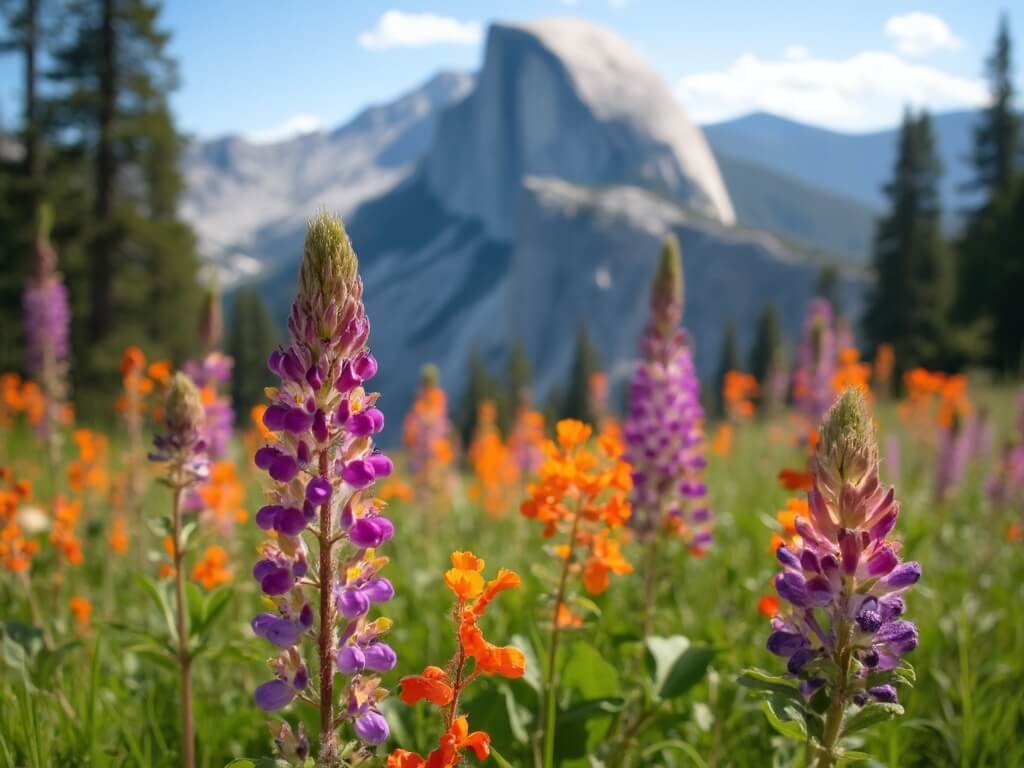
What you’ll actually see:
- Lupines in purple and blue
- Indian paintbrush in bright red-orange
- Western azaleas along water sources
- Mountain dogwood in shaded areas
The ecosystem hits maximum vibrancy. The moisture from melting snow keeps everything lush and green, which won’t last through July and August when things start browning out.
I spent an hour just wandering through Cooks Meadow on a Wednesday morning, and the variety was remarkable. Every few steps revealed different species I couldn’t name but could definitely appreciate. The birds were going mental, feeding on insects attracted by the flowers.
The wildflowers don’t just look pretty—they indicate the entire ecosystem firing on all cylinders. More flowers mean more insects, which means more birds, which means better wildlife viewing overall.
But you need to catch them in June. By August, many of these same meadows will be dried grass.
Hiking Access: What’s Actually Open
Most trails are open in June, which sounds straightforward until you realize Yosemite has dramatic elevation changes that affect accessibility.
Valley trails (4,000 feet):
- Fully accessible and dry
- Lower Yosemite Falls
- Mirror Lake Loop
- Valley View
- Swinging Bridge
Mid-elevation trails (5,000-7,000 feet):
- Generally open but check conditions
- Mist Trail to Vernal Falls
- Nevada Falls
- Panorama Trail
High-elevation trails (8,000+ feet):
- May still have snow coverage
- Clouds Rest
- Cathedral Lakes
- Parts of Tuolumne Meadows
Tioga Road typically opens sometime in late May or early June, giving you access to Tuolumne Meadows and high-elevation hikes.
My recommendation for June hiking: Focus on valley and mid-elevation trails in early June, saving high-elevation adventures for later in the month when you’re certain Tioga Road is open and the snow has properly cleared.
The Mirror Lake area becomes particularly brilliant in June. You get reflections of Half Dome in the water (when it hasn’t dried up), and the surrounding meadow fills with wildflowers. It’s an easy, mostly flat walk that delivers maximum scenic value for minimal effort.
Check out some free things to do in Yosemite Village while you’re at it.
The Crowd Reality Nobody Wants to Discuss
Everyone realizes June is brilliant. That’s the problem.
The weather is lovely, the waterfalls are peak, the trails are open, and school isn’t out yet for many districts. It feels like the secret perfect time to visit.
Except it’s not a secret.
June brings:
- Significantly increased visitor numbers compared to May
- Accommodation booked months in advance
- Parking challenges in the valley
- Popular trails getting congested
- Shuttle buses running at capacity
The valley floor, in particular, gets absolutely mobbed. Lower Yosemite Falls can have a queue just to get a decent photo. The grocery store runs out of supplies by afternoon. Finding parking anywhere near Curry Village requires either arriving before 8 AM or accepting a 20-minute walk from overflow lots.
Strategies that actually work:
- Start hikes before 7 AM to beat the rush
- Visit midweek rather than weekends
- Consider staying outside the park and driving in early
- Book accommodation 6+ months ahead
- Have backup trail options when your first choice is crowded
The crowds don’t ruin June, but they do require planning. You can’t just rock up at 10 AM on a Saturday and expect a peaceful, spacious experience.
Elevation Creates Different Parks
Here’s something that surprised me: Yosemite in June is actually several different parks depending on where you are.
The valley might be 82°F and sunny whilst Tuolumne Meadows is 65°F with afternoon thunderstorms threatening. A 10-degree temperature difference can exist within just a few miles of driving.
Temperature by elevation:
- Yosemite Valley (4,000 feet): 81°F high, 48°F low
- Glacier Point (7,200 feet): 70°F high, 40°F low
- Tuolumne Meadows (8,600 feet): 65°F high, 33°F low
Tuolumne Meadows in June requires a puffy jacket and proper layers. It’s not summer up there yet—it’s more like late spring. Meanwhile, down in the valley, you’re sweating in a t-shirt.
This elevation variation creates both opportunities and challenges.
The opportunity:
You can escape valley heat by driving up to higher elevations for cooler hiking.
The challenge:
You need to pack for multiple climates in the same day, which means your bag gets heavy and complicated.
The afternoon thunderstorms at higher elevations are real. They pop up quickly, drench everything, and disappear. Morning is generally more stable for high-elevation hikes, with storms building after 2 PM.
I got caught in one of these storms near Tenaya Lake in mid-June. Blue skies at 11 AM, dark clouds rolling in by 1 PM, proper rain and lightning by 2 PM, clear again by 4 PM.
The microclimates mean you need to check weather for specific areas, not just “Yosemite” generally.
The valley forecast might show sunny and 80°F whilst Tuolumne shows scattered thunderstorms and 60°F. Both are accurate for their specific locations just miles apart.
For more about where to explore, check our guide to California in June.
The Packing List That Actually Makes Sense
Most packing guides tell you to “bring layers,” which is about as helpful as saying “bring clothes.”
After multiple June visits where I either overpacked or underpacked (usually both somehow), here’s what actually matters:
Core clothing strategy:
- Base layer: 2-3 moisture-wicking t-shirts
- Mid layer: Long-sleeve shirt and lightweight fleece
- Outer layer: Light jacket that packs small
- Bottoms: Convertible hiking pants (shorts + long pants in one)
- Evening: One warm puffy jacket if visiting high elevations
- Extra: Hat, sunglasses, buff or bandana
The convertible pants sound gimmicky but they’re brilliant for June’s temperature swings.
The puffy jacket becomes essential if you’re doing anything at Tuolumne Meadows or watching sunset from Glacier Point.
Sun protection nobody emphasizes enough:
The Sierra sun is vicious. The dry air and higher elevation mean UV exposure is significantly more intense than at sea level.
- SPF 50+ sunscreen (reapply every 2 hours)
- Lip balm with SPF
- Wide-brimmed hat (baseball caps don’t protect ears and neck)
- Sunglasses with UV protection
The dryness cracks your skin faster than you’d expect. Bring proper moisturizer, not just some travel-size thing you grabbed at the airport.
The hydration situation:
You need more water than you think. Minimum: 3 liters per person for a full day hike. Ideal: water filtration system so you can refill from streams.
I carry a 3-liter hydration bladder plus a 1-liter bottle with electrolyte mix. It seems excessive until mile 6 of a hike when other people are rationing their single water bottle.
What the Weather Forecast Won’t Tell You
The standard forecast shows valley conditions, but it’s meaningless if you’re hiking to Nevada Falls or heading to Olmsted Point.
The microclimates breakdown:
- Valley (4,000 feet): Mediterranean climate, hot days, cool nights
- Midpoint elevations (5,000-7,000 feet): Transitional, occasional storms
- High country (8,000+ feet): Alpine conditions, likely afternoon storms
The afternoon thunderstorm pattern:
- Morning: Clear skies
- Midday: Puffy clouds form
- Early afternoon: Thunder begins
- Mid-afternoon: Heavy rain and lightning
- Evening: Skies clear beautifully
Plan high-elevation hikes early and be off exposed areas by 1 PM. Storms aren’t usually dangerous—just miserable without gear.
The Accommodation Nightmare (And How to Solve It)
Booking for June requires absurdly early planning. The Ahwahnee and in-park lodges book out 6–12 months ahead.
Realistic accommodation timeline:
- 12 months out: Premium in-park lodging
- 6 months out: Standard lodges or nearby hotels
- 3 months out: Limited options, rising prices
- 1 month out: Stay farther out or pay premium
- 1 week out: Good luck
Alternative strategies:
- El Portal: 20 minutes from the valley
- Groveland: 45 minutes, cheaper
- Wawona/Crane Flat campgrounds: Less popular but great
- Midweek visits: Better availability
Use Recreation.gov and treat it like concert tickets: ready to go right at release time.
Activities Beyond the Obvious Hikes
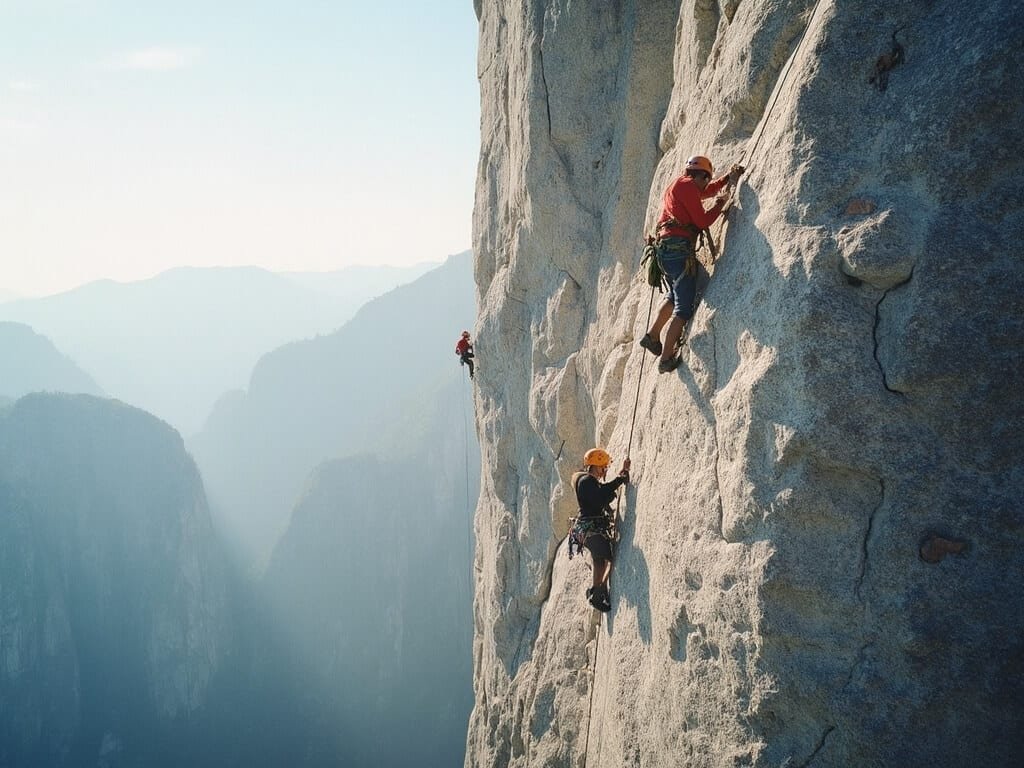
Rock climbing:
Even if you’re not a climber, watching climbers on El Capitan from El Cap Meadow is mesmerizing. Bring binoculars.
Rafting and swimming:
The Merced River runs high and cold. Raft rentals available from Curry Village for a mellow float. Swimming possible at Sentinel and Cathedral Beach—frigid but refreshing.
Ranger programs:
Evening ranger talks are surprisingly engaging. Topics include climbing history, wildlife, and Indigenous perspectives.
Star photography:
June skies are darker than later summer months. Glacier Point and Valley View are premium locations after dark.
The Crowds You Can Actually Avoid
Valley congestion pattern:
- 6–8 AM: Quiet
- 8–10 AM: Crowds arrive
- 10 AM–5 PM: Peak congestion
- 5–7 PM: Crowds thin
- After 7 PM: Mostly locals and overnight visitors
Location-based crowd avoidance:
- Avoid: Yosemite Falls, Half Dome, Bridalveil Fall
- Try instead: Hetch Hetchy, Wawona, Tuolumne trails
Visiting Yosemite in June during weekdays is far more peaceful than weekends.
The Food and Resupply Situation
What works:
- Bring non-perishables from outside
- Stock up in Mariposa or Groveland
- Expect high prices and limited selection in-park
- Have backup meals
Better food strategy:
- Make your own breakfast/lunch
- Dine out for dinner when tired
- Use a cooler for perishables
Medical and Safety Considerations Nobody Mentions
Altitude sickness:
Valley is fine, but Tuolumne Meadows at 8,600 feet can cause:
- Headache
- Nausea
- Dizziness
- Fatigue
Heat illness prevention:
- Drink before you’re thirsty
- Rest in shade
- Know your limits
- Start hikes early
Nearest hospitals are in Mariposa and Sonora. Serious issues require evacuation.
The Photography Light You’re Actually Working With
The midday problem:
Harsh shadows and blown highlights make 11 AM–3 PM less ideal for photography.
Better timing:
- Golden hour: First/last hour of sun
- Blue hour: Twilight before sunrise, after sunset
- Overcast: Rare but perfect light
Waterfall tips:
- Use lens hoods and cloths
- Polarizing filter helps with glare and spray
- Expect to get wet near Yosemite Falls
What Actually Changes Between Early, Mid, and Late June
- Early June: Highest waterfalls, fewer crowds, possible snow on high trails
- Mid-June: Ideal mix of access, weather, and waterfall flow
- Late June: Hotter, lower water levels, peak crowds
Best time? June 10th–20th hits the sweet spot.
The Weather Resources That Actually Help
Don’t rely only on basic forecasts. Use:
- Yosemite weather planning guide
- Yosemite webcams
- Weather.gov for location-specific forecasts
- Tioga Road status page
- NPS current conditions map
What to watch for:
- Air quality index
- Stream flow gauges
- Real-time webcam visuals
The June Experience Worth Planning For
June in Yosemite Village requires effort—but the payoff is unmatched:
- Peak waterfalls and wildflowers
- Long days for sunrises and sunsets
- Alpine trails accessible
Your visit succeeds when you:
- Book 6+ months ahead
- Pack for wide temperature swings
- Start early and hydrate constantly
- Check microclimate forecasts
- Accept crowds—but know how to avoid the worst
Fresno in June |
Fresno in June (Part 2) |
Mammoth Lakes |
Oakland in June |
San Jose in June