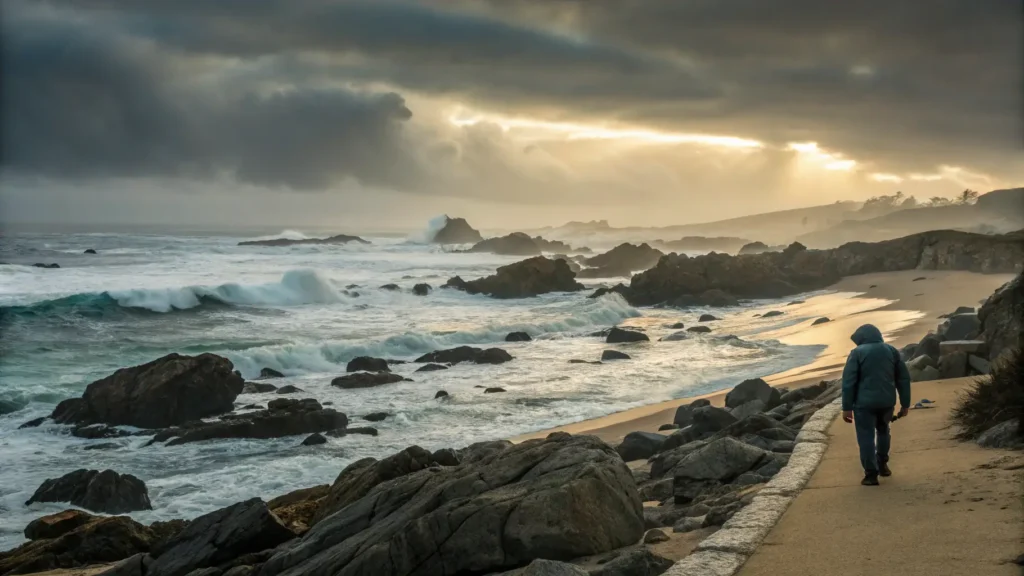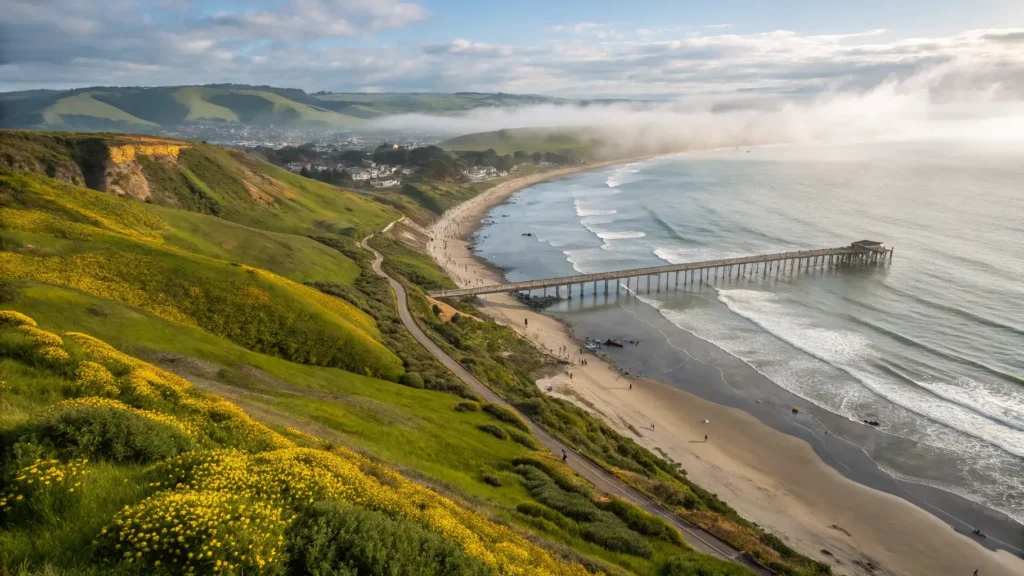
I have spent January at Pismo Beach in a windbreaker most of the day, with highs only reaching the low 60s. The mornings are cool off the water, but the afternoon sun makes a walk on the sand feel pleasant enough.
The Temperature Shock That Catches Everyone Off Guard
Here’s what the weather data won’t prepare you for: January mornings in Pismo Beach hover around 43°F (6°C).
That’s properly cold.
Not California “chilly”—actual cold that makes you question why you didn’t pack warmer clothes.
The daily temperature swing is massive:
- Morning lows: 43°F (6°C)
- Afternoon highs: 65°F (18°C)
- Average overall: 53.1°F (11.7°C)
I learnt this the hard way during my first January visit three years ago.
Stepped out at 7am in shorts and a hoodie to grab coffee, thinking “it’s California, how cold could it be?”
Spent the next fifteen minutes shivering outside a closed café, watching the marine layer roll in off the Pacific whilst feeling like an absolute fool.
The locals walking past in proper jackets didn’t even try to hide their amusement.

The temperature can fluctuate anywhere between 46°F and 64°F throughout the day, which means layering isn’t optional—it’s survival.
What feels comfortable at noon will leave you freezing by 4pm when the coastal winds pick up.
Why Everyone Gets The Rain Situation Wrong
Most visitors check the forecast, see “3 to 8 days of rain” for January, and think “that’s not too bad.”
What they don’t realise is how unpredictable Central Coast weather becomes during winter.
Here’s the actual breakdown:
- Expected rainy days: 3-8 days
- Total rainfall: 68mm
- Dry days: 28 days
- Snowy days: 0 (it never snows here)
Those numbers look manageable on paper.
The reality is that rain in Pismo Beach doesn’t follow a schedule.
You might get four consecutive dry weeks, then three days of biblical downpours that flood the pier parking lot and turn the coastal trails into mud slides.

The 9 hours of average daily sunshine sounds brilliant until you realise it’s distributed irregularly.
Some days you’ll get glorious clear skies from dawn to dusk.
Others, you’ll barely see the sun through the thick marine layer and storm clouds.
Pack these rain essentials:
- Waterproof jacket (not water-resistant—properly waterproof)
- Umbrella that can handle coastal winds
- Spare trainers or waterproof boots
- Plastic bags for wet clothes
The key takeaway: January weather here is a gamble, but the 28 dry days mean you’ve got better odds than not.
The Ocean Temperature Nobody Warns You About
Water temperature in January sits at 55.6°F (13.1°C).
Let me translate that: it’s absolutely freezing.
This isn’t “refreshing” cold.
This is “takes your breath away and makes your chest tighten” cold.
The kind that requires a proper wetsuit if you’re planning any water activities lasting more than a few minutes.
I’ve watched tourists wade in wearing nothing but swimwear, convinced they’ll acclimatise.
They last about thirty seconds before scrambling back to shore with blue lips and shaking hands.
The locals surfing nearby? Full 4/3mm or 5/4mm wetsuits, gloves, and booties.

If you’re planning water activities, you’ll need:
- Minimum 4/3mm wetsuit (5/4mm is better)
- Neoprene boots
- Gloves if you’re particularly sensitive to cold
- Post-surf warm layers ready on the beach
The Pacific doesn’t care that it’s California.
Winter ocean temperatures here behave more like Northern Europe than Southern California.
The Packing List That Actually Makes Sense
Forget what travel blogs tell you about “light California packing.”
January in Pismo Beach requires proper preparation.
Essential warm clothes:
- Thermal base layers (yes, really)
- Fleece or down jacket
- Long trousers (multiple pairs)
- Warm socks (pack extras)
- Beanie or warm hat
- Scarf for evening walks
The 22-degree temperature swing between morning and afternoon means you can’t just wear one outfit all day.
What works at 2pm will leave you hypothermic at 8pm watching the sunset from the pier.
I pack like I’m heading to autumn in England, not California.
Locals do the same—check out anyone who actually lives here in January, and you’ll see proper winter gear.
The layering strategy that works:
- Base layer (thermal or long-sleeve shirt)
- Mid layer (fleece or jumper)
- Outer layer (waterproof jacket)
- Remove or add layers as temperature shifts
Most importantly, pack clothes you can actually wear together in multiple combinations.
You’ll be changing outfits based on temperature more than any other factor.
The beauty of January weather in Pismo Beach is its unpredictability forces you to slow down and adapt.
You can’t rush from activity to activity like summer tourists.
You’ve got to read the weather, plan around it, and sometimes just accept that today’s a day for finding a great café rather than hiking the dunes.
Related Reading:
The Hidden Advantages That Make January The Best Time (If You Know What You’re Doing)
Everyone thinks summer is peak Pismo Beach season.
They’re wrong.
January offers something summer never can: actual space to breathe.
The pier isn’t crammed shoulder-to-shoulder with tourists taking selfies. You can actually find parking near the beach without circling for forty minutes. Restaurant reservations? Walk-ins work fine most nights. Hotel prices drop by 30-40% compared to July rates.
What January gives you that summer doesn’t:
- Empty beaches where you might walk a mile seeing fewer than ten people
- Dramatic storm watching from the pier
- Whale migration season (December through April)
- Locals who actually have time to chat and share recommendations
- Sunset photo opportunities without crowds blocking your shot
Last January, I sat on the beach for three hours watching a winter storm roll in from the northwest. The waves were massive—probably 12-15 feet—crashing against the pier pilings and sending spray fifty feet into the air. In summer, that same spot would’ve been packed with screaming children and people blasting music from portable speakers. Instead, it was just me, two other photographers, and one local surfer mad enough to be out in those conditions.

The solitude changes everything. Pismo Beach in January feels like a secret that summer tourists will never discover.
The Activities That Actually Work (And The Ones That Don’t)
Let’s be honest about what January weather allows and what it ruins.
Activities that thrive in January:
- Storm watching from the pier or Dinosaur Caves Park
- Tide pooling (lower tides, fewer people disturbing marine life)
- Whale watching tours (peak grey whale migration)
- Photography (dramatic winter light and cloud formations)
- Wine tasting in nearby Edna Valley (indoor activity, less crowded)
- Exploring downtown shops and galleries
- Dining at local restaurants with actual table availability
Activities that become challenging:
- Beach lounging (too cold, too unpredictable)
- Swimming without wetsuits (hypothermia waiting to happen)
- Extended hiking on exposed coastal trails (wind chill makes it miserable)
- ATV riding on Oceano Dunes (rain makes it dangerous)
- Outdoor events and festivals (most move to warmer months)
The Monarch Butterfly Grove at Pismo State Beach remains open, but butterfly activity depends entirely on weather. Cold, overcast days see them clustered tight in the eucalyptus trees. Warmer, sunny afternoons bring them out in thousands.

I’ve visited the grove three times in January over different years. First visit: brilliant sunshine, butterflies everywhere, absolutely magical. Second visit: cold and drizzling, saw maybe thirty butterflies total. Third visit: moderate conditions, decent butterfly activity but nothing spectacular.
The lesson? January activities require flexibility and backup plans.
The Food Scene Gets Infinitely Better When Tourists Leave
Summer in Pismo Beach means every restaurant operates at maximum capacity with minimal effort. They don’t need to try—tourists will fill seats regardless.
January forces restaurants to actually compete for business.
Service improves dramatically. Chefs have time to focus on quality rather than volume. You can actually taste the difference in the food.
Where locals eat in January:
- Cracked Crab (less chaotic without summer crowds)
- Ventana Grill (sunset views without reservation battles)
- Giuseppe’s Cucina Italiana (intimate dinner experience)
- Splash Café (famous clam chowder without 45-minute queues)
- Old West Cinnamon Rolls (Saturday morning tradition)

The bartenders and servers actually remember you after one visit. They’ll recommend menu items based on what you ordered last time. You can have actual conversations rather than rushed transactions.
I spent a Tuesday evening in January at a beachfront restaurant talking to the chef for twenty minutes about his supply chain and seasonal menu changes. He’d just sourced local Dungeness crab and was excited to share preparation techniques. Try having that conversation in July when they’re turning tables every forty-five minutes.
What The Weather Data Doesn’t Tell You About Microclimates
Here’s something nobody mentions: Pismo Beach has distinct microclimates within a three-mile radius.
The pier area can be grey and foggy whilst Shell Beach (two miles south) enjoys brilliant sunshine. Grover Beach (three miles north) might be getting hammered by rain whilst downtown Pismo stays dry.
The microclimate pattern:
- Coastal areas: coolest, foggiest, most wind exposure
- Downtown: moderate temperatures, some fog protection
- Inland areas (toward Highway 101): warmest, least fog, more sun
This means checking one weather forecast for “Pismo Beach” gives you incomplete information. You need to understand which part of town you’re staying in.
Strategic planning based on microclimates:
- Morning activities: head slightly inland where fog clears faster
- Afternoon activities: coastal areas warm up and fog usually lifts
- Evening activities: dress for temperature drops regardless of location
- Storm watching: obviously stay coastal for dramatic views
The Pismo Beach January weather forecast and January climate data help—but don’t tell the whole story.
The Accommodation Strategy Nobody Shares
Where you stay in January matters more than summer.
Beachfront hotels in January:
- Pros: Storm watching from your room, dramatic views, sound of crashing waves, lower winter rates
- Cons: Colder and windier, more fog, potential storm noise, fewer nearby restaurants open
Downtown or slightly inland options:
- Pros: Warmer, better fog clearance, walking distance to restaurants, less wind
- Cons: Not on the beach, require driving, less dramatic views
Booking tips for January:
- Look for properties with fireplaces or good heating
- Check cancellation policies
- Read winter-specific reviews
- Verify off-season amenity availability
- Ask about heating system quality
The Questions Everyone Asks (And The Honest Answers)
“Is January too cold to enjoy Pismo Beach?”
Depends on expectations. If you want sunbathing and swimming, probably yes. If you want drama, solitude, and better food, January is ideal.
“Will I be able to swim in the ocean?”
Not without a wetsuit. The water is 55.6°F. Locals don’t go in unprotected.
“How many days should I plan for a January visit?”
Three to four days is perfect. Long enough for weather variety, short enough for backup plans.
“What if it rains the entire time?”
Rainy days = wine tasting in Edna Valley, exploring San Luis Obispo, trying new eateries, and cozy downtime. Rain isn’t a deal-breaker.
“Can I see whales in January?”
Yes. January is peak grey whale migration season. Take a tour or watch from the coast.
The Real Reason January Visitors Never Regret Coming
Summer visitors experience Pismo Beach as a commodity. January visitors experience it as a place. A real town with genuine weather, locals, and atmosphere.
The solitude, unpredictability, and change of pace offer something deeper. Something real. The California in January everyone overlooks is often the most rewarding.
The Final Word On Whether You Should Visit
Come to Pismo Beach in January for authenticity over aesthetics, calm over crowds, wonder over weather perfection.
Bring layers. Book flexible. Plan wisely. Embrace the real California coast.
Pismo Beach in January is cool and breezy, with highs in the low 60s. Layer for the wind, and plan beach walks for the clearer midday hours.