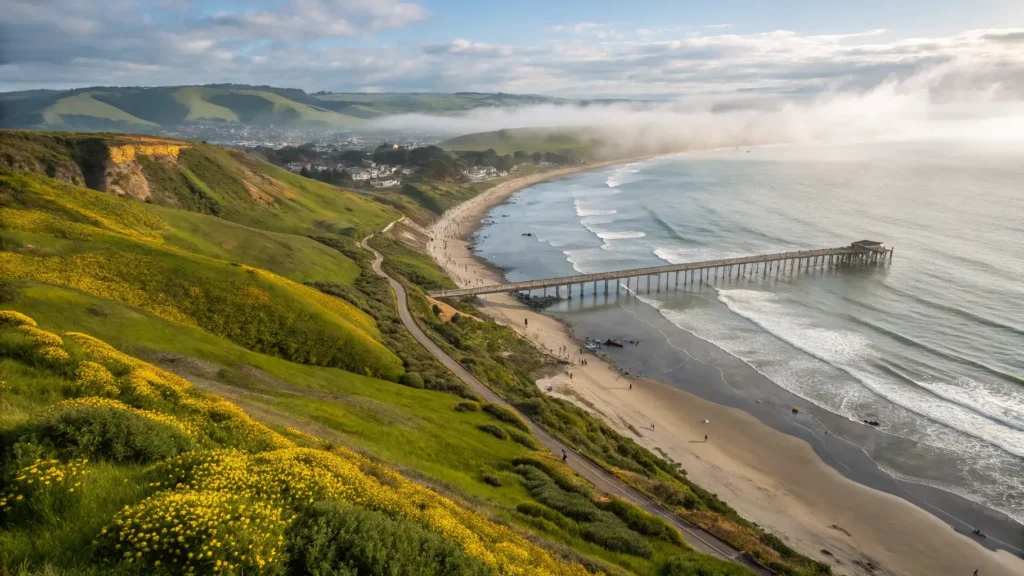
I spent an October in Monterey where the highs settled in the upper 60s and the skies stayed clear. The first rain usually holds off until November, so most days are mild with a light bay breeze.
I’m talking 68-71°F days, virtually zero rain, and attractions without the summer hordes breathing down your neck.
But here’s the thing: planning an October trip to Monterey isn’t just about checking the weather forecast and booking a hotel.
There’s a rhythm to this coastal town during autumn that completely changes how you should approach your visit.
The Weather Reality Check: What Those 70-Degree Days Actually Feel Like
Let me be straight with you.
When someone says “70 degrees in Monterey”, they’re not talking about 70 degrees in Arizona.
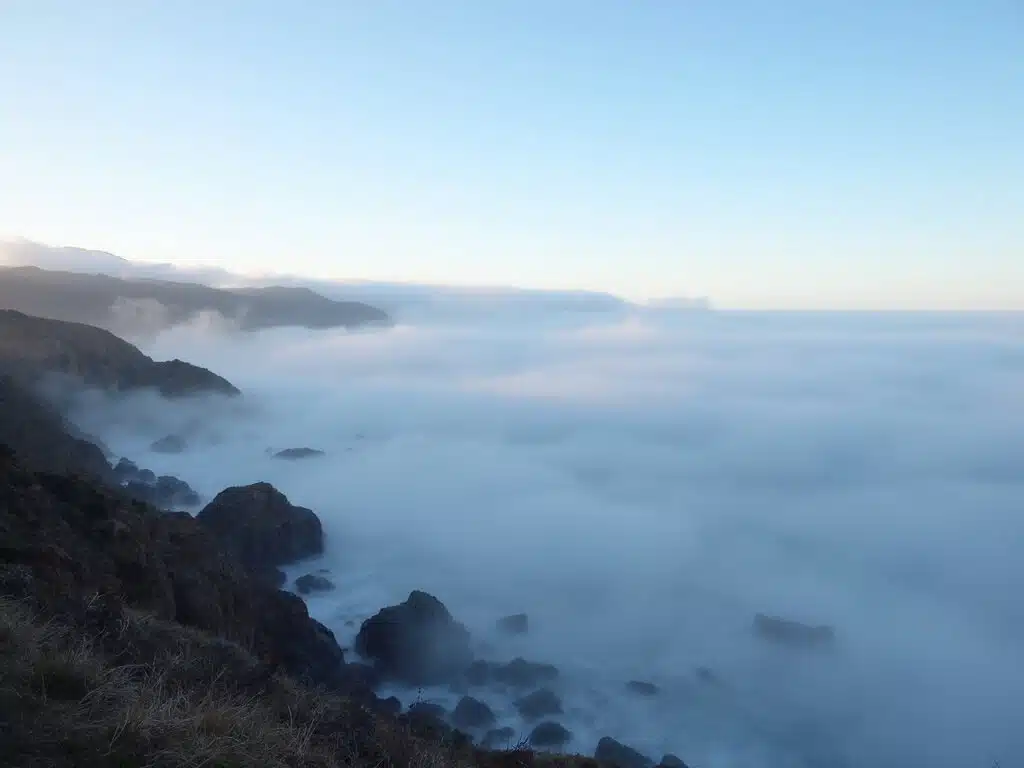
The Pacific Ocean sits right there, constantly breathing cool, misty air across the peninsula.
Average daily highs hover between 68-71°F (20-21°C), whilst nighttime temperatures drop to 51-55°F (11-13°C).
That 20-degree swing catches people off guard every single time.
I learnt this the hard way during my first October visit five years ago, when I confidently wore shorts and a t-shirt for an evening harbour walk. By 7 PM, I was genuinely uncomfortable – not freezing, but that penetrating coastal chill that seeps through thin clothing. I ended up ducking into a tourist shop and buying an overpriced fleece that I still own today.
The early October days occasionally spike into the low 80s, especially if you venture inland toward Salinas Valley.
But coastal Monterey? It stays remarkably consistent.
The Microclimate Nobody Warns You About
Here’s what the brochures won’t tell you: Monterey has about seventeen different microclimates within a five-mile radius.
Cannery Row might be sunny and pleasant whilst Carmel Valley (just 15 minutes away) is ten degrees warmer.
Pacific Grove can be wrapped in fog whilst downtown Monterey basks in sunshine.
Key temperature facts for October:
- Morning temps start around 55°F
- Afternoons peak at 68-71°F
- Ocean water temperature: a brisk 57°F
- Inland areas can reach mid-70s to low 80s
The fog pattern matters more than you’d think.
October sees less of the famous Monterey fog compared to summer months, but marine layer mornings still happen 2-3 times per week.
It usually burns off by 11 AM, revealing stunning blue skies.
Pack Like a Local (Not Like Someone Going to Southern California)
Forget everything you know about California beach packing.
Monterey in October demands a completely different strategy.
The layering approach is non-negotiable:
- Base layer: comfortable t-shirts or long-sleeves
- Mid layer: light jumper or fleece
- Outer layer: windproof jacket
- Evening layer: proper jacket or hoodie
I cannot stress this enough: a windbreaker changes everything.
The coastal breeze in October isn’t aggressive, but it’s constant and it cuts right through cotton.
Those Pinterest photos of people in sundresses on Monterey beaches? They were either taken in July or those people were bloody uncomfortable.
Add these to your packing list:
- Closed-toe walking shoes (trainers work perfectly)
- One pair of warmer socks for evening
- Sunglasses (the glare off the water is intense)
- Sunscreen with at least SPF 30
- Small backpack for layers you’ll inevitably remove
The UV index remains moderate during October, but “moderate” at sea level with water reflection still means you’ll burn if you’re not careful.
Why Everyone Overpacks (And How to Avoid It)
Most visitors pack for two different trips: beach holiday and autumn getaway.
You only need the autumn getaway wardrobe.
That bikini? Leave it home unless you’re genuinely planning to brave 57°F ocean water.
Those shorts? One pair maximum, mainly for indoor activities or the occasional warm afternoon.
The 6% Rain Probability That Actually Matters
October in Monterey averages just 0.9 inches of rainfall across the entire month.
The probability of rain on any given day sits at roughly 6%.
Sounds negligible, right?
But here’s the nuance: when it does rain in October, it’s usually not the brief shower you’d get in summer.
It’s the first hint of California’s wet season creeping in.
We’re talking about proper rainfall that can last several hours, averaging 0.52 inches when it occurs.
I’ve watched tourists completely unprepared for an October downpour, huddled under awnings at Cannery Row, expensive cameras stuffed under shirts.
The smart move? Pack a compact rain jacket or small umbrella.
It probably won’t leave your bag, but if October decides to flex that 6% probability during your sunset dinner reservation, you’ll be grateful.
What “Dry Season” Really Means Here
Meteorologically, October sits at the tail end of Monterey’s dry season.
The rainy season typically kicks off in November, but October occasionally gets a preview.
Early October (first two weeks) is statistically drier than late October.
If you’re absolutely rain-averse, aim for the first half of the month.
The weather reliability in October makes it exceptional for planning outdoor itineraries – whale watching tours, kayaking adventures, hiking trips – without the constant backup plan anxiety that plagues spring visits.
The Daylight Hours Everyone Takes for Granted (Until They Don’t)
October delivers an average of 11.3 hours of daylight in Monterey.
Sunrise happens around 7:14 AM at the start of October, shifting to approximately 7:35 AM by month’s end.
Sunset goes from roughly 6:45 PM to 6:00 PM across those 31 days.
That’s nearly 45 minutes of lost evening light throughout the month.
This matters more than you’d think for photography, beach time, and evening activities.
That sunset kayak tour? Book it early in your trip rather than late October when darkness arrives by 6:15 PM.
Those Instagram-worthy sunset photos at Bixby Bridge? You need to be positioned by 5:30 PM in late October, not 6:30 PM like you would in July.
The shrinking daylight creates a subtle pressure on daily itineraries.
You’ve got less cushion for leisurely lunches if you want to maximise outdoor exploration.
I’ve found that autumn visitors often misjudge how quickly dusk arrives, ending up rushing through Point Lobos or 17-Mile Drive in fading light, missing half the scenery they came to see.
Planning Around the Golden Hours
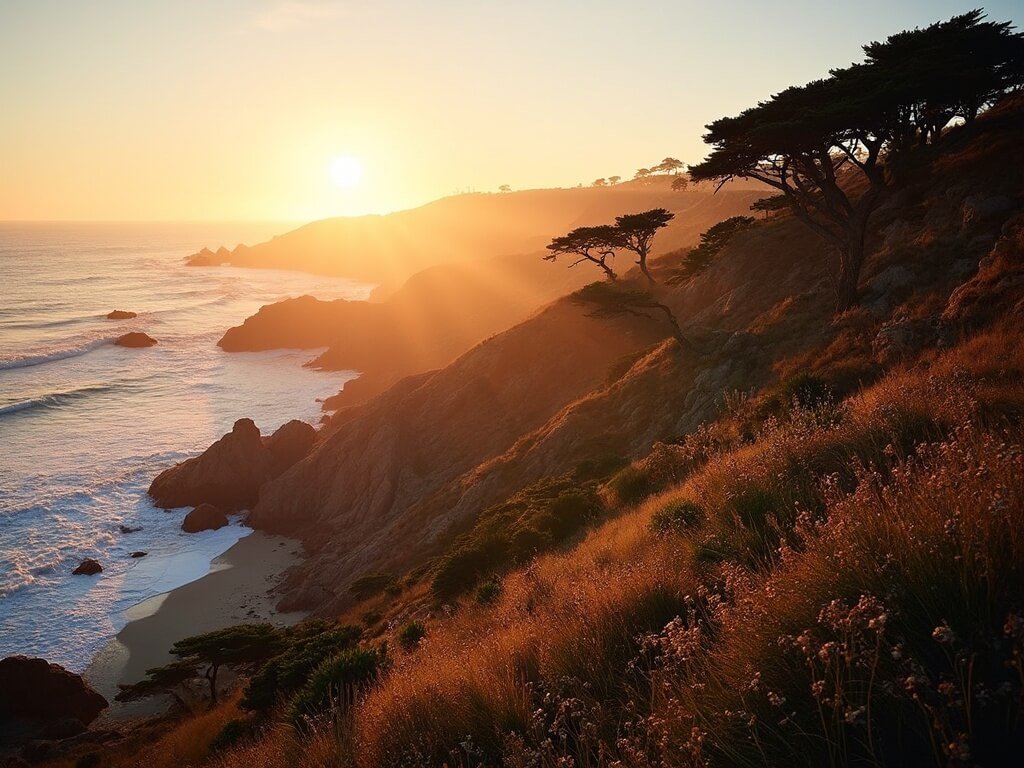
Photographers know that October’s lower sun angle creates exceptional golden hour lighting.
The quality of light from 4-6 PM is absolutely stunning along the coast.
But that golden hour arrives earlier and shorter than summer months.
Optimal photo timing in October:
- Morning golden hour: 7:00-8:30 AM
- Evening golden hour: 5:00-6:15 PM (early October) or 4:30-5:45 PM (late October)
- Blue hour: approximately 30 minutes after sunset
Plan your scenic drives and viewpoint stops accordingly.
The famous 17-Mile Drive takes about two hours if you’re stopping at viewpoints – start by 3 PM in late October to catch optimal light.
Why October Is Monterey’s Secret Weapon Against Crowds
Summer tourism in Monterey is genuinely overwhelming.
Cannery Row becomes a sardine tin of humans (ironic, given the history).
The Aquarium sells out days in advance.
Restaurant reservations require planning weeks ahead.
October changes everything.
This is shoulder season – that magical window between peak summer chaos and winter holiday rushes.
Accommodation availability improves dramatically, often with rates 20-30% lower than July or August.
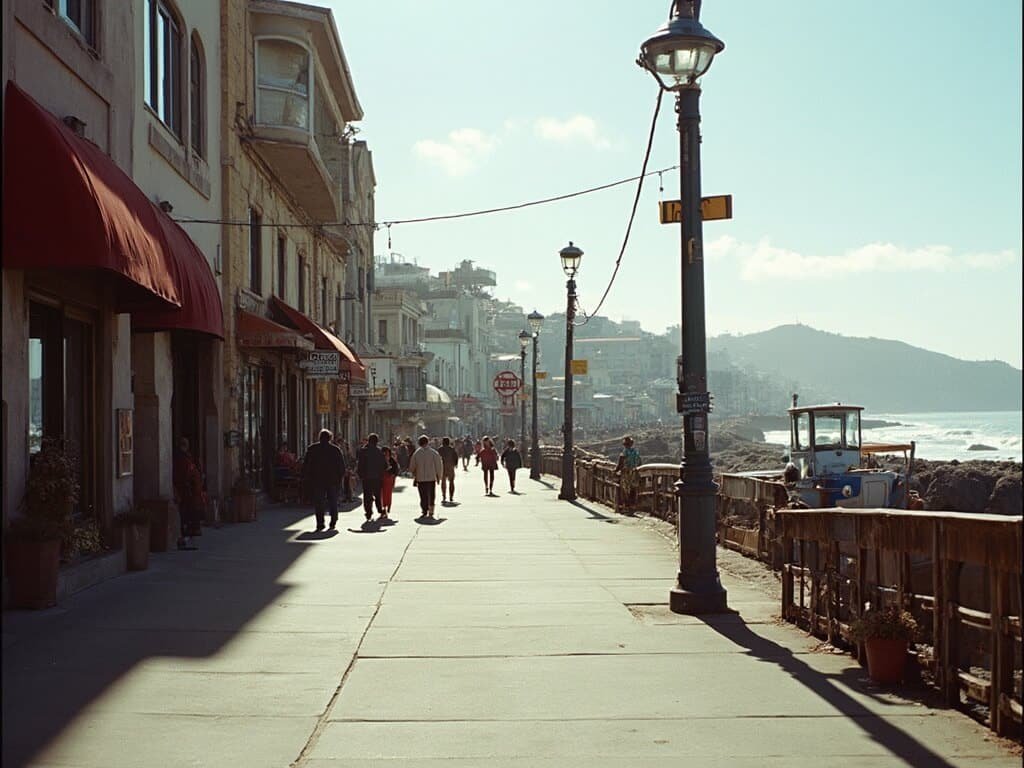
You can actually walk the Cannery Row sidewalks without playing human dodgeball.
The Monterey Bay Aquarium, whilst still popular, has reasonable queue times if you arrive when doors open.
Those iconic restaurants on Fisherman’s Wharf? You might snag a same-day reservation.
I’ve visited Monterey in both July and October, and the psychological difference is massive.
Summer feels like you’re constantly competing for space, views, and experiences.
October feels like you’re actually experiencing Monterey rather than just witnessing it through crowds.
The Economics of Shoulder Season
Hotel rates in October typically run 25-40% below peak summer pricing.
That $400/night property in July? Expect $250-300 in October.
The same applies to holiday rentals, though the discount isn’t quite as dramatic.
Beyond accommodation savings:
- Easier parking at popular spots (massive win)
- More flexibility with activity bookings
- Restaurant staff actually have time for recommendations
- Tour guides can provide more personalised attention
The value proposition shifts significantly when you’re not fighting crowds and paying premium prices for the privilege.
But October isn’t completely dead either – weekends still see healthy visitor numbers, especially during any special events.
Book weekend accommodation in advance; weekday stays offer more flexibility and better deals.
The shoulder season advantage extends to the entire Monterey Peninsula, from Carmel to Pacific Grove, making October ideal for exploring beyond just downtown Monterey proper.
Want to explore more fall destinations? Check out Oakland in October for more California autumn travel inspiration.
The Marine Life Advantage That Makes October Genuinely Special
Here’s something most travel guides completely gloss over: October sits at a fascinating intersection for Monterey Bay wildlife.
You’re catching the tail end of summer species whilst early winter migrants start arriving.
The 57°F water temperature might sound brutal for swimming, but it’s absolutely prime for the bay’s ecosystem.
Humpback whales are still feeding in the bay through October, often visible from shore at Point Pinos or Moss Landing.
Gray whales begin their southward migration in late October, occasionally passing close to the coastline.
Sea otters remain active year-round, but October’s calmer seas make them easier to spot lounging in kelp beds off Cannery Row and Hopkins Marine Station.

I spent three hours one October morning at Lovers Point in Pacific Grove, watching a mother otter teach her pup to crack open mussels.
No boat tour, no expensive excursion – just patience and a decent pair of binoculars.
That’s the thing about October: the wildlife viewing doesn’t require as much production as peak season.
Where to Actually See Wildlife (Without the Tourist Trap Tours)
Don’t get me wrong – whale watching tours have their place.
But October offers exceptional shore-based wildlife viewing that summer crowds often miss.
Best land-based wildlife spots:
- Point Pinos (westernmost tip of Pacific Grove): whales, seals, sea otters
- Hopkins Marine Station rocky shores: otter feeding grounds
- Moss Landing harbour mouth: seals, sea lions, occasional whale sightings
- Point Lobos State Reserve: harbour seals, sea lions, grey whales (late October)
The morning hours (8-10 AM) offer the calmest seas and best visibility for marine life observation.
Bring binoculars – not the cheap tourist ones, but actual decent optics.
Harbour seals haul out more frequently in October compared to breeding season (spring), making them easier to photograph at close range.
The kelp forests are still lush in October before winter storms thin them out, creating that quintessential Monterey Bay scene: bright green kelp contrasting with deep blue water and rocky shoreline.
Learn more about free things to do in Monterey.
What Nobody Tells You About October Hiking Conditions
The temperature range (50s to 70s) creates absolute magic for hiking.
You’re not overheating on uphill sections like in summer.
You’re not dealing with muddy, slippery trails like winter.
Point Lobos State Reserve becomes genuinely walkable – the summer crowds thin out, and those rocky coastal trails don’t feel like a queue at Disneyland.
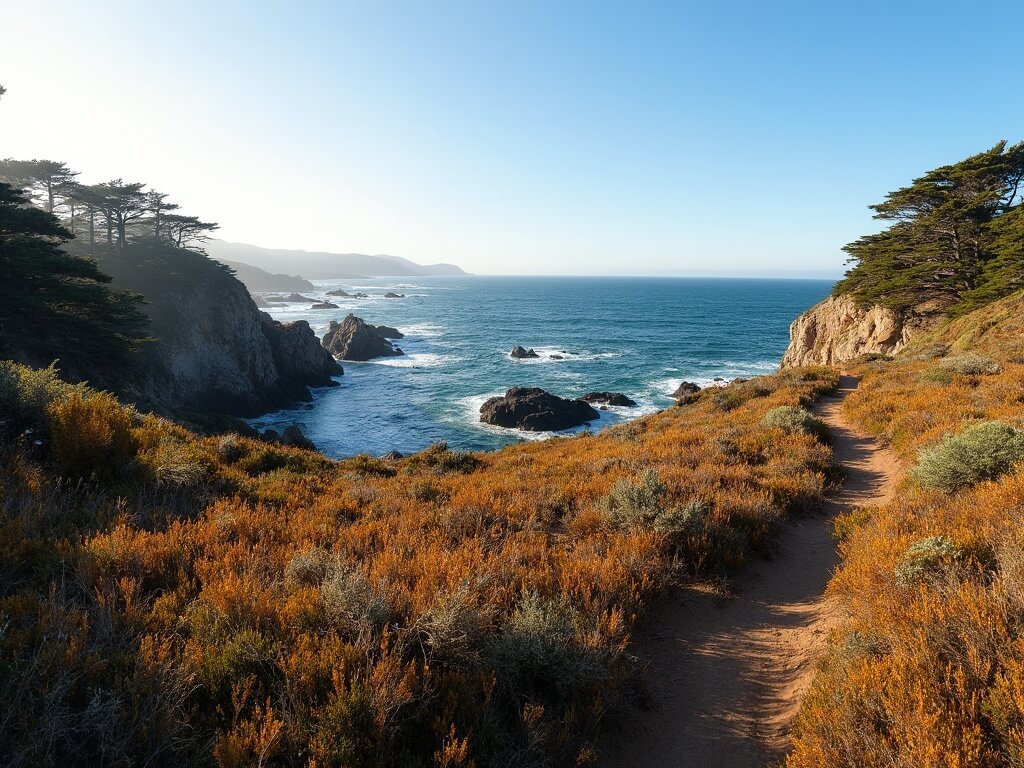
Garland Ranch Regional Park, about 15 minutes inland in Carmel Valley, provides warmer hiking conditions if the coast feels too cool.
October trails are dry – genuinely, properly dry.
This matters enormously for the clay-based soils common around Monterey.
Wildflowers? Basically done by October. But the coastal scrub sage, coyote brush, and grasslands take on golden autumn tones that photograph beautifully in that lower-angle October sunlight.
Explore more Big Sur hiking opportunities.
The Food Scene Advantage You’re Probably Missing
October is harvest season in the Salinas Valley and Carmel Valley.
Those “farm-to-table” menus that restaurants advertise year-round? They’re actually legitimate in October.
Artichokes (Castroville is the artichoke capital) are in their fall harvest. Wine grapes from Carmel Valley are being crushed.
Spot prawns from Monterey Bay are still in season through October.
October more than compensates with other local seafood even though Dungeness crab season opens in November.
Where Locals Actually Eat (Not Where TripAdvisor Says)
Fisherman’s Wharf restaurants cater heavily to tourists year-round. But October is when you can explore beyond the obvious:
- Wild Fish in Pacific Grove
- Mundaka in Carmel
- Alvarado Street Brewery
- First Awakenings in Pacific Grove
Monterey farmers market runs year-round on Tuesdays. October brings the transition harvest – late summer tomatoes alongside early season citrus, squashes, and root vegetables.
Learn more about the food scene in Carmel-by-the-Sea.
The Accommodation Strategy That Actually Works
October’s shoulder season creates a fascinating accommodation dynamic.
This translates to legitimate deals, not just marginal discounts.
Columbus Day weekend sees a pricing spike and availability crunch. The rest of October offers flexibility that simply doesn’t exist in summer months.
The Location Decision That Changes Your Entire Trip
For October specifically, Pacific Grove is the sweet spot.
You’re five minutes from Monterey attractions, positioned perfectly for Point Pinos and Lovers Point coastal access, and paying 30-40% less than equivalent Carmel properties.
Avoid Marina and Seaside unless budget is absolutely paramount – you’re 15-20 minutes from main attractions and saving maybe $40-50/night.
Compare with California’s broader October travel opportunities.
The Day Trip Opportunities Everyone Overlooks
October weather makes Monterey an exceptional base for regional exploration.
Highway 1 is typically clear of winter closures, fog is less common than summer, and crowds are manageable.
Carmel Valley wine tasting heats up in October – literally and figuratively.
The Santa Cruz Beach Boardwalk remains open weekends through October.
Pinnacles National Park delivers spectacular hiking in October’s mild temperatures.
The Timing Strategy for Regional Exploration
October’s 11.3 hours of daylight means day trips require more strategic timing than summer.
Morning coastal activities, afternoon inland excursions – this rhythm maximizes comfort across Monterey’s microclimates.
Explore more about Santa Cruz in October.
The Activity Booking Reality Check
October’s shoulder season means many activity providers reduce schedules.
Always verify October-specific schedules before planning your itinerary.
Scuba diving remains viable through October – visibility actually improves in fall compared to summer plankton blooms.
The Weather Backup Plan Nobody Thinks They Need
Smart October planning includes indoor contingencies:
- Monterey Bay Aquarium
- Monterey Museum of Art
- Cannery Row’s indoor shopping/dining
- Carmel’s gallery scene
Check Average Weather in October in Monterey and Monterey Bay October Weather Averages for forecasts.
The Sunset Situation That Defines October Evenings
Those 6:00-6:45 PM October sunsets create a specific rhythm for evening plans.
Plan sunset viewing as a deliberate activity, then dine afterward.
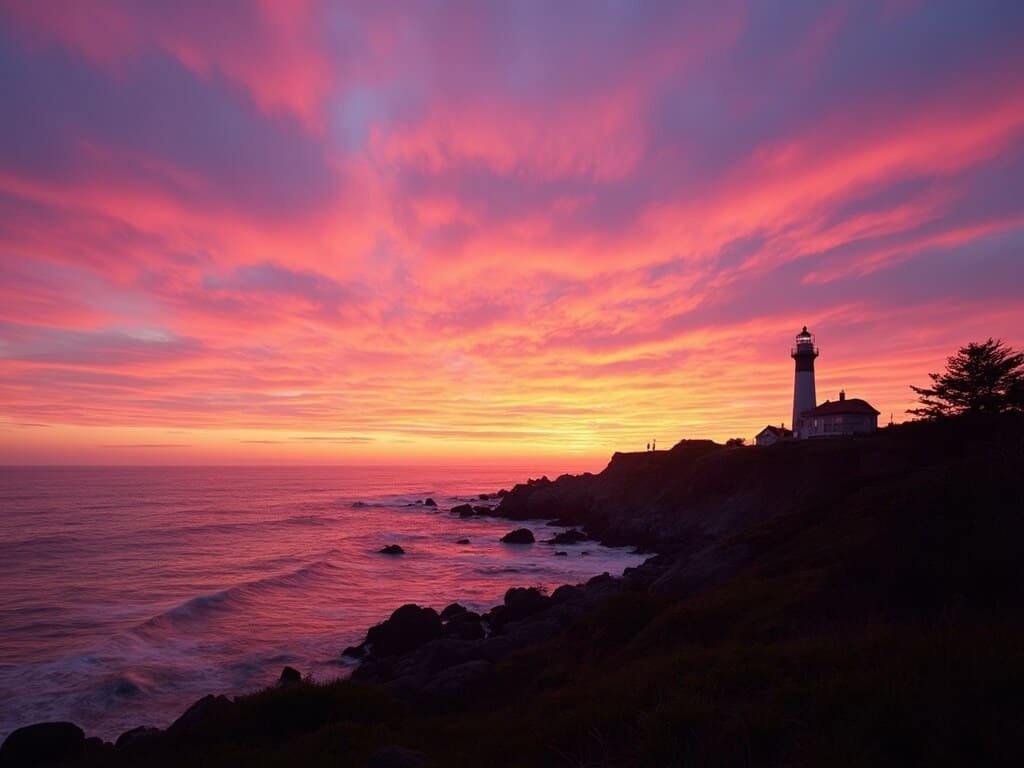
Sunset spots within 5-10 minutes of good restaurants:
- Lovers Point → walk to Passionfish or Il Vecchio
- Asilomar Beach → drive to downtown Pacific Grove or Monterey
- McAbee Beach → walk to Scales or Monterey’s Fish House
- Carmel Beach → walk to Carmel’s numerous restaurants
The Photography Timing Most People Botch
The best sunset colours happen 15-30 minutes after the sun drops below the horizon.
Stay through blue hour for the most dramatic colours.
The October Events That Might Conflict With Your Plans
Monterey Jazz Festival occasionally pushes into early October, affecting accommodation prices.
Carmel Art Festival brings moderate crowds to Carmel specifically.
Check event calendars via the Monterey County Convention & Visitors Bureau before booking.
The Weekend vs. Weekday Calculation
Weekday visits (Sunday-Thursday nights) offer better value:
- 20-30% lower accommodation rates
- Easier restaurant reservations
- Less crowded attractions
The Hidden Costs That Sneak Up on October Visitors
These costs catch people off guard:
- Parking at popular spots: $8-$12
- 17-Mile Drive: $11.25
- Aquarium tickets: $60 adults
- Wine tasting: $20-$35 per winery
The Value Calculation That Actually Matters
October Monterey costs roughly 25-35% less than peak summer with fewer crowds and similar weather quality.
October emerges as Monterey’s value leader – comparable or better weather than other seasons at lower cost with fewer crowds.
Why October Monterey Works (And When It Doesn’t)
October excels for couples, solo travellers, and outdoor enthusiasts.
October might not work if you:
- Need warm swimming weather
- Want extended evening daylight
- Prefer guaranteed sunshine
- Need maximum activity schedules
But for most visitors, these limitations are minor compared to October’s advantages.
Monterey Bay isn’t a swimming beach destination regardless of season – it’s a coastal ecosystem, scenic landscape, and marine life haven that actually peaks in shoulder seasons like October.
Monterey in October is mild and mostly sunny. It is a reliable month for the coast, with comfortable temperatures and fewer crowds than summer.