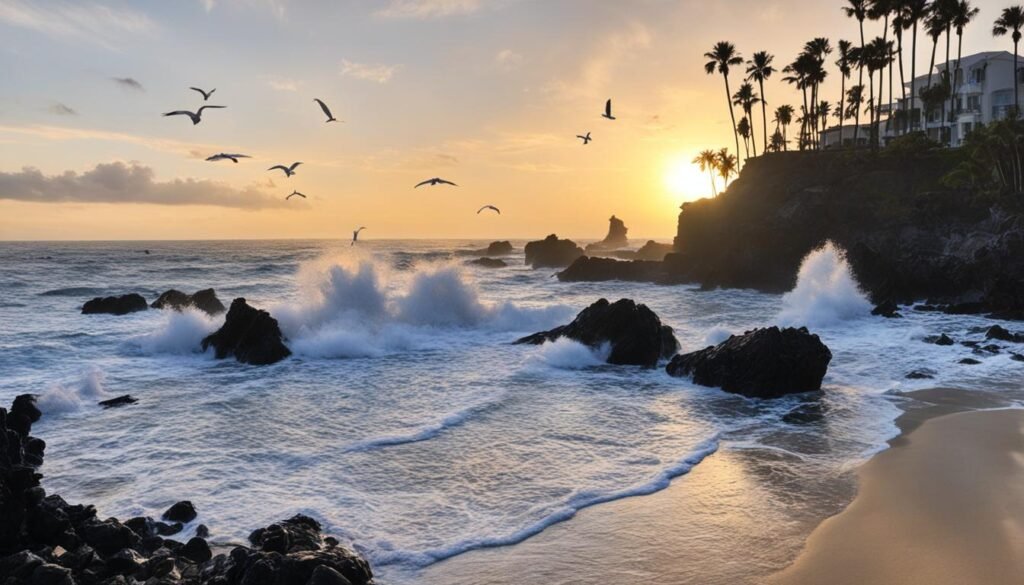
California’s coast runs from warm Southern California shallows to cold, nutrient-rich northern water, and that range supports an unusual mix of marine life — kelp forests, rocky-reef fish, migrating whales, and tide-pool invertebrates. This is a practical overview of what lives here and where you can see it, not a species field guide.
Fish and Invertebrates
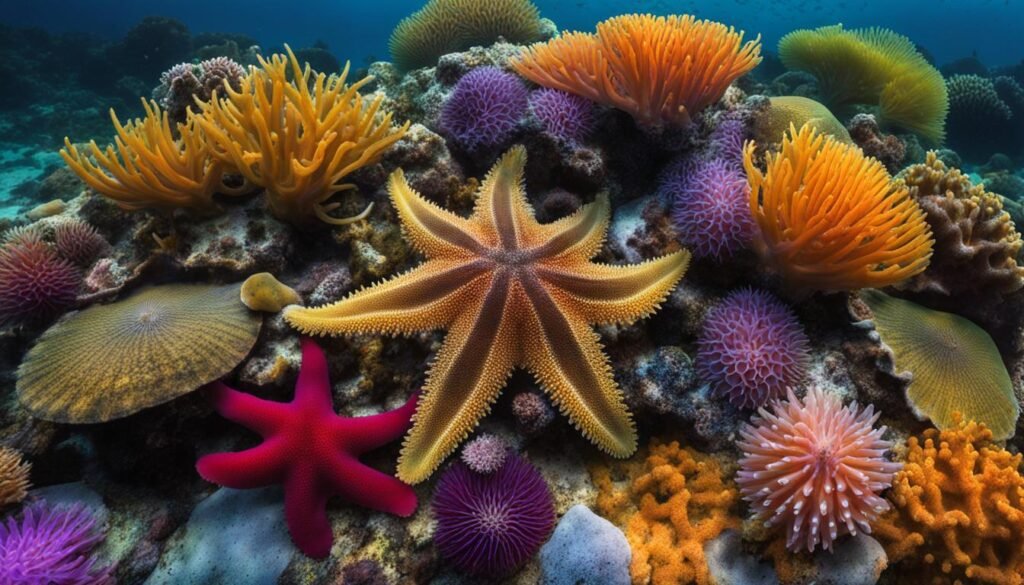
Common reef fish include the garibaldi (the bright orange state marine fish), opaleye, California sheephead, rockfish, and the occasional giant sea bass. Invertebrates — anemones, sponges, nudibranchs, crabs, and echinoderms (sea stars, urchins) — are the easy wins on any tide-pool or shallow dive. The Channel Islands and Monterey Bay are the two richest spots for seeing this diversity.
Bigger Animals
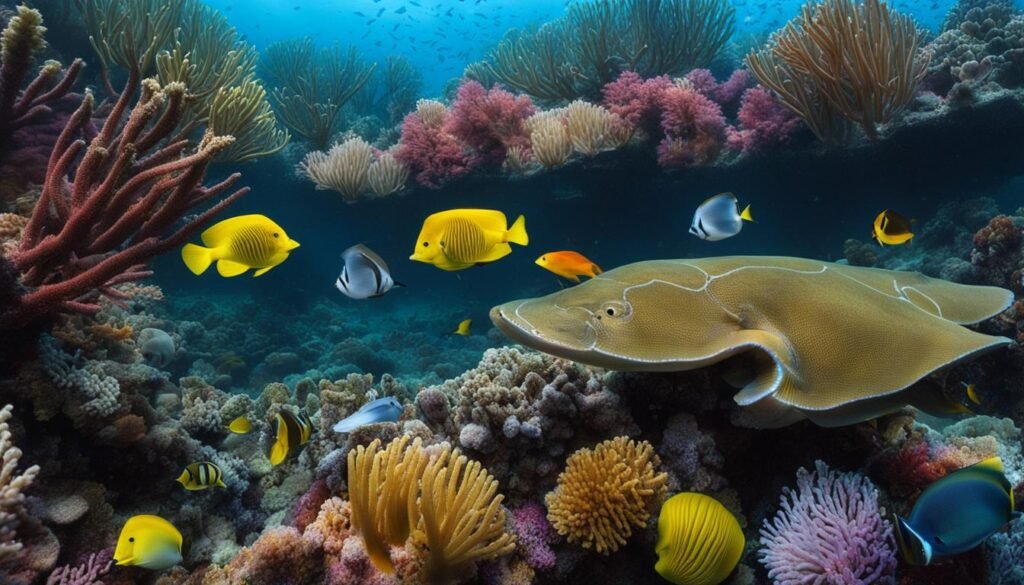
California’s headline marine life is the mammals: sea lions and harbor seals on the rocks, sea otters in Monterey Bay, and whales — gray whales on their migration past the coast, humpbacks and blues feeding in summer. Sharks are present but mostly not a beach hazard: leopard sharks aggregate in shallow La Jolla in summer and are harmless, while white sharks are occasional and mostly offshore. Rays (bat rays, stingrays) are common in bays.
Conservation and Marine Protected Areas
California runs a statewide network of marine protected areas (MPAs) — no-take or restricted zones meant to let habitat and fish recover. The network was phased in after 1999 and covers a meaningful share of the coast. Citizen science, beach cleanups, and the refuges around San Diego Bay all feed the same goal. If you dive or tide-pool, the MPA boundaries matter for what you can take (generally nothing inside a reserve).
Best Places to See Marine Life
- Channel Islands – kelp forests, sea lions, clear water; boat access from Ventura or Santa Barbara.
- Monterey Bay – the canyon brings whales close to shore; sea otters and tide pools at Pacific Grove.
- La Jolla (San Diego) – leopard sharks, garibaldi, and the sea-lion colony at the cove.
- Tide pools – anywhere rocky at low tide: Cabrillo Beach, Crystal Cove, Natural Bridges.
Conclusion
California’s marine life is best appreciated in person: snorkel La Jolla for leopard sharks and garibaldi, watch Monterey Bay for whales and otters, or walk a rocky tide pool at low tide for anemones and urchins. Respect the MPA rules (most reserves are no-take), keep your distance from marine mammals under federal law, and check tide tables before a tide-pool trip — the life is only exposed for an hour or two around low water. For divers, the Channel Islands and Monterey are the two destinations that justify the gear.