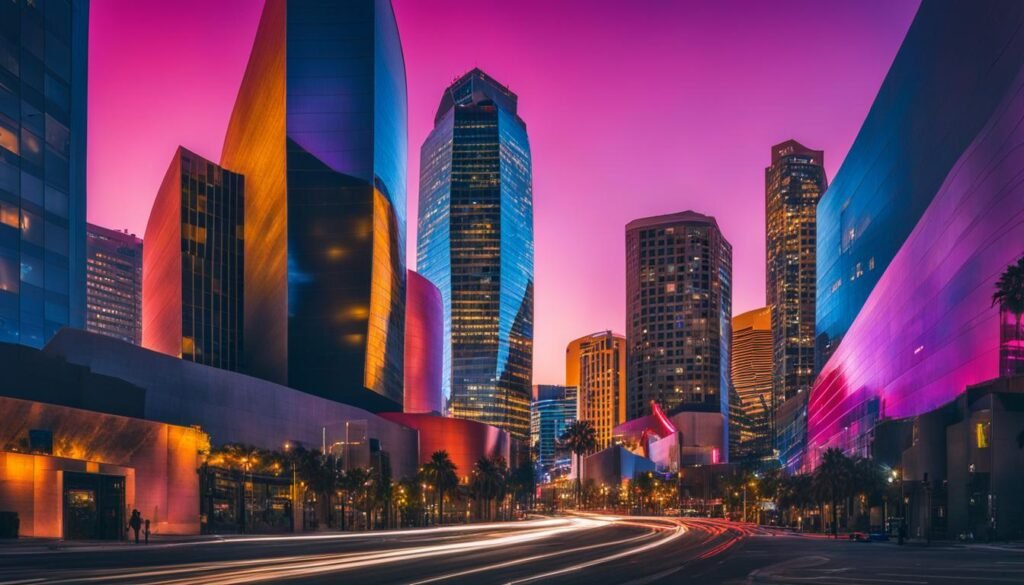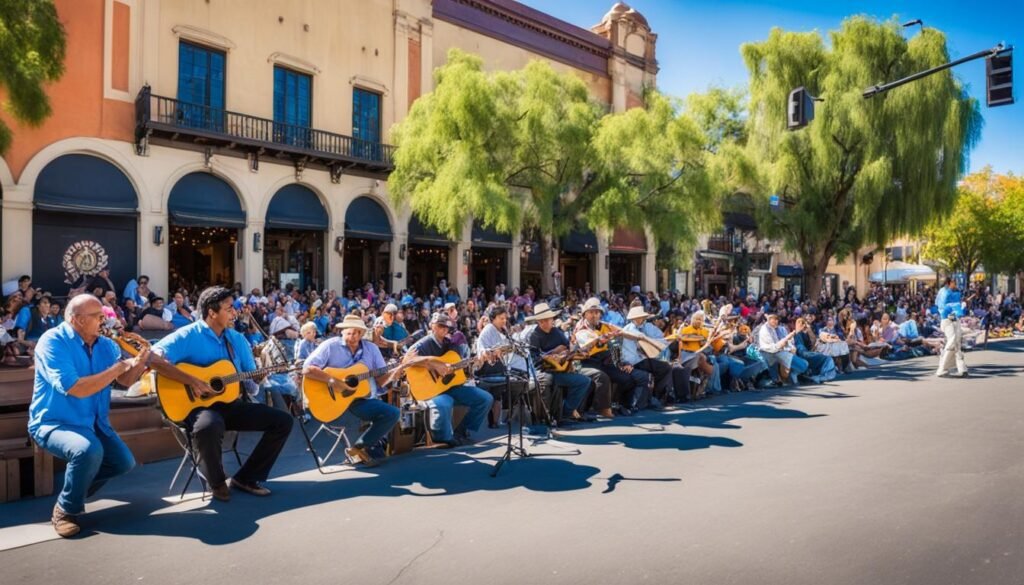
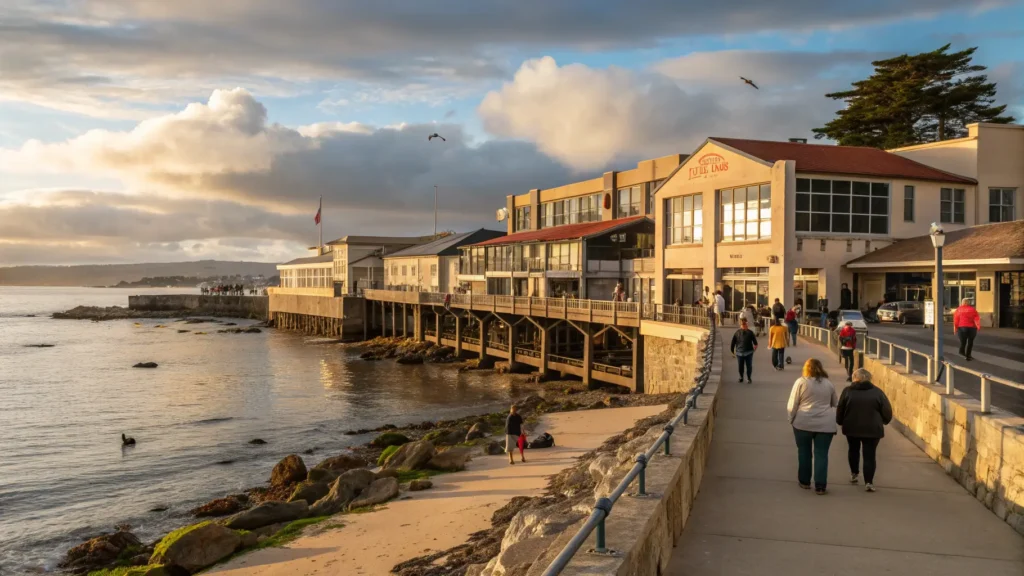
Monterey in November offers something most California coastal towns can’t deliver during the off-season: genuinely pleasant weather without the overwhelming summer crowds.
I’m going to be straight with you.
Most people get Monterey wrong.
They either show up in July expecting perfect beach weather only to freeze in the coastal fog, or they write off autumn entirely because they assume California’s coast gets miserable after September.
Both groups miss the sweet spot.
The November Weather Truth Nobody Tells You (And Why It Actually Matters)
Here’s what the thermometer really says when you visit Monterey in November.
Daytime highs hover around 64°F (18°C).
Nighttime lows drop to about 51°F (11°C).
That temperature range puts Monterey in November squarely in that perfect zone where you’re comfortable walking around all day but never sweating through your shirt.
The numbers themselves don’t tell the full story, though.
Early November still carries some of that lingering Indian Summer warmth—you’ll see highs around 61-62°F during the first ten days.
By mid-month, things cool off slightly to around 60°F for daytime temperatures.
Late November inches closer to proper winter, though you’d barely notice compared to most of the country.
I remember walking Cannery Row one November afternoon in just a light jumper.
The sun was out, the air was crisp but not cold, and I kept thinking how absurd it was that my mates back in Manchester were already dealing with freezing rain whilst I was comfortable enough to sit outside with a coffee.
That’s the Monterey November advantage—it’s cool without being unpleasant.
Here’s What You Actually Need to Pack
Forget what the packing lists tell you.
Here’s what works:
- Long-sleeve shirts (not jumpers, unless you run cold)
- One proper jacket for mornings and evenings
- Jeans or long trousers (shorts only if you’re unusually warm-blooded)
- Layers you can remove when the sun comes out midday
The 50-70°F range means you’ll dress like it’s a mild British spring day.
Not exactly shorts weather, but nowhere near needing a heavy coat either.
The Rain Situation: Should You Actually Worry?
Everyone obsesses over California rain.
Let me give you the real numbers.
On any given November day in Monterey, there’s an 18% chance of rain.
That’s roughly one day in five where you might see precipitation.
And when it does rain, you’re looking at about 0.4 inches (10mm) on average—barely enough to properly soak through a decent jacket.
Compare that to December’s 27% chance of rain or September’s nearly nonexistent 1% chance, and you can see where November sits.
It’s the beginning of California’s rainy season, but you’re catching it before things get properly wet.
I’ve planned three November trips to Monterey and only encountered rain once—a light drizzle that lasted maybe two hours before the sun broke through again.
Here’s my rain strategy:
Pack a compact rain jacket.
Don’t plan your entire itinerary around avoiding rain.
If it does drizzle, you’ve got the Monterey Bay Aquarium, Cannery Row’s shops, and dozens of restaurants to duck into.
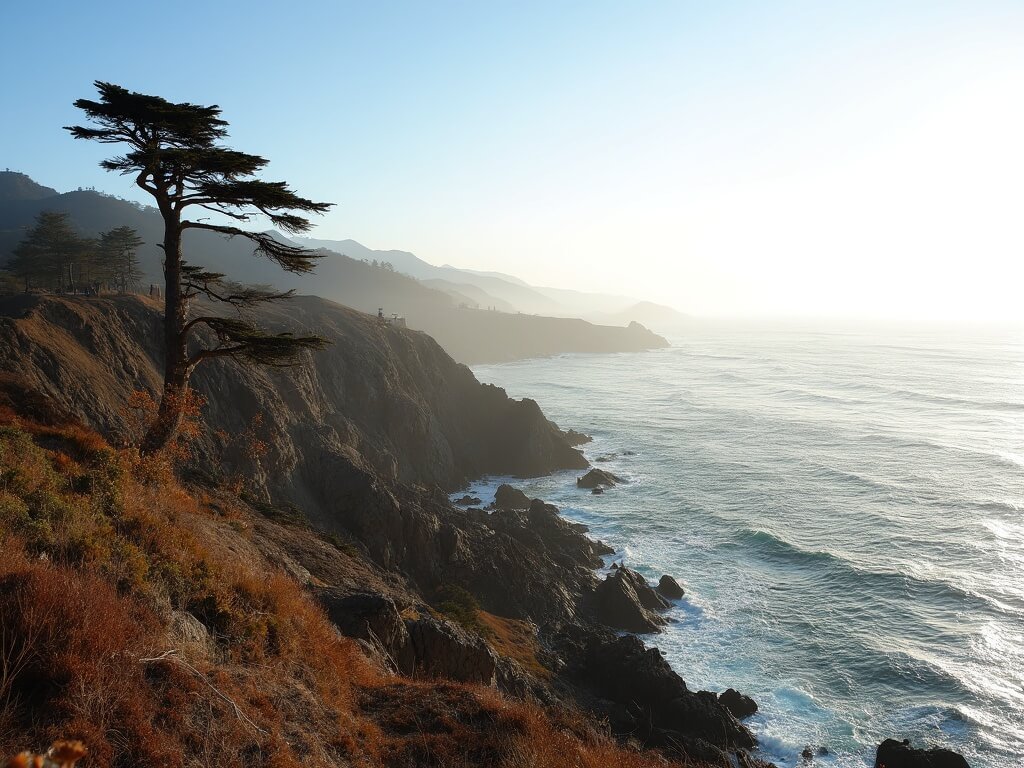
The reality is that most November days in Monterey are mostly sunny.
The county averages 267 sunny days per year—that’s 30% higher than the US average of 205 days.
November doesn’t suddenly buck that trend.
Why the Daylight Hours Work Better Than You’d Think
Shorter days usually put people off autumn travel.
November in Monterey gives you 10.3 hours of daylight.
Sunrise happens around 6:56 AM.
Sunset arrives about 5:13 PM.
That’s enough time to have a proper breakfast, spend a full day exploring, and still catch the sunset over the Pacific.
The key difference from summer isn’t that you lose entire chunks of your day—it’s that your schedule compresses slightly.
You’re not stumbling around at 6 AM trying to catch the sunrise, and you’re not waiting until 8 PM for dinner because the sun’s still blazing.
The practical upside:
Morning attractions open around 9-10 AM.
You’ve got seven hours of prime daylight.
You’re back at your hotel or heading to dinner right as the temperature drops.
I actually prefer this schedule to summer’s endless daylight, which tricks you into staying out too long and wearing yourself out.
What the Coastal Humidity Really Feels Like
Monterey sits right on the Pacific.
The ocean air brings moderately humid conditions year-round, November included.
But here’s what matters: the combination of cooler temperatures and that ocean moisture creates a different feeling than inland California.
It’s not sticky humidity like Florida or Thailand.
It’s more like the air has weight to it—substantial but not oppressive.
You won’t notice the humidity much unless you’re particularly sensitive.
The cool temperatures keep everything comfortable.
The Biggest November Advantage: Tourism Without the Tourists
This is where November truly shines.
Smaller crowds mean:
- Shorter queues at the Monterey Bay Aquarium (often a 30-45 minute wait in summer versus walk-in November availability)
- Available parking along Cannery Row and downtown
- Restaurant reservations that don’t require booking three days ahead
- Beach access where you can actually find a spot
Summer in Monterey can feel like you’re constantly fighting for space.
Everyone wants the same Instagram shot at the same viewpoint at the same time.
November strips that away.
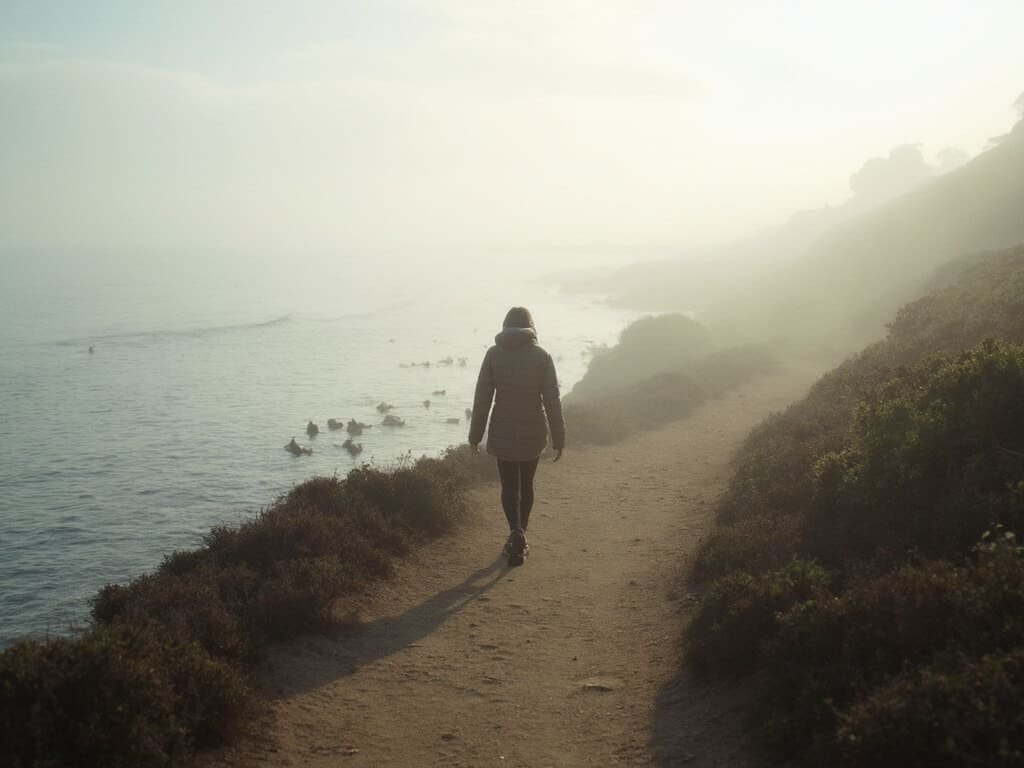
You still get access to everything—the state parks are open, the beaches are accessible, the restaurants are serving, the attractions are running their normal hours.
You just get to enjoy it all without constantly navigating around tour groups and families on school holidays.
I walked 17-Mile Drive one November morning and passed maybe a dozen other cars over the entire route.
In July, you’re in a conga line.
The experience difference is massive.
You can actually stop at the viewpoints, take your time with photos, and soak in the scenery without feeling rushed by the people queuing behind you.
The Lone Cypress—normally swarmed—had maybe three other people when I visited in November.
What About the Water Temperature?
The Pacific Ocean off Monterey is cold.
November doesn’t change that.
Water temperatures hover around 12-13°C (54-56°F).
That’s wetsuit territory if you’re planning any water activities.
Surfing, kayaking, paddleboarding—all possible, all require proper gear.
But here’s the thing:
Most November visitors aren’t planning to swim anyway.
You’re walking the beaches, exploring tide pools, watching sea otters and seals, enjoying the coastal paths.
The cold water barely factors into your trip unless you specifically want to get in it.
The ocean views, the sound of waves, the coastal experience—all of that works perfectly in November without needing to touch the water.
How November Weather Compares Across Monterey County
Monterey County isn’t uniform.
Coastal Monterey and inland areas like Carmel Valley and Salinas have notably different climates.
Along the coast (Monterey, Pacific Grove, Carmel):
Moderate temperatures thanks to the ocean.
More consistent weather day-to-day.
Occasional morning fog.
Inland valleys (Carmel Valley, Salinas):
Slightly warmer daytime temperatures (sometimes 5-10°F higher).
Clearer mornings with less fog.
Bigger temperature swings between day and night.
If you’re basing yourself in Monterey but planning day trips inland, bring layers you can remove.
That morning jacket that feels perfect on Cannery Row might be too much by midday in Carmel Valley.
The elevation differences play a role too.
Monterey itself sits at just 26 feet above sea level, keeping it firmly in the coastal climate zone.
Head into the hills, and you’ll notice the changes.
The Seasonal Transition That Makes November Special
November sits in this unique transitional window.
It’s not quite autumn anymore—the September and October warmth has faded.
But it’s not properly winter yet—December’s increased rain and cooler temperatures haven’t arrived.
Think of November as the bridge month.
You’re catching Monterey after the Indian Summer but before the cold season properly sets in.
Temperatures have dropped from September’s highs but remain warmer than what’s coming in December through February.
This transition creates conditions that many visitors actually prefer to summer.
The fog that blankets Monterey in July and August has largely cleared.
The marine layer that keeps summer visitors bundled up in jackets while the inland valleys bake has dissipated.
You get more consistent sunshine and clearer skies than the height of summer typically delivers.
Here’s what that transition looks like in practice:
- The landscape is still green from any early autumn rains.
- The tourists have thinned out but everything remains open.
- Prices drop from summer peaks.
- The locals are friendlier because they’re not exhausted from peak season.
I’ve visited Monterey in June, September, and November.
November delivered the best overall experience by a considerable margin.
The November weather creates this specific sweet spot where you can plan outdoor activities with confidence whilst still having the flexibility to pivot if conditions change.
State parks and coastal trails remain accessible and pleasant for walking.
The fresh ocean air feels invigorating rather than bitingly cold.
You can spend hours outside without ever feeling uncomfortably hot or miserably cold.
That balance is surprisingly rare in coastal destinations.
What the Data Actually Tells Us (And Why You Should Trust It)
Weather predictions for Monterey draw from solid sources.
NASA’s MERRA-2 project combines climate models with historical data over an 11-year period (2010-2020).
Weather station networks across the region contribute measurements that get elevation-corrected for accuracy.
Historical analysis covers decades of hourly weather reports from 1980-2016.
Why this matters:
When someone tells you November in Monterey averages 64°F with an 18% rain chance, that’s not a guess.
It’s decades of actual measurements showing consistent patterns.
California’s weather is remarkably predictable compared to many regions.
You’re not dealing with the wild variability of British weather or the hurricane uncertainty of the Gulf Coast.
November in Monterey is reliably mild, mostly sunny, and occasionally rainy.
Year after year.
The confidence you can have in those conditions makes trip planning dramatically easier.
You’re not gambling on whether the weather will cooperate—you’re booking a destination with a proven track record of delivering pleasant November conditions.
That reliability extends beyond just temperature and precipitation too.
Wind patterns remain moderate.
Extreme weather events are exceptionally rare.
The marine influence keeps conditions from swinging wildly day-to-day.
Translation: You can book your Monterey November trip months in advance and have reasonable confidence that the weather will cooperate with your plans.
The risk isn’t whether November will be pleasant—it’s whether you’ll kick yourself for not discovering this sooner whilst everyone else crowds into summer’s disappointing fog.
Related Resources:
The Events Nobody Mentions (But Totally Change Your November Experience)
Most travel guides skip right over November events.
They assume everything interesting happens in summer or during the holiday season.
Wrong.
Monterey hosts several notable events specifically in November that fundamentally change what’s available during your visit.
The timing can work massively in your favor if you plan around it.
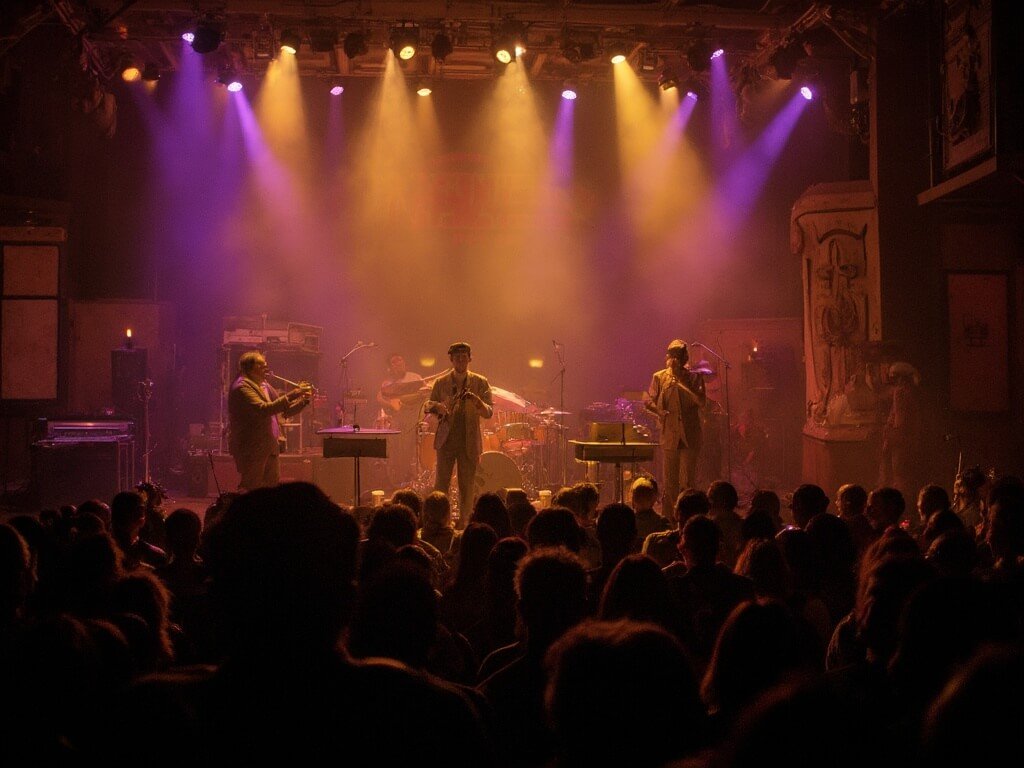
The Monterey Jazz Festival sometimes extends into early November depending on the year’s schedule.
Even when the main festival happens in September, related performances and venue bookings continue through autumn.
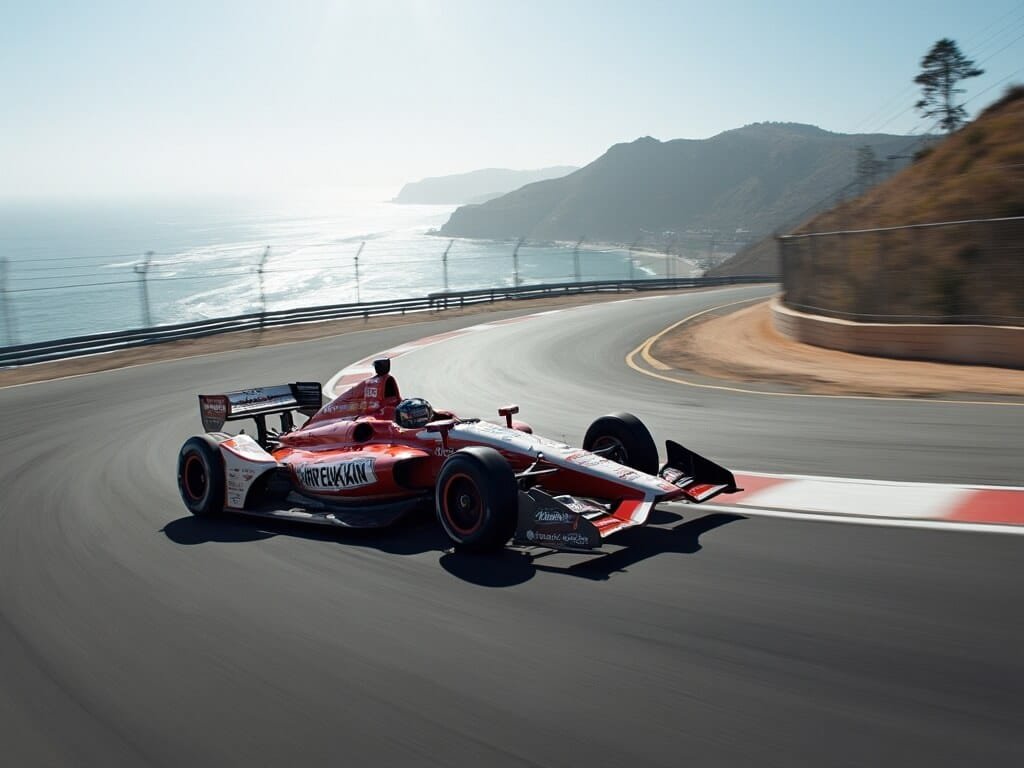
The IndyCar Grand Prix of Monterey at Laguna Seca Raceway occasionally lands in November.
When it does, the entire region transforms—hotels book up, restaurants fill earlier, and there’s an energy in the air you won’t find during quieter months.
Here’s what matters:
These events don’t overwhelm Monterey the way summer tourism does.
They add flavor and activity without destroying the off-season advantages.
You might catch live music at venues that go quiet in winter.
You might experience the racing atmosphere without the usual crowds those events draw in peak season.
Or you might intentionally avoid event weekends entirely to maintain that peaceful November vibe.
I accidentally visited during a smaller motorsport event one November.
The restaurants were busier than I expected, but nothing like July chaos.
The energy felt festive rather than overwhelming.
The key is checking the events calendar before booking.
If you want maximum quiet, avoid event weekends.
If you want a bit of action mixed with your coastal relaxation, target those dates specifically.
The Real Cost Advantage of November Travel
Let’s talk money.
November accommodation prices in Monterey drop 20-40% compared to summer peaks.
A hotel room that costs $300-400 per night in July might run $180-250 in November.
The same property, the same view, dramatically different price.
Rental properties follow similar patterns.
That Airbnb or VRBO home that’s $500/night in summer? Check the November calendar—you’ll likely find it listed at $300-350.
The savings extend beyond accommodation:
- Rental cars cost less without peak-season demand.
- Restaurants offer better value (and sometimes autumn specials).
- Tour operators occasionally discount November bookings.
- Even parking is cheaper in some areas due to off-season rates.
You’re getting the same Monterey experience—arguably a better one without crowds—at a fraction of peak-season cost.
Quick cost comparison from my own bookings:
July trip (2022):
- Hotel: $340/night
- Rental car: $85/day
- Dinner reservations: required 3+ days ahead
- Aquarium tickets: $50 (peak pricing)
November trip (2023):
- Hotel: $195/night (same chain, similar quality)
- Rental car: $52/day
- Dinner reservations: walk-ins available most places
- Aquarium tickets: $50 (same price, but no queue)
The accommodation and car rental savings alone covered an extra day of travel and several nice meals.
This isn’t about choosing budget options over luxury.
It’s about getting more value for the same spend—or the same experience for significantly less money.
How to Actually Plan Your November Days (The Framework That Works)
November weather in Monterey creates a specific planning opportunity.
You know conditions will be mild.
You know rain is possible but unlikely.
You know crowds will be manageable.
Here’s the framework I use:
Morning (7 AM – 12 PM)
- Coastal trail walks (recreation trail from Monterey to Pacific Grove)
- Point Lobos State Natural Reserve exploration
- 17-Mile Drive (better light, fewer cars)
- Beach walks and tide pooling
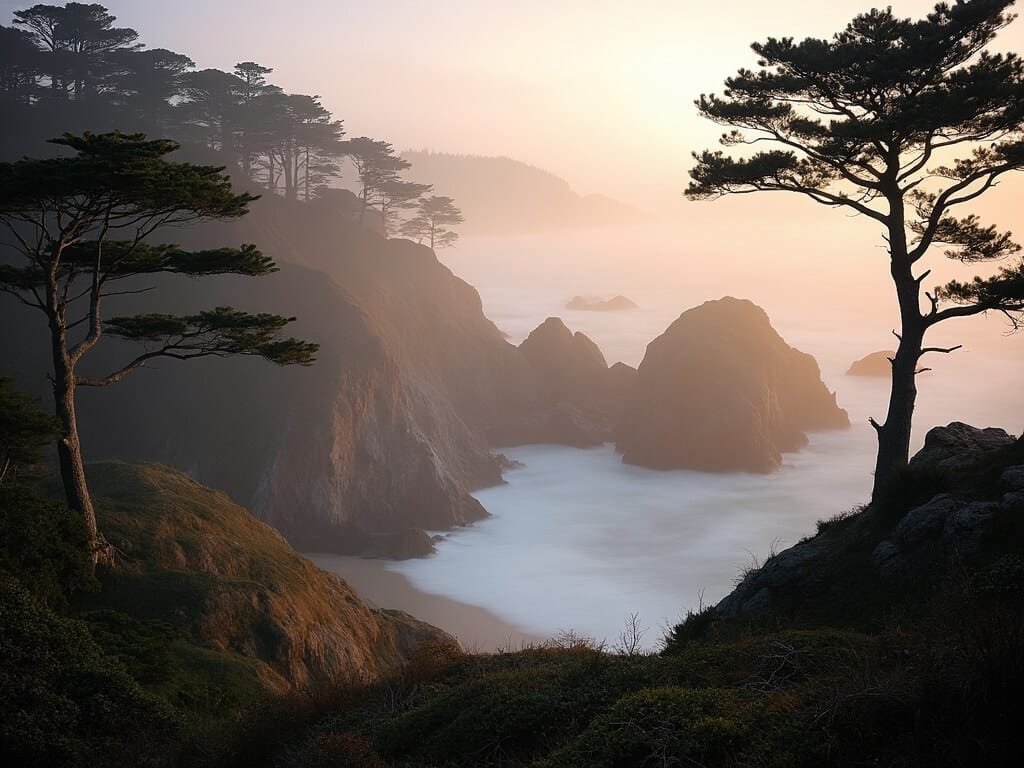
Pack a light jacket.
You’ll likely remove it by late morning.
The advantage of November mornings is that sunrise happens late enough (6:56 AM) that you don’t need to wake obscenely early to catch good light.
But the crowds haven’t arrived yet because most tourists sleep in.
Midday (12 PM – 3 PM)
- Outdoor dining on Cannery Row or downtown
- Continuing outdoor activities if weather cooperates
- Indoor attractions if you want a break (aquarium, museums)
If it’s sunny and 64°F, stay outside—you’re not getting better conditions.
Afternoon/Evening (3 PM – 7 PM)
- Sunset viewing from coastal viewpoints
- Early dinner before the temperature really drops
- Indoor entertainment or hotel relaxation
- Downtown Monterey exploration (shops, galleries)
November encourages a more relaxed evening pace.
Summer’s endless daylight tricks you into packing too much into each day.
November’s earlier sunset creates a natural endpoint where returning to your accommodation feels right rather than premature.
The meta-strategy:
Book one or two must-do activities in advance (aquarium, specific tours).
Leave everything else flexible based on daily conditions.
November’s predictable weather means you can decide morning-of whether to spend the day hiking or exploring indoor attractions.
This flexibility is harder in summer when everything requires advance booking, and impossible in December when rain becomes more frequent.
The Coastal Microclimate Secret That Changes Everything
Monterey’s microclimate creates conditions that differ dramatically from areas just 10-20 miles away.
The Pacific Ocean moderates temperatures year-round.
Cold ocean currents keep summers cool and winters mild.
Within the county, you’ll find surprising variations:
- Carmel Valley is 10°F warmer than the coast
- Big Sur changes with elevation
- Santa Cruz has different fog patterns
Learn more about Monterey’s November climate
You can optimize your itinerary based on what you want that day:
- Sunshine and warmth? Head inland to Carmel Valley
- Dramatic coastal scenery? Stay along Pacific
- Diversity? Plan a loop day trip
The ocean temperature (54-56°F) keeps air mild.
You’re never getting the blazing inland heat or extreme winter chill.
The Fog Factor Nobody Explains Properly
Monterey is famous for fog.
But November changes everything.
Summer fog often lingers all day.
November fog burns off early.
What November fog actually looks like:
- Morning: Light fog, clears by 9-10 AM
- Midday: Clear or partly cloudy
- Evening: Fog may reappear near water
This atmospheric fog enhances the mood without ruining plans.
What the Locals Do in November (And Why You Should Copy Them)
Watch what Monterey locals do in autumn.
- They walk the trails
- They dine out peacefully
- They return to state parks
- They enjoy the real Monterey
Farmers Markets
Fresh local produce, artisan goods, and friendly atmosphere.
State Parks
Point Lobos, Garrapata, and Big Sur are all better with fewer crowds.
Beach Time
Walk, relax, watch waves—skip the swimming.
Wine Country Access
Less crowded tasting rooms in Carmel Valley and Santa Lucia Highlands.
Enjoy attentive service and real conversations with wine pros.
The November Photography Advantage You’re Missing
November light in Monterey is exceptional.
- Longer golden hour
- Saturated color
- Dramatic skies
Better Landscape Shots
Sun angles flatter coastal cliffs and rock formations.
Superior Wildlife Photography
Whales, otters, seals—more visible without crowds.
Architectural Photography
No harsh shadows or tourist photobombs.
The November Dining Scene That Nobody Writes About
Summer dining is stressful.
November dining is peaceful.
- Walk-ins welcome
- Relaxed service
- Focused kitchens
Where to Focus Your November Dining
Seafood: Dungeness crab season begins.
Fresh local fish and squid available year-round.
Wine country dining: Less crowded, more personal.
Hidden locals spots: Now accessible again after the summer crowds leave.
The Single Biggest November Mistake (And How to Avoid It)
They pack for winter.
Don’t bring a heavy coat.
Don’t expect bikinis either.
The correct packing approach:
- One proper jacket
- Long trousers
- Layering tops
- Walking shoes
- Optional light rain jacket
Leave behind: Winter coat, shorts, swimwear, snow gear.
Why November Is Actually Better Than Summer (Yes, Really)
You Get More Usable Weather
- Less fog
- More sunshine
You Experience Real Monterey
See the town as locals do—not the summer performance for tourists.
Your Money Goes Further
Save 30-40% on accommodations and reinvest in longer stays or nicer experiences.
You Avoid the Summer Activity Disappointment
No false expectations—just scenic coastlines, outdoor fun, and fresh food.
The Weather Preparation That Actually Matters
Forget apps. November is consistent.
- Highs: ~64°F
- Lows: ~51°F
- 18% rain chance
Your strategy:
- Pack layers
- Bring a rain jacket
- Be flexible
You don’t need overplanning—just awareness.
The Final Truth About Monterey in November
Monterey stays open.
Unlike other coastal towns, it doesn’t shut down post-summer.
You get full service, lower crowds, better weather, and authentic experiences.
Stop waiting for summer. Book your trip. Bring layers. And get ready for the best Monterey month you never considered—November.
Explore More:
- Monterey in October
- Monterey in September
- Free Things to Do in Monterey
- Carmel-by-the-Sea
- Santa Cruz in September
External References: