Yosemite Village in August is a study in contradictions.
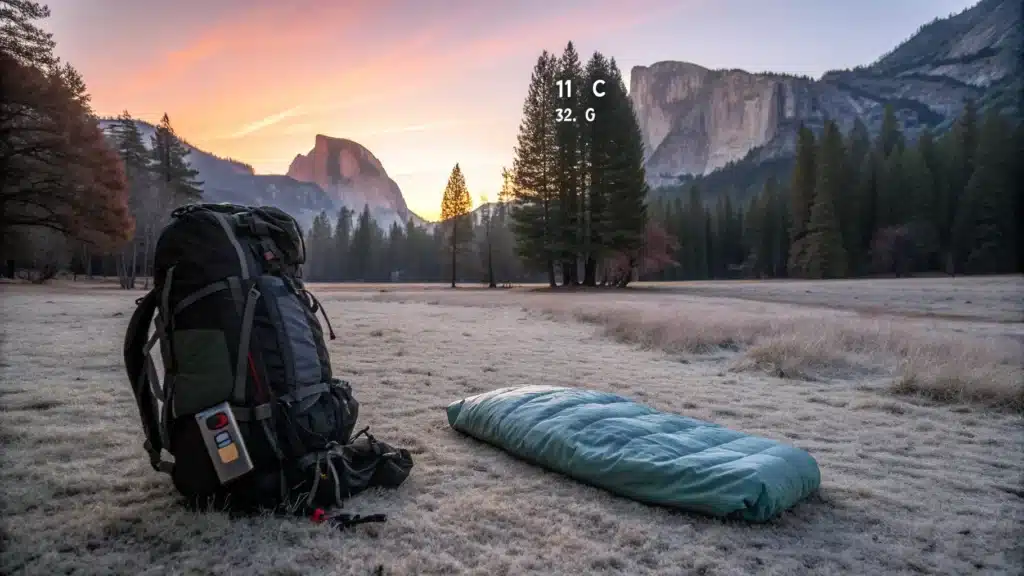
You’ll wake up at 6 AM in a sleeping bag that felt perfect at midnight but now has you questioning whether you accidentally packed for Antarctica.
The thermometer reads 11°C.
By noon, you’ll be desperately seeking shade as temperatures soar to 32°C, wondering if you’ve somehow teleported to the Sahara.
That 21-degree temperature swing isn’t a typo—it’s your daily reality in Yosemite Valley during August.
The Temperature Rollercoaster You Need to Pack For
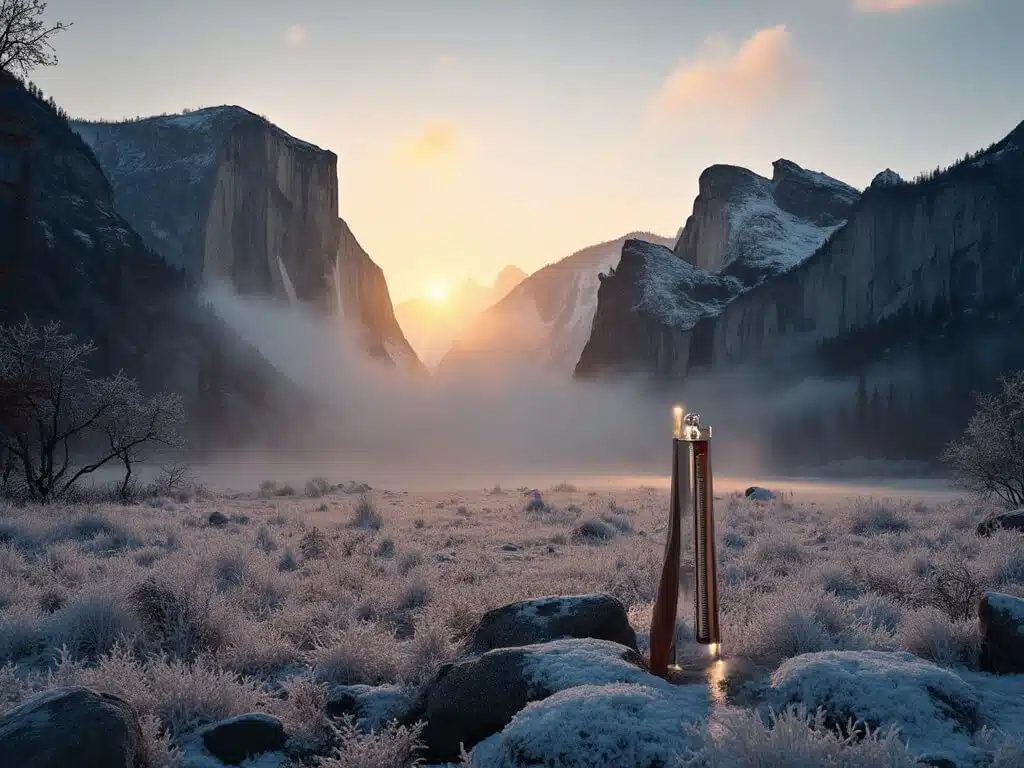
Here’s what the weather actually does in Yosemite Village come August:
Daytime conditions:
- Valley temperatures hit 87-90°F (32°C) as standard
- Occasional heat waves push past 100°F (37°C)
- Clear blue skies dominate (only 0.2 inches of rain for the entire month)
- UV index stays moderate, but don’t let that fool you
Night-time reality check:
- Temperatures plummet to 49-57°F (11-14°C)
- Higher elevations drop to a frigid 37°F (3°C)
- That lightweight summer sleeping bag? Completely inadequate
I learnt this the hard way during my first August visit in 2019.
I’d packed like I was heading to the beach—minimal layers, one hoodie, confidence bordering on arrogance.
The first night at Tuolumne Meadows, I wore every piece of clothing I’d brought, including my rain jacket as an extra blanket layer, and still shivered until sunrise.
Meanwhile, my hiking partner, a seasoned Yosemite regular, slept comfortably in his proper 3-season sleeping bag, probably dreaming about how he’d mock me in the morning.
He did.
The elevation makes all the difference.
At 8,000 feet, daytime temperatures max out at a pleasant 70°F whilst the valley floor bakes.
This isn’t just trivia—it’s your escape route on brutal heat days.
The wildcard nobody mentions: wildfire smoke.
August sits squarely in fire season, and some years that pristine blue sky turns hazy grey.
Check air quality reports before you go, not just weather forecasts.
Why August Brings Both the Best and Worst of Yosemite
Peak season doesn’t begin to describe August at Yosemite Village.
It’s the busiest month of the year.
Car parks fill by 7 AM.
Accommodation prices triple.
The iconic shuttle buses pack tighter than a London tube at rush hour.
But here’s the thing—there’s a reason everyone shows up in August.
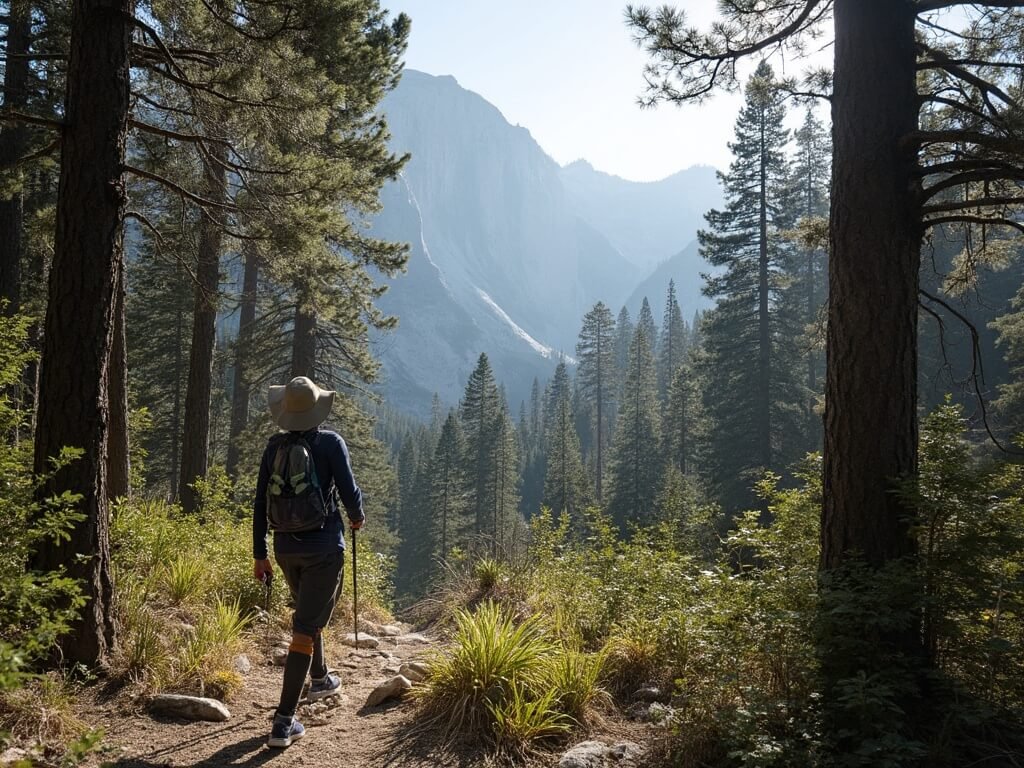
Every single trail is open.
No snow blocking high passes.
No “trail closed” signs.
All 800+ miles of hiking routes become accessible, from easy valley strolls to brutal high-country slogs.
Tioga Road opens fully, unlocking Tuolumne Meadows and the entire high Sierra.
Glacier Point Road gives you those postcard-perfect valley views without the 4-hour climb.
You can actually plan your dream itinerary without checking trail condition reports every morning.
The late August secret?
Wait until the last two weeks of the month.
Schools resume.
Families disappear.
The crushing crowds thin noticeably whilst weather remains brilliant.
Mosquitoes, those ankle-biting terrorists of the Sierra summer, mostly vanish by late August too.
June and July? You’ll need industrial-strength repellent and the patience of a saint.
August? Barely a nuisance.
Is it worth battling the crowds for these conditions?
That depends entirely on what you value—and how you plan your days.
Discover free things to do in Yosemite Village
The Trail Selection Strategy That Separates Tourists from Locals
Not all Yosemite trails are created equal in August heat.
Some stay relatively comfortable.
Others transform into sun-baked torture chambers by 10 AM.
The north-facing advantage:
Four Mile Trail climbs 3,200 feet to Glacier Point, but because it faces north, it holds shade through much of the morning.
Still challenging? Absolutely.
But survivable, even in August.
The south-facing mistake:
Upper Yosemite Fall Trail faces directly into the sun.
No shade.
No mercy.
The granite reflects heat like a convection oven.
I’ve watched tourists start this trail at 11 AM in August, carrying a single water bottle, wearing cotton t-shirts.
It never ends well.
Park rangers do regular patrols on hot days specifically to rescue people who underestimated this route.
The elevation escape:
When valley temperatures hit triple digits, the high country sits 20-30 degrees cooler.
Cathedral Lakes, Clouds Rest, any trail starting from Tuolumne Meadows—these become your best mates on scorching days.
Smart hikers follow this pattern:
- Start valley hikes at first light (5:30-6 AM)
- Finish before 11 AM
- Spend midday swimming or hiding in shade
- Drive to high elevation for afternoon hiking
- Return to valley for evening
The minimum water calculation everyone gets wrong:
Three litres for a day hike isn’t a suggestion—it’s the absolute minimum.
The dry mountain air dehydrates you faster than you’ll notice.
By the time you feel thirsty, you’re already behind.
I now carry four litres on any hike over 8 miles, plus electrolyte tablets.
It feels excessive until mile 6, when everyone else is rationing their last few sips and eyeing your pack with undisguised envy.
Quick-drying clothing matters more than you’d think.
Cotton soaks with sweat and stays wet.
Synthetic fabrics or merino wool wick moisture and dry fast.
When you’re generating heat climbing Half Dome, this difference becomes critical.
The gear checklist that actually matters:
- Wide-brimmed hat (not a baseball cap—you need neck protection)
- Sunscreen SPF 30+ (reapply every 2 hours, seriously)
- Sunglasses rated for high altitude
- Lightweight long sleeves (protects better than sunscreen alone)
- Multiple water bottles or hydration bladder
- Salty snacks (you’re sweating out electrolytes constantly)
Explore more about California in August
Why August Backpacking Hits Different (In the Best Way)
Day hiking gets all the attention, but August backpacking in Yosemite offers something special.
The weather creates this perfect sweet spot—warm enough for comfortable camping, cool enough for quality sleep.
You don’t need a winter-rated sleeping bag, but you’re not sweating through the night either.
The wilderness permit reality:
You need one.
They’re competitive.
Popular routes like Half Dome and Cloud’s Rest fill up months in advance through the reservation system.
But here’s what the guidebooks don’t tell you—walk-up permits become available daily at 11 AM for next-day departures.
About 40% of permit quota stays in this pool.
If you’re flexible on routes and timing, you can snag permits even in peak August.
I’ve secured walk-up permits twice in August by showing up at the wilderness centre at 10 AM with three backup route options.
First choice was taken.
Second choice was available.
Two days later, I was camping next to Budd Lake with maybe six other people visible in a 5-mile radius.
The heat management game:
Backpacking in August heat requires a different rhythm than spring or autumn trips.
- Start hiking at dawn (proper dawn, not 8 AM “dawn”)
- Cover serious mileage before 11 AM whilst it’s pleasant
- Find a shaded spot near water for midday (noon to 4 PM)
- Swim, read, nap, filter water
- Resume hiking in late afternoon as temperatures drop
This schedule feels lazy until you try it.
Then you realise you’re covering the same distance as the suffer-fest crowd, but you’re actually enjoying the experience instead of just surviving it.
Stream crossings that terrify people in June become casual rock-hops by August.
Water levels drop significantly as snowmelt finishes.
The afternoon thunderstorm lottery:
August afternoons occasionally spawn thunderstorms, especially in the high country.
They’re brief, usually light, but you don’t want to be on an exposed ridge when lightning starts.
Pack a rain jacket and rain fly for your tent.
Not because you’ll probably need them—you likely won’t.
But because the one time you don’t bring them, you’ll spend a miserable night huddled under a tree cursing your optimism.
The night skies in August deliver something extraordinary.
No marine layer clouds.
Minimal atmospheric moisture.
Just crystalline darkness and more stars than seem physically possible.
I’ve camped in dozens of places worldwide, but lying in a sleeping bag at 10,000 feet in the Sierra, watching the Milky Way stretch from horizon to horizon—that experience hasn’t been matched.
The Perseid meteor shower peaks in mid-August too.
If you time your backpacking trip right, you’ll catch shooting stars whilst falling asleep to the sound of wind through pine trees.
Worth the permit hassle?
Every single time.
The Wildlife Situation You Should Actually Expect
August brings Yosemite’s wildlife into full summer mode, and you need to know what that means beyond the romantic notion of “observing nature.”
Bears are everywhere.
Not metaphorically everywhere—literally everywhere.
They’re active, hungry, and completely unimpressed by your bear canister unless you’ve stored it properly.
I’ve watched a bear spend 45 minutes trying to open an improperly closed canister at Sunrise Lakes, eventually succeeding by rolling it off a cliff.
The hiker’s food? Gone.
The bear? Emboldened to try this technique on every canister it finds.
- Store your bear canister 100 feet from camp
- Never sleep with it as a pillow
- Never store food in your car
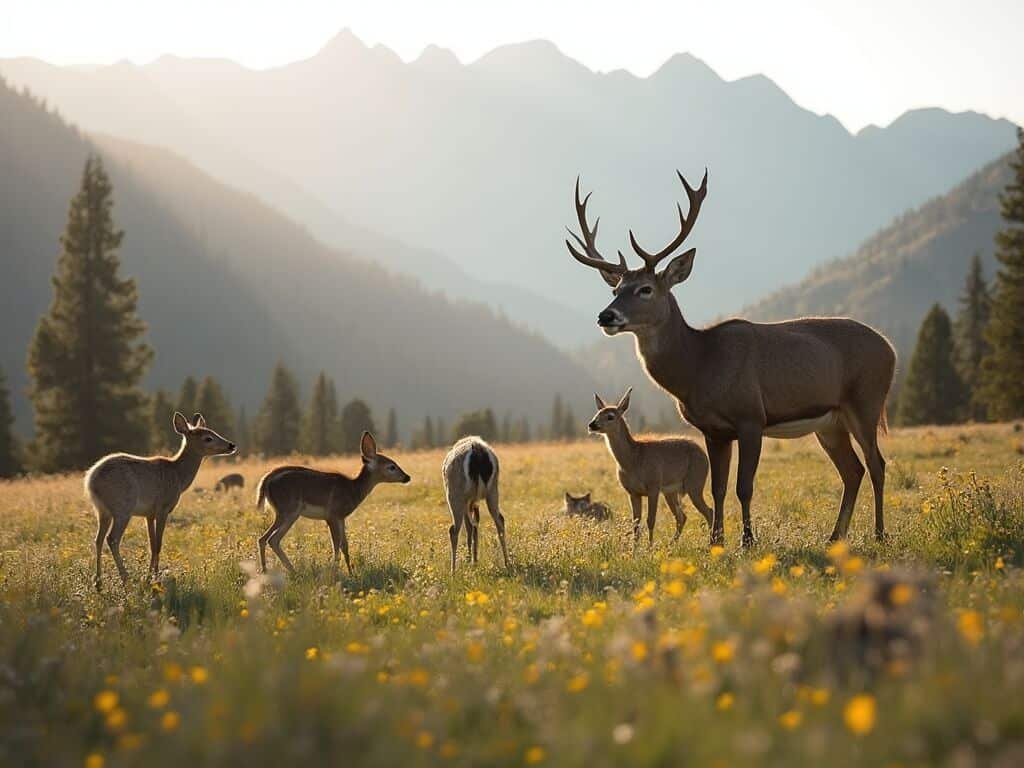
Mule deer wander through meadows and campgrounds.
They’re wild animals with sharp hooves and protective instincts.
Keep your distance.
The wildlife viewing sweet spots:
- Early morning in Yosemite Valley meadows (deer, bears occasionally)
- Dusk near Tuolumne Meadows (marmots, ground squirrels, deer)
- Any backcountry lake at dawn (sometimes deer, marmots guaranteed)
The smaller critters cause more daily problems than the charismatic megafauna.
Ground squirrels and Steller’s jays have PhDs in food theft.
Turn your back for 30 seconds, and your sandwich disappears.
Never feed them, even “accidentally” by leaving food accessible.
Animals that associate humans with food become aggressive and eventually get euthanised by park rangers.
The alpine lakes accessible in August also mean you might spot fish.
Check current fishing regulations if you’re planning to fish—rules change based on conservation needs.
What you won’t see much of: snakes and large predators beyond bears.
Rattlesnakes exist in Yosemite but stay lower and drier than most August hikers venture.
Mountain lions roam the park but avoid humans religiously.
The real magic happens at the intersection of landscape and wildlife—watching a deer drink from a crystal stream with granite peaks behind it, or spotting a bear ambling through a wildflower meadow.
These aren’t guaranteed Disney moments.
But August’s accessibility means you can position yourself in the right places at the right times to increase your odds significantly.
Respect the wildlife, follow food storage rules obsessively, and you’ll have encounters that justify the entire trip without ever feeling dangerous.
The Swimming Spots That Save Your August Yosemite Trip
When valley temperatures cross 100°F, swimming becomes less recreation and more survival strategy.
The Merced River cuts through Yosemite Valley with dozens of swimming holes, each with its own character and danger level.
The safest swimming areas:
- Sentinel Beach (gentle current, sandy bottom, lifeguards present)
- Cathedral Beach (popular with families, easy access)
- Swinging Bridge area (calm pools, picnic areas nearby)
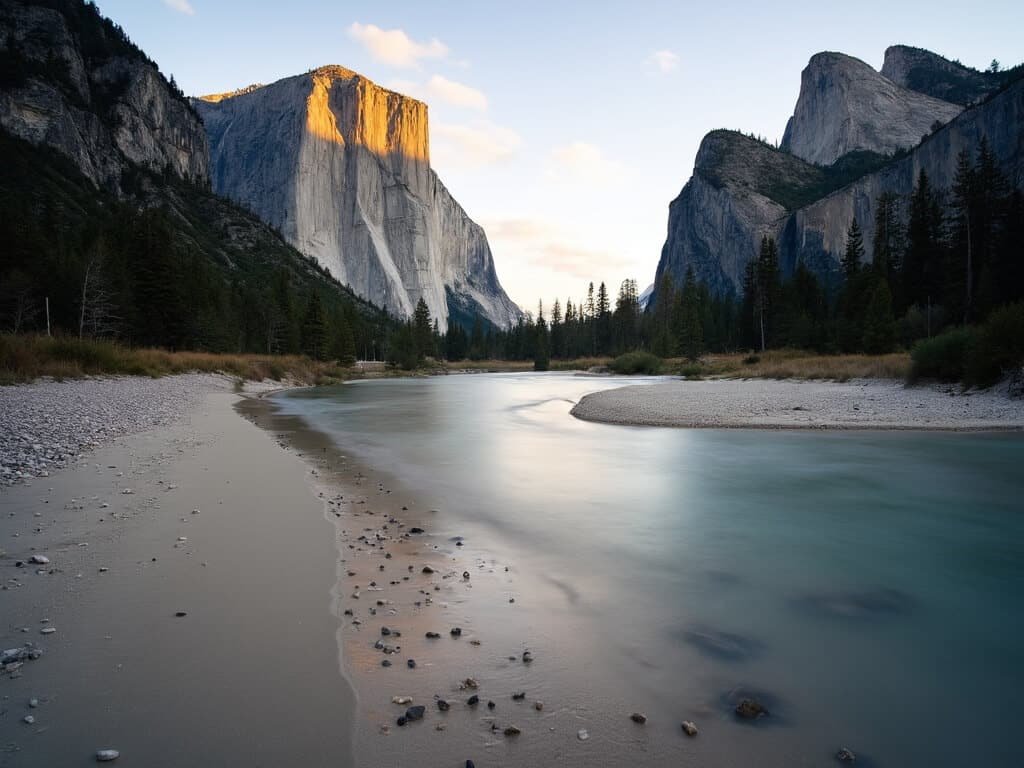
These spots get crowded by 11 AM in August. Locals arrive at sunrise to claim shaded spots before the tourist wave hits.
The absolute rule nobody should break:
Never swim above a waterfall. Ever.
The smooth granite near waterfall edges looks innocent. It’s not. Algae creates an invisible slick surface more slippery than ice. Once the current catches you, there’s no stopping.
Yosemite averages multiple drowning deaths annually, almost always from people who thought they’d just wade near the edge. The park posts warning signs. Rangers give talks. People ignore them anyway and die.
I watched a ranger pull a tourist back from the edge at Vernal Fall in 2021. The guy was ankle-deep in water, maybe 15 feet from the drop, taking selfies. One slip would have sent him over a 317-foot waterfall. He got angry at the ranger for “ruining his photo.”
Some people can’t be helped. Don’t be one of them.
The high-country swimming secret:
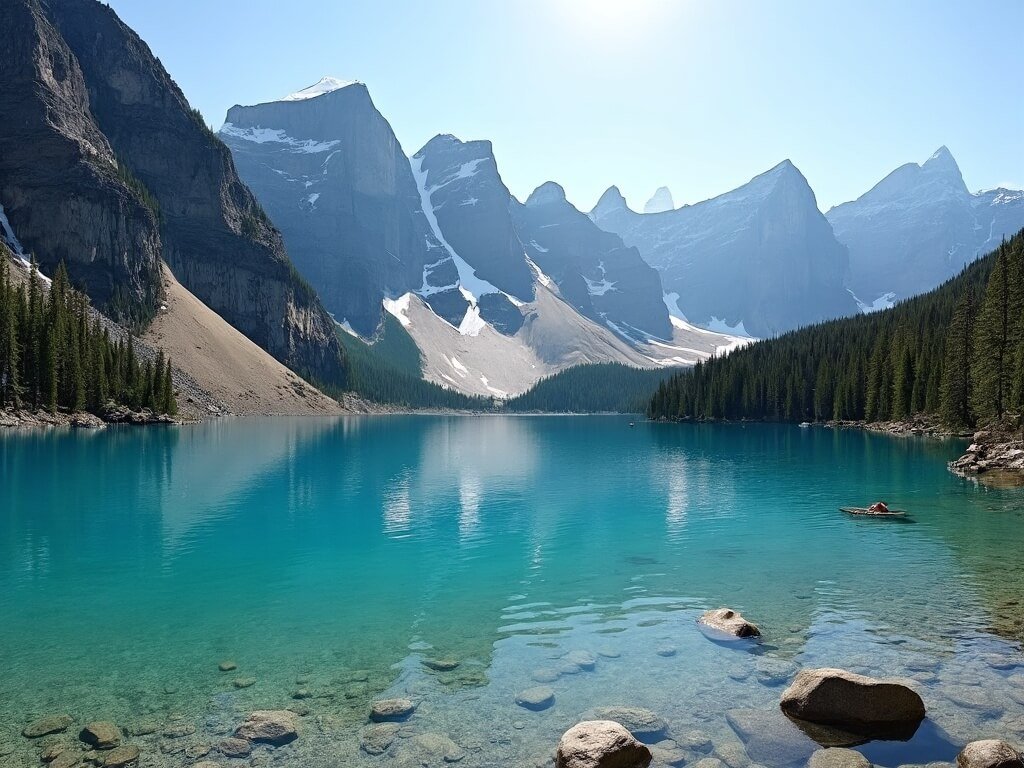
Alpine lakes in August hit temperatures that make “refreshing” feel like a generous description.
Most stay between 50-60°F. You’ll gasp when you enter. Your muscles will seize briefly. Then it’s glorious.
After hiking 8 miles in 85-degree heat, that shock of cold water becomes one of those sensory memories that stays with you for years.
Tenaya Lake, accessible via Tioga Road, offers the warmest high-country swimming—it actually reaches the low 60s by late August. Families with kids gravitate here because you can swim without inducing hypothermia in 90 seconds.
The backcountry lakes—Cathedral, Budd, May—stay brutally cold but offer something better than warmth: solitude.
Pack a quick-dry towel. Regular towels stay damp in your pack and breed mildew. A lightweight microfiber version dries in an hour hanging from your pack.
Swimming saves August days that would otherwise become heat-stroke marches. But only if you respect the water’s power and avoid the obviously dangerous spots that social media has unfortunately made famous.
Learn more about visiting Yosemite in August and what to expect when visiting Yosemite in August.
The Gear That Separates Pleasant Days from Miserable Ones
For more Yosemite travel tips, check out these resources: