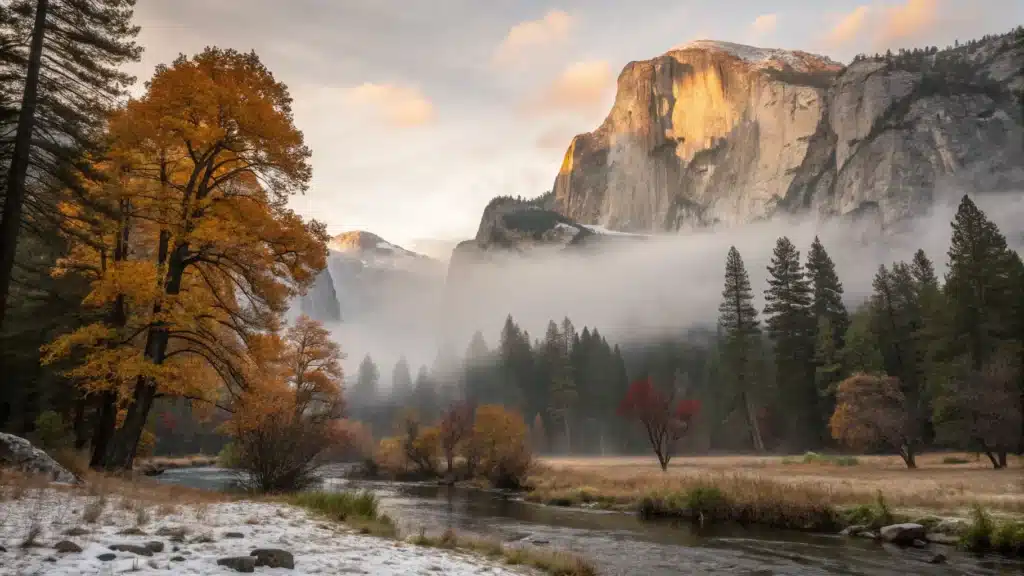
Yosemite in October is what happens when Mother Nature decides to show off.
You’ve seen the summer photos. The crowded overlooks, the packed shuttles, the elbow-to-elbow scramble for that perfect Half Dome shot.
But October? October is different.
The temperature swings from a pleasant 64-75°F during the day to a crisp 37-51°F at night, creating this perfect window where you’re comfortable hiking but not melting into a puddle halfway up a trail.
I’m talking about weather that actually makes sense for outdoor exploration.
The Temperature Sweet Spot That Changes Everything
Here’s what nobody tells you about Yosemite weather in October.
The daytime highs hover around that magical 18-24°C range where your body just works better. You’re not constantly chugging water. You’re not stopping every fifteen minutes to catch your breath. You’re actually hiking.
Some days push into the upper 70s or low 80s°F, giving you those rare autumn days where a t-shirt feels just right on the trail.
But when the sun drops? That’s when October shows its teeth.
Temperatures plummet to the low 50s°F in early morning and late evening, occasionally dipping into the high 30s°F overnight.
This isn’t a bug. It’s a feature.
The temperature contrast creates some of the most dramatic photography conditions you’ll ever see.
The cold air settles into the valley overnight, and when that 7:06 AM sunrise hits, you get mist rising off the Merced River, golden light spilling across granite faces, and colours that make your Instagram feed look like you’ve applied filters (you haven’t).
Last October, I woke up at 5:30 AM feeling absolutely ridiculous about my life choices. Cold. Dark. Questioning why I’d driven four hours for this.
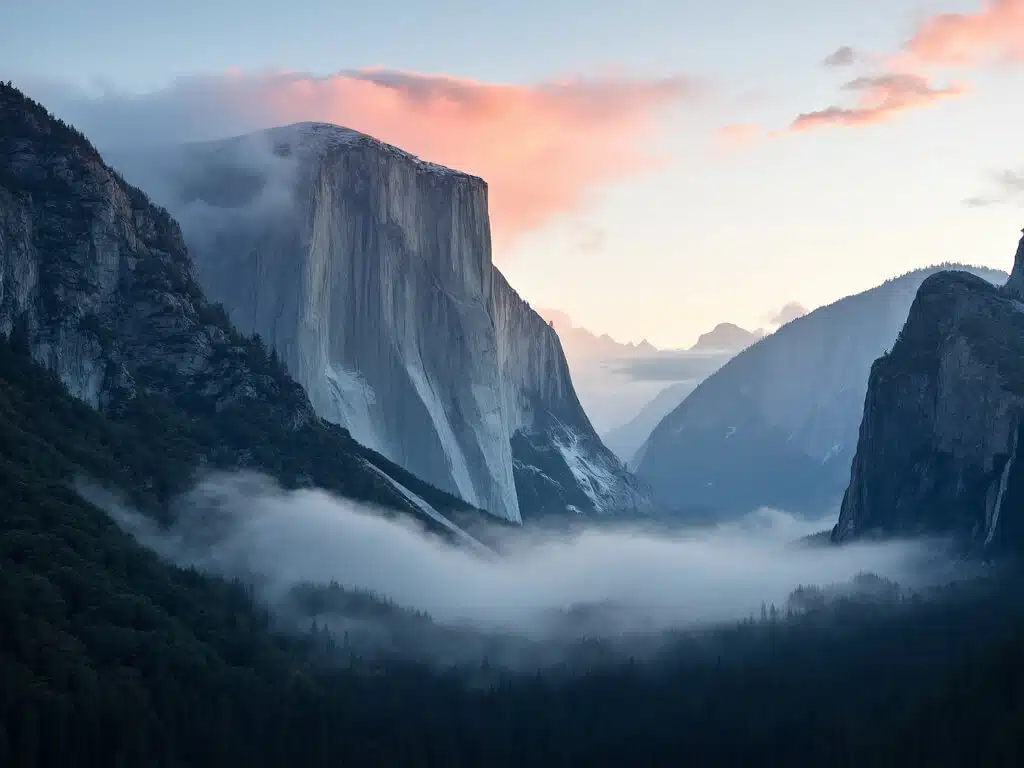
Then I watched El Capitan turn pink, then orange, then this impossible shade of amber as the alpenglow hit. The entire valley was socked in with ground fog, and Half Dome was just floating there like some mythical fortress in the clouds.
I stood there for forty minutes, camera forgotten, just watching.
Worth every cold, dark minute.
What the 11% Precipitation Probability Actually Means for Your Trip
October sits right at that seasonal transition point.
You’ve got an 11% chance of rain or snow on any given day. Sounds low, right?
But when it does rain, it dumps an average of 14.5mm. These aren’t gentle drizzles—October marks the beginning of Sierra Nevada storm systems rolling through.
The weather can flip from heat wave to snow storm within the same week.
Unpredictable? Absolutely.
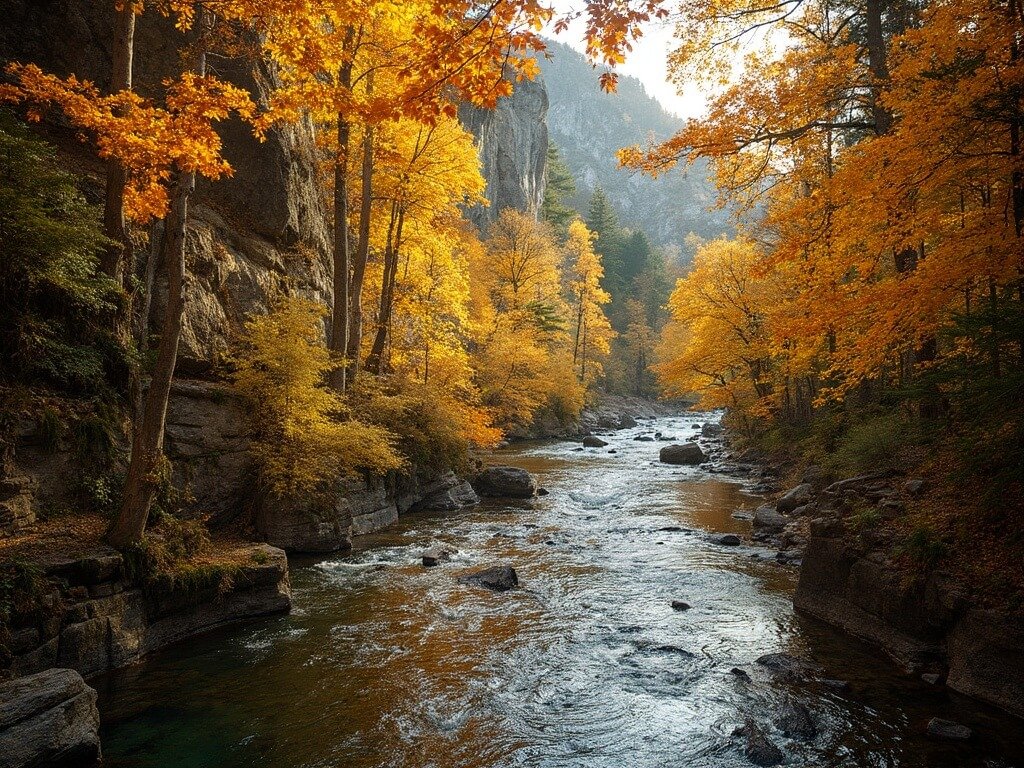
But here’s the thing: those storms create visual conditions that summer visitors never see.
Sunshine breaking through swirling clouds. Mist clinging to granite walls. Waterfalls suddenly surging with fresh rainfall.
The granite cliffs look more dramatic when they’re wet, darker, more imposing. The contrasts become sharper. The whole valley transforms.
And most of the time? The roads stay clear because it’s still warm enough that snow melts quickly.
I always ring 209-372-0200 (press 1, then 1 again) the morning of any big hike. Real-time road conditions in fifteen seconds. No guessing, no gambling with tire chains you’ve never fitted before.
The Golden Hour Secret That Photographers Guard Jealously
October gives you roughly 11.2 hours of daylight.
Sunrise at 7:06 AM. Sunset at 6:20 PM.
Sounds limiting compared to summer’s endless days, but shorter daylight hours mean longer golden hours.
The sun sits lower in the sky throughout the day, creating that soft, directional light that makes everything look like it belongs in a magazine.
Morning golden hour around 7 AM stretches longer because the sun’s taking its sweet time climbing over those eastern ridges.
Evening alpenglow? Sunset colours create these red and orange blushes across El Capitan and Half Dome that last well past 6:20 PM.
The granite becomes a canvas, and October light is the paint.
You don’t need expensive equipment or advanced photography skills to capture stunning images in October. The light does half the work for you.
Point your phone at anything and it looks good. That’s just October in Yosemite.
Why the Roads Stay Open (And Why That Matters More Than You Think)
All areas of the park remain accessible throughout October.
Tioga Road might close later in the month depending on when the first big snow hits, but Yosemite Valley, Wawona, and Glacier Point stay open.
No restrictions. No detours. No “sorry, that area’s closed for the season.”
This matters because you’re getting full park access without summer crowds.
Those roadside pullouts where you’d normally see fifteen cars jockeying for position? Empty.
That perfect Tunnel View shot? Walk right up, no waiting.
The accessibility advantage isn’t just about driving—it’s about flexibility.
You can change plans on the fly. Weather looking dodgy in the valley? Drive up to Glacier Point. Want to explore Tuolumne before it closes for winter? You’ve still got time.
October is your last chance to see everything before winter locks down the high country, but you’re doing it with autumn weather and autumn crowds (meaning: barely any).
The Fall Colour Explosion Nobody Expects in California
When people think Yosemite, they think granite. Waterfalls. Maybe giant sequoias.
They don’t think autumn foliage.
That’s their loss.
Mid-September through late October is peak fall colour season, and it’s spectacular in ways that surprise even repeat visitors.
Big-leaf maples turn yellow and orange, lining the valley floor like someone spilled paint. Black oak trees display golden hues that catch the afternoon light and practically glow. Dogwoods shift to peach and rose-coloured tones, creating these unexpected pops of colour against dark granite.
Along the Merced River, willows and alders add ribbons of yellow. At higher elevations, aspens contribute their signature bright yellow.
It’s not Vermont. It’s not the Great Smoky Mountains.
It’s its own thing—autumn colour with a Sierra Nevada twist, where deciduous trees paint splashes of warmth against evergreen conifers and silver granite.
The contrast is what makes it work.
Cook’s Meadow in October looks like nature couldn’t decide between summer and winter, so it just threw every colour at the wall to see what stuck.
Everything stuck.
The Waterfall Reality Check You Need to Hear
Yosemite Falls in October? Probably dry. Maybe a trickle. Possibly disappointing if that’s your only waterfall goal.
But Vernal, Nevada, and Bridalveil Falls? Flowing year-round, and October’s rainfall can actually boost their volume.
This is where managing expectations becomes important.
Summer visitors get Yosemite Falls at peak flow (if they visit early summer). October visitors get something different—the permanent waterfalls doing their thing without the crowds, and occasional storm-boosted bonus flows.
After a good October rainstorm, waterfalls you didn’t even know existed suddenly appear on cliff faces, temporary cascades that might flow for a day or two before vanishing.
It’s like the park reveals hidden features, Easter eggs for October visitors who time their visit right after weather systems roll through.
Bridalveil Falls in October has this perfect balance—enough flow to be impressive, not so much that you’re drenched from the spray (looking at you, spring visitors).
You can actually stand at the base and enjoy it without needing full waterproof gear.
Hiking When the Trails Finally Breathe Again
Four Mile Trail in October is what that hike was designed for.
The 7.6-mile round trip to Glacier Point in July? Brutal. Hot. Crowded.
The same hike in October? Perfect.
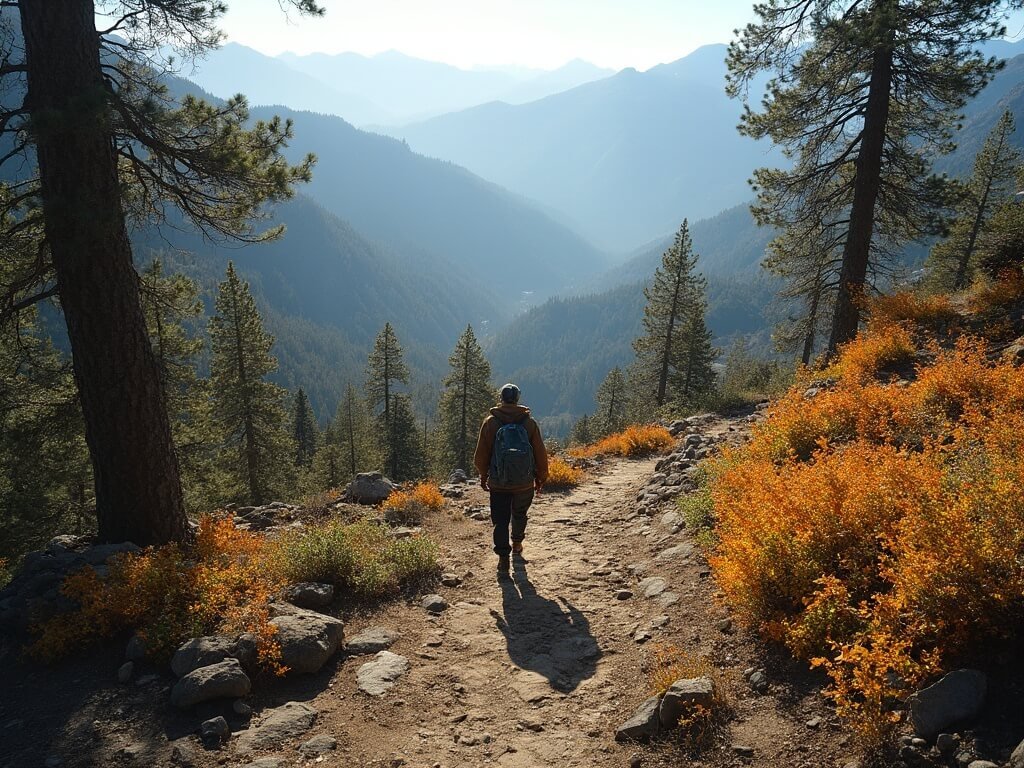
Brisk air keeps you cool on the climb. Autumn colours line the switchbacks. You might see three other people the entire way.
Even the shorter 2-mile round trip to Columbia Rock—usually packed with families and tour groups—becomes peaceful in October.
The Mist Trail maintains its popularity (it’s Yosemite, after all), but “popular” in October means manageable, not overwhelming.
Mirror Lake lives up to its name better in October because the water’s calmer, the light’s better, and there aren’t seventy-five people disturbing the surface trying to get that reflection shot.
The temperature advantage for hiking can’t be overstated.
Your body performs better in cooler temperatures. Your endurance stretches further. You recover faster.
Hikes that felt impossible in summer become challenging but achievable in October.
And the mosquitoes? Mostly gone.
That alone is worth the October timing.
What You Actually Need in Your Pack (And What You Don’t)
The 40-degree temperature swing between day and night makes packing either really simple or completely confusing.
I’ve landed on this: layers are non-negotiable.
Start the morning in a puffy jacket. Strip down to a t-shirt by 11 AM. Add the jacket back by 4 PM.
Repeat daily.
The combination of t-shirt weather and puffy jacket weather on the same day means you can’t pack light and you can’t pack heavy. You pack smart.
Here’s what works:
- Base layer (worn at dawn and dusk)
- T-shirt (midday workhorse)
- Insulating layer (fleece or lightweight puffy)
- Waterproof shell (rain jacket that handles wind)
- Comfortable hiking boots (broken in, not new)
If you’re staying more than a few days, accommodation with washer and dryer access becomes clutch.
You can pack less, wash mid-trip, and avoid that thing where you’re wearing damp clothes because everything’s been sitting in your pack for four days.
The waterproof gear earns its weight when those October storms roll through.
Not if—when.
One minute you’re hiking in sunshine, the next you’re in a downpour that lasts twenty minutes and then vanishes like it never happened.
That’s just October in the Sierra Nevada, keeping you honest about preparation while rewarding flexibility.
Explore more:
The Accommodation Strategy That Makes October Even Better
Lodging in Yosemite changes character completely in October.
Those cozy lodges and rustic cabins that were impossible to book in summer? Suddenly available.
Not just available—actually cozy in a way that matters.
A cabin in July is fine. A cabin in October when it’s 37°F outside and you’ve got a fireplace going? That’s the experience people write home about.
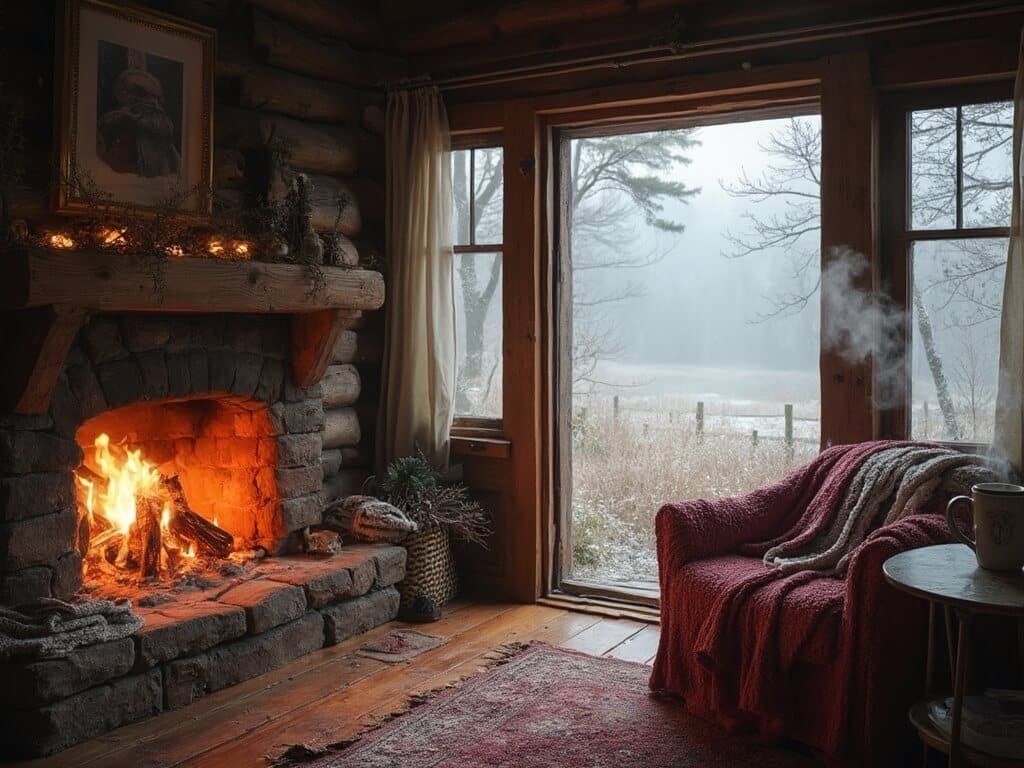
Glamping tents just outside park boundaries become legitimately appealing when the temperature drops. Heavy blankets. Wood-burning stoves. That satisfying feeling of being warm and comfortable while nature does its thing just outside.
Evening campfires hit different in October. They’re not just nice—they’re necessary. The warmth, the smoke, the marshmallows—they all feel more intense, more earned.
I spent three nights last October at a lodge near Yosemite Valley. Mornings started on the porch with coffee, watching mist burn off the meadow. Days were spent hiking. Evenings ended around a fire pit, swapping trail notes with fellow adventurers.
The cold makes you social in ways summer heat doesn’t. People gather. Puffy jackets come out. Strangers become trail buddies.
October lodging isn’t just about a place to sleep—it’s a cycle of cold hikes, warm fires, starry skies, and misty mornings. The whole experience amplifies itself.
The Stargazing Advantage That Summer Visitors Miss Entirely
Clear, crisp October night skies create stargazing conditions that summer can’t touch.
Cold air holds less moisture = less distortion. Fewer visitors = less light pollution.
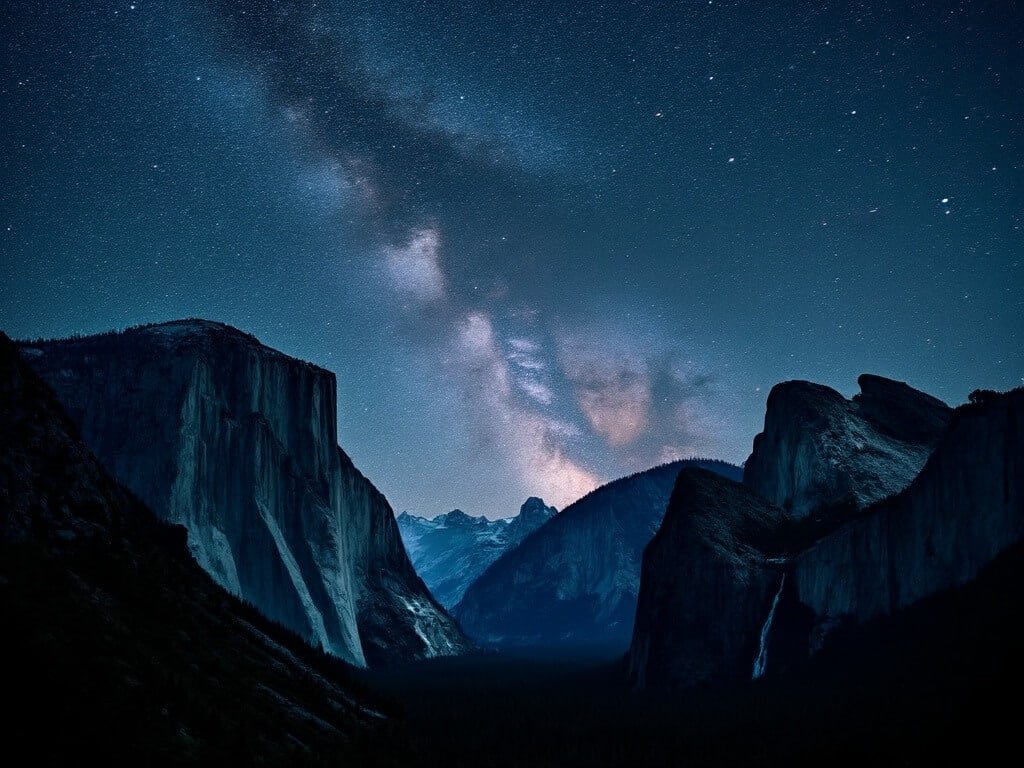
Yosemite Valley and Glacier Point after dark become celestial theaters. The Milky Way stretches across the sky. Jupiter’s moons are visible. No telescope needed—just let your eyes adjust and look up.
You start to understand why people travel: not just to see, but to recalibrate. Granite cliffs shrink under cosmic skies. You feel tiny—but that feels right.
The Elevation Reality That Changes Everything About Your Experience
Elevation is everything in Yosemite.
The park spans 4,000 feet of elevation difference. That means 10-degree temperature swings depending on where you are. Comfortable in Yosemite Valley? Tuolumne Meadows might be freezing.
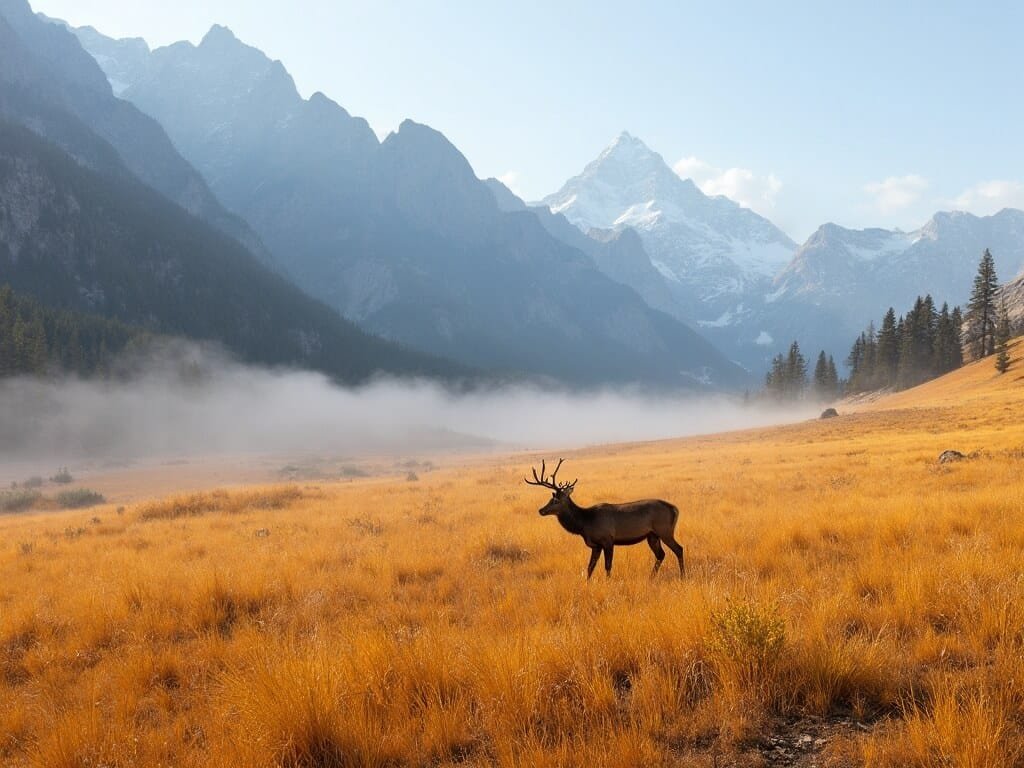
Microclimates matter. That t-shirt you wore comfortably at Mirror Lake won’t cut it at Tuolumne. Early October gives you one last shot at the high country before Tioga Road closes.
Golden meadows. Zero crowds. Alpine conditions previewing winter. But wow—it’s cold.
Respect the elevation. Check area-specific weather. Pack layers like you’re visiting three parks in one day. Because you are.
Why October Beats Every Other Season (And It’s Not Even Close)
Let’s look at the seasons:
Summer
Pros: Waterfalls (early summer), long days, warm.
Cons: Crowds, parking drama, heat, mosquitoes, high prices.
Spring
Pros: Wildflowers, waterfalls, moderate temps.
Cons: Road closures, muddy trails, lingering snow.
Winter
Pros: Snowy beauty, solitude.
Cons: Limited access, tire chains, intense cold.
October
Pros: Fall foliage, clear skies, full park access, minimal crowds, cozy lodging, perfect hiking weather.
Cons: Dry Yosemite Falls, shorter days.
October delivers 90% of the magic with 10% of the hassle.
You’re not seeing a lesser Yosemite—you’re seeing a different Yosemite. A version that feels secret, personal, yours.
The Crowd Differential That Changes How You Experience Everything
Fewer people = better experience.
Summer: 20,000+ visitors. October weekdays? A fraction. But it’s not just about fewer bodies—it’s about exponential impact.
No parking stress. No shuttle waits. No noise pollution. More wildlife, more ranger time, more quiet.
No rush. No guilt for lingering at Tunnel View. You can breathe. You can discover.
October transforms Yosemite from a spectacle into a sanctuary.
The Wildlife Window That October Quietly Opens
Less noise = more animals.
Black bears are still active. Mule deer roam freely. Coyotes and bobcats appear. Migratory birds pass through.
Last October: three bears in two days—naturally, peacefully, without crowds. That’s the difference.
October lets you observe, not disturb.
The Photography Reality That Nobody Talks About
You don’t need a fancy camera. You need October.
Autumn sun = dramatic lighting. Fall foliage = color contrast. Weather systems = dynamic skies.
October conditions do the work for you.
Same shot in July? You’re fighting haze, glare, and photo bombers.
October is a creative gift. The images you capture now can’t be replicated any other time.
What October Actually Costs (The Financial Reality Check)
Costs drop when crowds drop.
Lodges that are $400 in July? Around $280 in October. Campsites open up. Reservations become flexible. Restaurants feel relaxed instead of overbooked.
No surge pricing. No last-resort splurges. Just value-driven travel in a world-class location.
The Trip Planning Framework That Actually Works
Here’s a sample plan for 5 October days in Yosemite:
Day 1 – Arrival
- Tunnel View
- Sunset at Valley View
Day 2 – Valley Hikes
- Four Mile Trail or Columbia Rock
- Evening stargazing
Day 3 – High Country
- Glacier Point
- Tioga Road & Tuolumne
Day 4 – Waterfalls
- Mist Trail to Vernal & Nevada Falls
- Bridalveil Fall
Day 5 – Departure
- Morning wildlife watch
- One last meadow stop
Be flexible. October weather can be moody—but that’s where the magic lies.
Your Last Chance for Full Access (And Why That Creates Magic)
October is the final window before winter closures.
Tioga Road? Closes late October or early November. Glacier Point slightly later.
October is Yosemite’s breath between seasons. A fleeting version of the park that disappears quickly.
That fleeting nature makes it special. You’re not just visiting Yosemite—you’re experiencing a moment.
The One Thing Everyone Gets Wrong About October Visits
They think it’s off-season. It’s not.
October is optimal season.
It’s not about missing summer—it’s about choosing better. Conditions align. Crowds vanish. Features shine.
We’ve been taught that busyness means value. It doesn’t.
October is Yosemite being itself, not performing for crowds. And it’s magnificent.
Why You’ll Book October Dates After Reading This
- Weather: Cool but comfortable
- Crowds: Manageable
- Access: Almost full
- Foliage: Peak
- Wildlife: Active
- Photography: Rewarding
- Price: Reasonable
- Stargazing: Unmatched
This isn’t second place—it’s the informed traveler’s first choice.
And if you keep it a secret? We understand. But if you share it, you’re changing someone’s life.
Because Yosemite in October isn’t just a destination.
It’s the way Yosemite was meant to be.
Explore more October adventures in California:
- California in October
- Pasadena in October
- Oakland in October
- Fresno in October
- Bakersfield in October