Monterey in August defies every summer stereotype you’ve been told about California.
I’ve watched countless tourists arrive in tank tops and flip-flops, expecting blazing heat and endless sunshine.
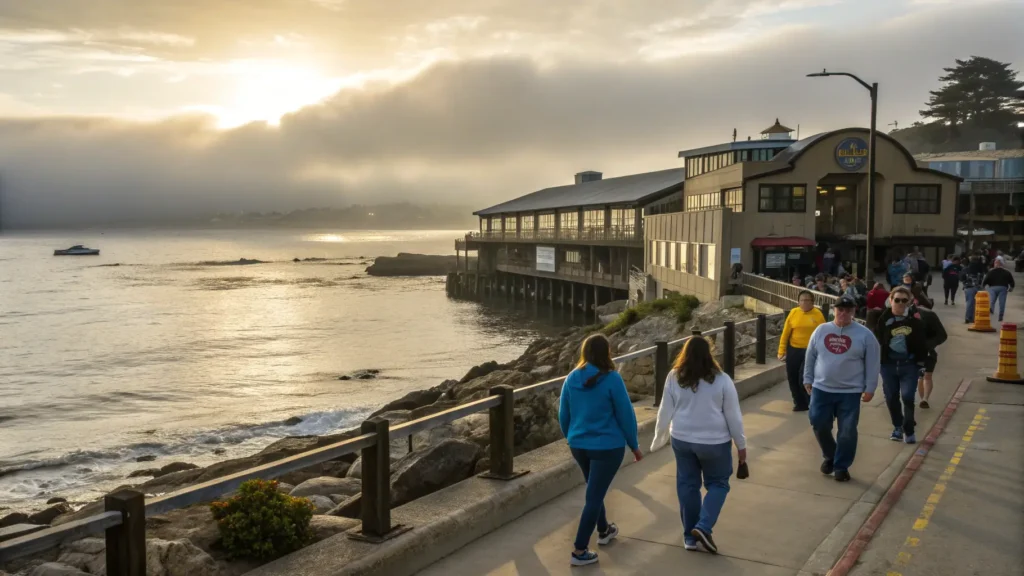
Within two hours, they’re shivering on Cannery Row, desperately hunting for a jumper in the souvenir shops.
The truth about August weather in Monterey is far more nuanced than those glossy travel brochures suggest.
The Temperature Reality That Catches Everyone Off Guard
Here’s what the data actually shows: Monterey in August hovers between 66-70°F (19-21°C) during the day, dropping to a chilly 50-56°F (10-13°C) at night.
That’s right—whilst the rest of California bakes under triple-digit heat, Monterey remains stubbornly, delightfully moderate.
Mid-to-late August pushes the mercury to its peak, occasionally touching 73°F.
Early August starts cooler, around 61-65°F.
Then temperatures gradually ease back down as September approaches.
The evening drop is what trips people up every single time.
I learnt this the hard way during my first visit in August 2019.
I’d planned a romantic sunset dinner at one of those clifftop restaurants overlooking the bay.
The afternoon had been pleasantly warm—about 68°F—so I confidently wore a sleeveless dress.
By 7 PM, as the sun dipped toward the horizon, the temperature had plummeted to the low 50s.
I spent the entire meal with my partner’s jacket draped over my shoulders, teeth chattering between courses, watching the gorgeous sunset through a fog of discomfort.
The waiter eventually took pity and brought me a spare fleece from the staff room.
That’s the Monterey reality: a 20-degree swing between afternoon and evening is completely normal.
Why Monterey Stays Cool When Everywhere Else Melts
The Pacific Ocean acts as nature’s thermostat.
Those consistent ocean breezes rolling off water that sits at a bracing 56.8°F keep coastal temperatures locked in the mid-60s.
No amount of sunshine can override that marine influence.
Compare this to inland California valleys, where August regularly hits 90-100°F.
Drive 30 minutes east from Monterey and you’ll add 20-30 degrees to the thermometer.
This creates a bizarre microclimate situation.
Salinas, just 20 miles away, can be sweltering whilst Monterey residents are wearing cardigans.
The temperature gradient is sharp enough that you can literally feel the change as you drive over the hills separating coast from valley.
The Fog Situation Nobody Warns You About
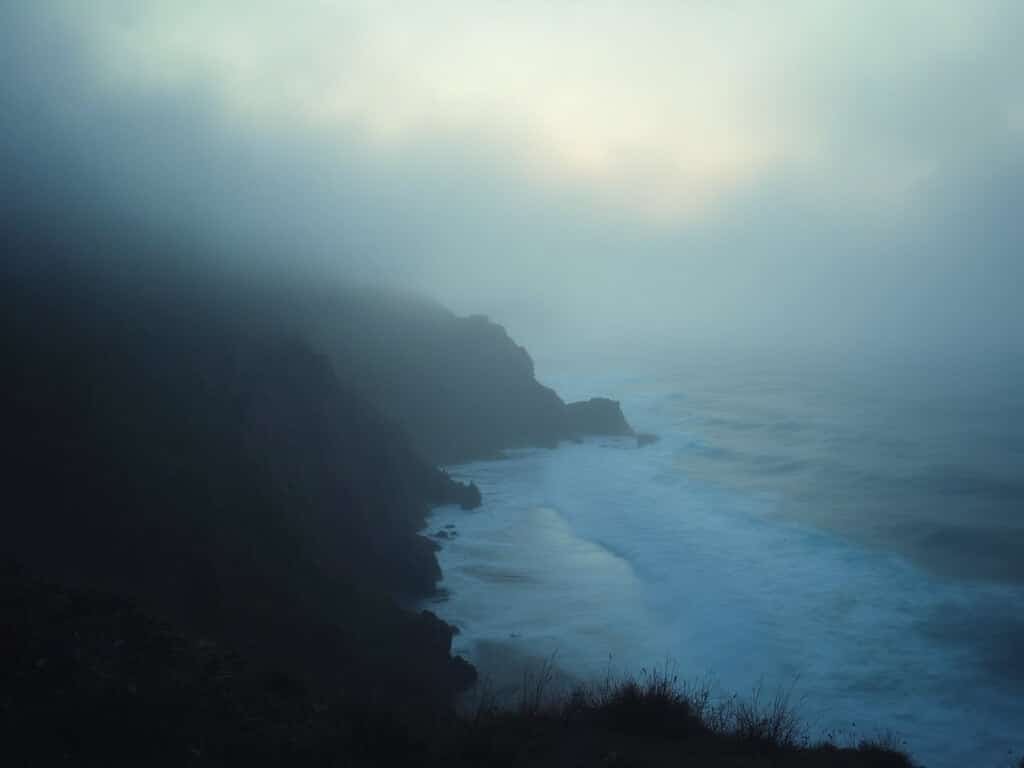
Let’s talk about August fog in Monterey, because this is where expectations crash hardest against reality.
Late August brings increased fog rolling in from the Pacific.
Some mornings you’ll wake up to a thick marine layer that doesn’t burn off until noon—or sometimes at all.
The statistics sound promising: clear skies 91% of the time, with only 9% overcast or cloudy conditions.
But those percentages don’t capture the lived experience of morning fog.
Here’s the pattern I’ve observed:
- Mornings start grey and misty (60-70% of August mornings)
- Fog typically lifts by 11 AM-1 PM
- Afternoons turn sunny and gorgeous
- Evening fog creeps back in around 7-8 PM
That 91% clear sky metric measures the entire day.
If you’re only out during specific hours, your experience will vary dramatically.
The fog isn’t necessarily a negative.
It creates that moody, atmospheric California coastal vibe that photographers absolutely love.
It also prevents the region from overheating.
But if you’re expecting Mediterranean sunshine from dawn to dusk, you’ll be disappointed.
The Rain Question: Should You Even Worry?
Short answer: no.
August in Monterey is bone dry.
We’re talking a 1% chance of rain on any given day.
When rain does occur—which is rare—it amounts to barely 15mm of accumulation.
August falls smack in the middle of California’s dry season.
The rainy season runs November through March.
By August, the state is six months into drought conditions.
I’ve visited Monterey in August three times and have never seen a single drop of rain.
You’re more likely to win a small lottery prize than get rained on.
Pack an umbrella if it makes you feel better, but you won’t use it.
This reliability makes August phenomenal for outdoor activities.
You can book whale watching tours, coastal hikes, and outdoor dining with near-complete confidence.
Daylight Hours: The Secret Advantage
Here’s something that doesn’t get enough attention: August in Monterey gives you 13.6 hours of usable daylight.
Sunrise hits around 6:24 AM.
Sunset arrives near 7:57 PM.
That’s nearly 14 hours to pack in activities.
Compare that to winter months (closer to 9-10 hours) and you realise August offers extraordinary time efficiency for tourists.
You can fit in morning kayaking, afternoon aquarium visits, and sunset drives down to Big Sur—all in one day.
The extended daylight also affects the vibe.
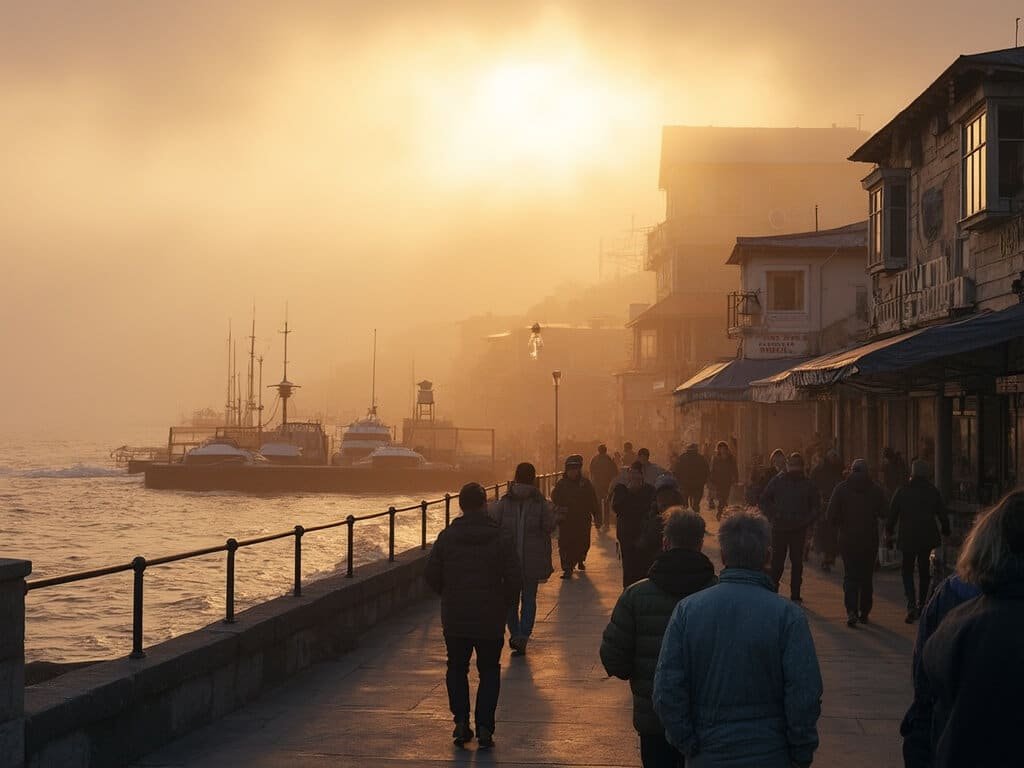
Cannery Row and Fisherman’s Wharf stay lively well into the evening.
Restaurants don’t feel rushed to turn tables before darkness falls.
There’s a relaxed, lingering quality to August evenings that shorter days don’t permit.
What Actually Goes in Your Suitcase
Right, let’s get practical about Monterey in August packing, because this is where most people stuff it up.
Essential items:
- A proper jacket or fleece (not optional, not negotiable)
- Long trousers or jeans (you’ll wear these more than shorts)
- Closed-toe shoes (flip-flops are insufficient for evening temperatures)
- Multiple layers (think onion approach to dressing)
- A light scarf or wrap (brilliant for quick temperature adjustments)
Optional but recommended:
- Shorts and t-shirts for midday warmth
- Sunglasses and sun cream (that 91% clear sky figure is real)
- A beanie or warm hat for particularly foggy mornings
The layering strategy is crucial.
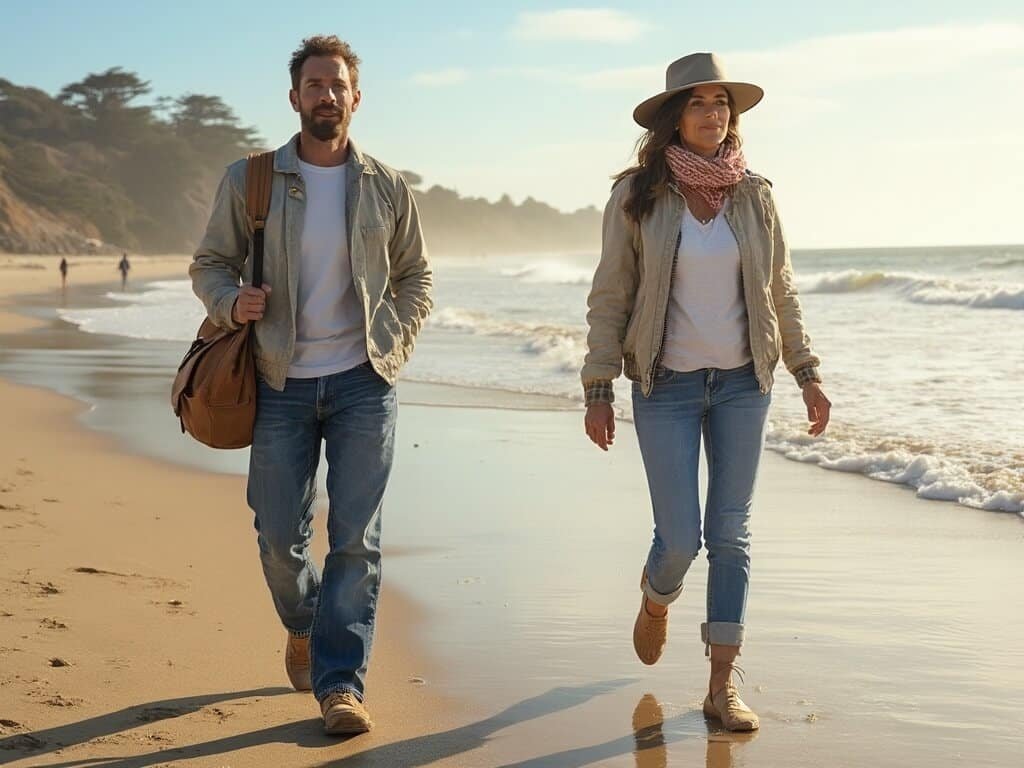
I typically start my August Monterey days in jeans, a t-shirt, and a light jacket.
By noon, the jacket comes off.
By 3 PM, I might roll up my sleeves.
By 6 PM, the jacket goes back on.
By 8 PM, I’m zipping it up fully.
If you’re planning water activities, add a wetsuit to the list.
That 57°F ocean temperature is no joke.
Without thermal protection, you’ll last about 15 minutes before hypothermia becomes a concern.
Local surf shops rent wetsuits if you don’t want to travel with one.
The Tourist Timing Calculation
August ranks as one of Monterey’s busiest months.
Why? Because visitors from scorching inland cities (Sacramento, Fresno, Bakersfield) flee to the coast for relief.
Add in international tourists on California tours, families squeezing in last-minute summer holidays, and couples seeking romantic coastal getaways.
The result: crowded attractions and premium accommodation prices.
Popular spots like the Monterey Bay Aquarium see significant queues.
Restaurants along Cannery Row require reservations.
Hotel rates jump 30-50% compared to off-season pricing.
But here’s the thing—the crowds are manageable compared to truly overtouristed destinations.
Monterey never reaches the suffocating density of, say, Venice or Santorini.
Strategic timing helps:
- Visit major attractions on weekday mornings
- Book accommodation several months ahead
- Make restaurant reservations 2-3 weeks in advance
- Explore lesser-known spots like Pacific Grove or Moss Landing
The tourist volume actually validates what locals know: August offers some of the year’s most reliable weather for coastal exploration.
For more ideas on planning your trip, check out our guide to free things to do in Monterey or explore what California in August really looks like.
The Activities That Actually Work (And the Ones That Don’t)
Not all Monterey activities are created equal in August.
Some shine in these conditions. Others become exercises in frustration.
Beach activities sit in an awkward middle ground.
The beaches are gorgeous—Carmel Beach, Asilomar State Beach, and Lovers Point deliver that classic California coastal beauty. But swimming? That’s a hard sell with 57°F water temperatures.
I’ve seen plenty of optimistic families arrive with beach toys and swimsuits, only to spend 20 minutes wading ankle-deep before retreating to build sandcastles instead. The kids don’t care about the temperature data—they just know it’s bloody freezing.
What works brilliantly:
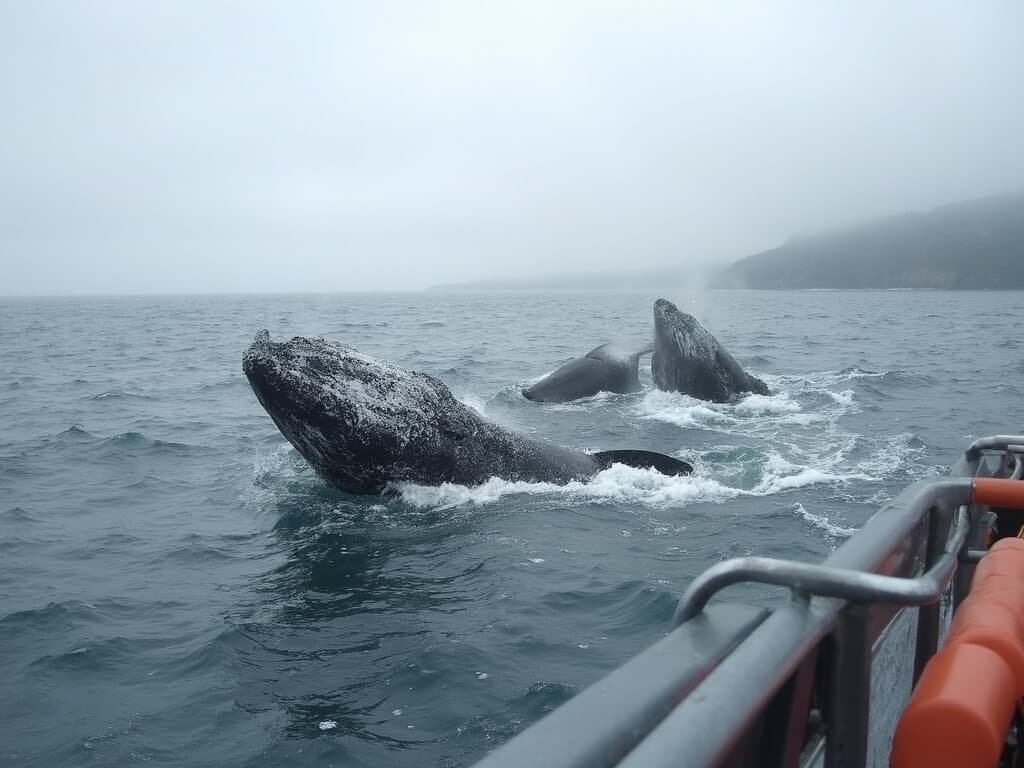
- Whale watching (August sits right in the middle of humpback and blue whale season)
- Kayaking (with proper wetsuit rental)
- Coastal hiking (17-Mile Drive, Point Lobos, Garrapata State Park)
- Wine tasting in nearby Carmel Valley (warmer microclimate, stunning vineyards)
- Monterey Bay Aquarium (indoor comfort when fog rolls in)
- Cycling along the Monterey Bay Coastal Recreation Trail (18.5 miles of paved perfection)
What disappoints:
- Sunbathing (you’ll get cold before you get tan)
- Swimming without thermal protection (miserable experience)
- Expecting warm evening outdoor activities (you’ll freeze)
The magic happens when you align your expectations with August’s actual conditions rather than fighting against them.
The Inland Valley Temperature Trap
Here’s where visitors make a costly miscalculation.
Many people combine Monterey with inland destinations—Salinas, Paso Robles, or even Yosemite. The temperature shock between coastal and inland regions can hit 30-40 degrees.
The pattern looks like this:
- Monterey coast: 68°F and breezy
- Salinas (20 miles inland): 85°F and warming
- Paso Robles (75 miles inland): 95-100°F and scorching
I made this mistake during my second August visit. We’d planned a wine tasting day trip to Paso Robles, about 90 minutes south. Left Monterey in jeans and a light jacket at 9 AM when it was a cool 62°F with morning fog. Arrived in Paso Robles at 11 AM to blazing 94°F sunshine.
Spent the entire day sweating through our inappropriate clothing, desperately seeking air conditioning between wineries. The drive back to Monterey felt like entering a refrigerator—we actually turned the car heater on because the temperature had dropped so dramatically.
The solution: pack for both climates if you’re doing day trips.
Keep a change of clothes in the car. Layers that work in Monterey become torture chambers 30 miles inland.
Why September Steals August’s Thunder (But Shouldn’t)
September technically claims the title of warmest month in Monterey, averaging 70°F compared to August’s 68°F.
That 2-degree difference makes September the “official” best weather month.
But here’s what the statistics don’t capture: September brings increased unpredictability.
The transition from summer to autumn creates weather volatility. Some September days hit 75°F with gorgeous sunshine. Others drop to 60°F with persistent fog and wind.
August maintains more consistency—you know what you’re getting.
The temperature range stays tight. The fog patterns follow predictable morning-evening rhythms. The dry conditions hold absolutely firm.
August offers reliability that September occasionally lacks.
For trip planning, reliability trumps a 2-degree temperature advantage. Nobody wants their special coastal getaway derailed by an unexpected cold front or unusual weather pattern.
August delivers predictable excellence rather than occasional perfection.
The California Rodeo Factor Nobody Mentions
Late July through early August brings the California Rodeo to nearby Salinas.
This week-long event is one of the largest rodeos in the United States, drawing massive crowds to Monterey County.
What this means for Monterey visitors:
- Significantly increased traffic on Highway 1 and 101
- Higher hotel rates throughout the region
- Crowded restaurants and attractions
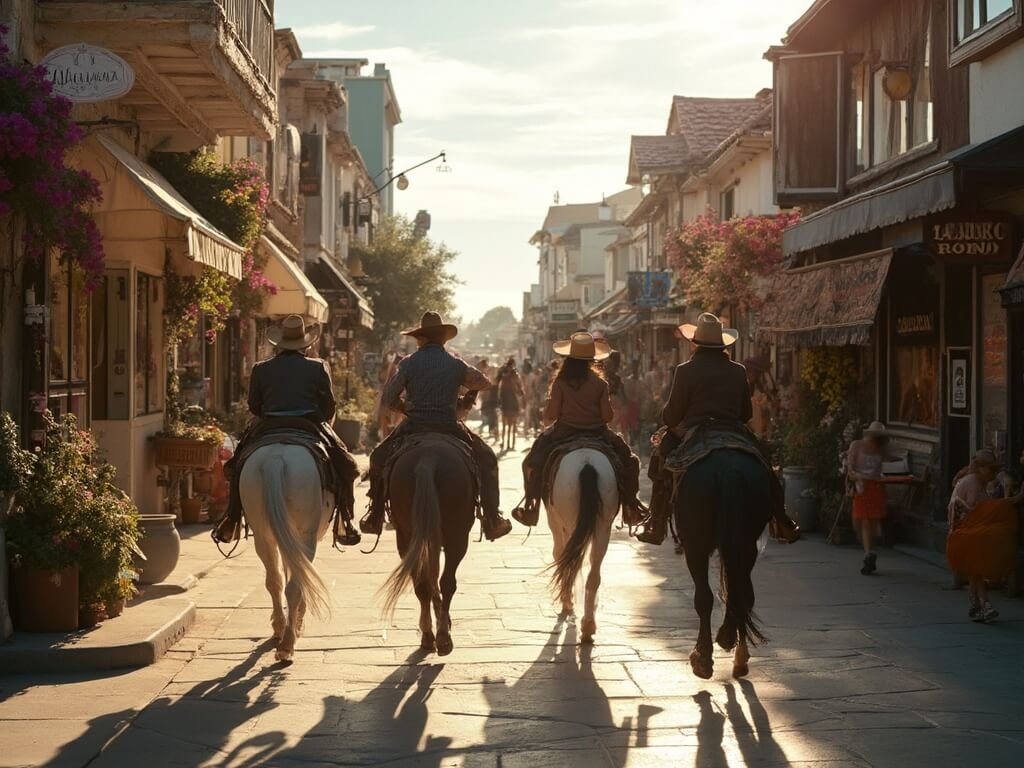
- A distinctly different demographic mix (cowboys and rodeo fans)
If you’re not interested in rodeo culture, this timing creates challenges.
But here’s the unexpected upside: the rodeo atmosphere adds authenticity to the Central California experience. Western wear shops do brisk business. Country music spills from bars. There’s an energy that purely tourist-focused weeks lack.
Check the rodeo dates before booking if this matters to you.
Early August typically sees the event. Mid-to-late August avoids the rodeo crowds entirely.
The Carmel and Big Sur Extension Decision
Most Monterey visitors wrestle with this question: should I add Carmel and Big Sur to my August itinerary?
The short answer: absolutely yes, but with weather awareness.
Carmel sits just 4 miles south of Monterey. The weather mirrors Monterey almost exactly—perhaps 1-2 degrees warmer. The village atmosphere offers charming contrast to Monterey’s tourist infrastructure. Carmel Beach provides arguably better sunset viewing than Monterey beaches.
August conditions make Carmel exploration delightful.
Big Sur presents more complexity.
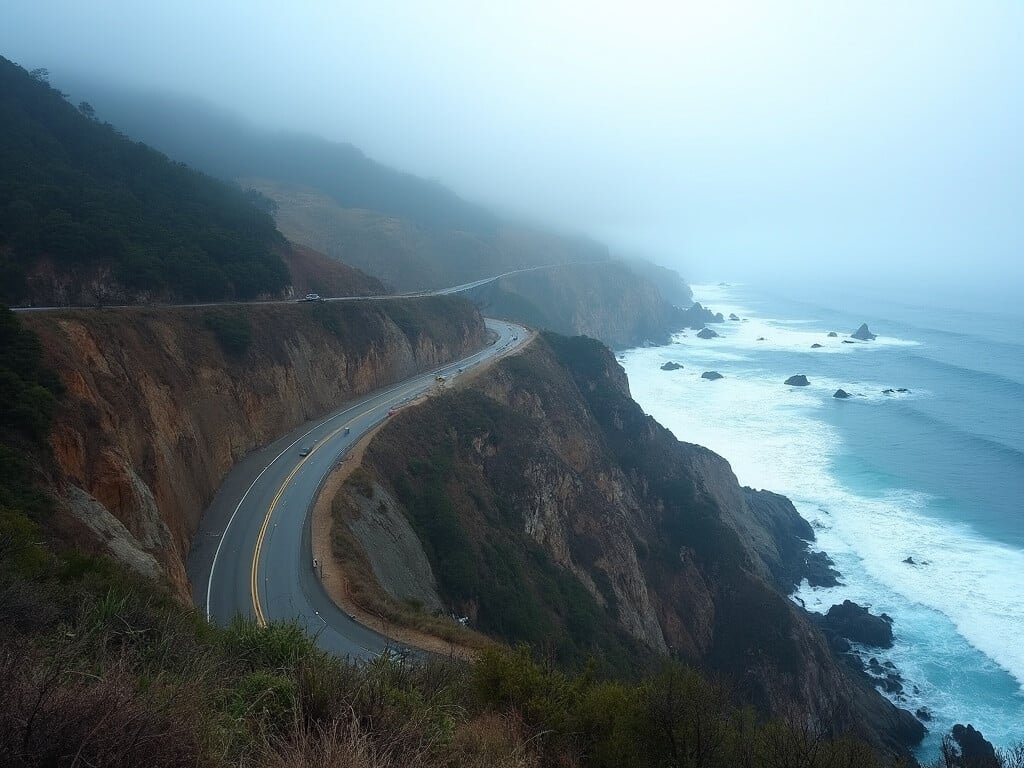
The 90-mile stretch of Highway 1 from Carmel to San Simeon ranks among California’s most spectacular drives. August offers excellent visibility for the dramatic clifftop views.
But Big Sur’s weather varies significantly by location:
- Northern Big Sur: similar to Monterey, cool and often foggy
- Central Big Sur: slightly warmer, variable conditions
- Southern Big Sur: noticeably warmer and sunnier
The August advantage: reliable road conditions.
Winter storms occasionally close sections of Highway 1 due to landslides. August eliminates that risk entirely—roads stay consistently open.
If you’re adding Big Sur to August Monterey plans:
- Start early (leave by 7–8 AM)
- Bring extra layers despite inland warming
- Pack snacks
- Fill your tank
- Download offline maps
The Accommodation Strategy That Saves Hundreds
August accommodation prices in Monterey hurt.
Expect to pay $200–400+ per night for decent hotels. Waterfront properties and boutique inns easily hit $500–600.
But there’s a geographical arbitrage opportunity most visitors miss.
Pacific Grove sits immediately adjacent to Monterey.
The two cities share a border—you can walk between them in 15 minutes. Yet Pacific Grove hotel rates run 20–40% lower than equivalent Monterey properties.
The practical reality:
- Same weather as Monterey
- Same ocean access and views
- Same proximity to major attractions
- Significantly lower accommodation costs
Other money-saving strategies for August:
- Book 3–4 months ahead
- Consider Monday–Thursday visits
- Look at Marina or Seaside
- Check vacation rentals
Why August Beats Summer Elsewhere in California
Let’s put August Monterey in broader California context.
San Francisco: cool, foggy, urban
Los Angeles: hot, crowded, expensive
San Diego: sunny, beachy, packed
Lake Tahoe: pretty, smoky, overbooked
Monterey in August occupies a sweet spot.
The trade-off is simple: comfort over heat.
The Final Reality Check
Monterey in August works if you understand what you’re actually getting.
This isn’t Mediterranean summer. It’s not tropical beach weather. It’s temperate coastal California in its most reliable form.
What August Monterey does brilliantly:
- Provides escape from extreme heat
- Offers near-perfect conditions for outdoor exploration
- Delivers consistent, reliable weather for trip planning
- Showcases California’s dramatic coastal scenery
- Enables comfortable all-day activities
What August Monterey doesn’t do:
- Offer warm swimming conditions
- Guarantee fog-free, sunny days
- Provide budget accommodation options
- Create traditional “beach vacation” experiences
- Deliver warm evening outdoor dining comfort
The visitors who arrive disappointed are those expecting Southern California beach culture or Mediterranean warmth.
Monterey in August is exactly what it promises to be: cool, coastal, consistent, and compelling—if you pack the right expectations along with that essential jacket.
Explore more about California in August, scenic Big Sur drives, or consider a side trip to Santa Cruz in September.